Iran threatens wider US strikes even as talks make progress
Published in News & Features
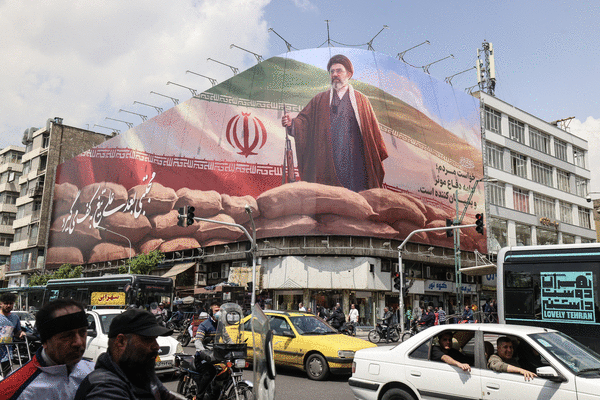
Iran’s Supreme Leader ordered his top military commanders to prepare for renewed confrontation with the U.S. and Israel and expand Tehran’s options for retaliation, even as his top diplomat signaled progress in diplomatic talks.
“Every level and type of threat must be met with an immediate, effective response, without geographical limitations,” Mojtaba Khamenei told the heads of the Islamic Revolutionary Guard Corps, the Army and the General Staff of the Armed Forces, according to a statement Saturday on Telegram.
He ordered the military to update its lists of potential targets to bring “all types of material and immaterial assets” of the U.S. and Israel “within the armed forces’ reach.”
The supreme leader also “described intelligent combat readiness for a powerful confrontation with the enemies as one of the prerequisites of maximum deterrence,” and urged the military to strengthen its capabilities with new technologies.
The comments underline the heightened state of alert in Iran as it braces for the potential resumption of U.S.-Israeli strikes, even at a time of renewed diplomatic efforts to end the conflict — as well as Tehran’s determination to escalate its response if it’s attacked again.
Khamenei’s statement didn’t say when or where the meeting took place, but it marks the first time he’s known to have convened his top military commanders as the head of state. He hasn’t been seen in public since the U.S. and Israel started the war in February, and only a handful of Iranian officials have said they’ve spoken to him since.
Secretary of State Marco Rubio said the U.S. hasn’t made any decision to renews strikes on Iran and that President Donald Trump prefers a diplomatic resolution. He added that the U.S. retains the capabilities to achieve whatever military objective Trump decides to pursue.
“What the Iranian regime is basically arguing is unless we get what we want, not only will we blow up ships, but we will destroy the energy infrastructure of our neighbors in the entire region,” he said in a news conference after a Group of 20 foreign ministers meeting in Atlanta. “Just think about that, because I think we skip over that like that’s some sort of normal behavior. That’s not normal behavior. That’s not.”
Hormuz proposal
Diplomatic shuttling continued on Saturday, with Iranian Foreign Minister Abbas Araghchi saying an Iranian delegation was in Qatar for talks with mediators there.
Iran suggested accelerating the implementation of its previous seven-day proposal for reopening the Strait of Hormuz to two days, Araghchi told Al Jazeera in an interview.
“Our conditions include lifting the sanctions imposed following the Islamabad memorandum and reducing U.S. forces in the region,” Araghchi added, a reference to the June ceasefire agreement that later collapsed. “We demand the restoration of oil waivers and the release of all our frozen funds, including those held in Qatar.”
Mediators have also shared proposals about Iran’s nuclear program, the minister said, without elaborating.
Araghchi acknowledged the recent letter from U.S. Vice President JD Vance to Iran’s national security chief Mohsen Rezaee, saying: “The American side’s attempt to open the door to broader dialogue and understanding is considered a positive step.”
The U.S. has warned Gulf countries to prepare for renewed strikes against Iran after Tuesday’s midterm elections, the Wall Street Journal reported this week. U.S. Central Command briefed Trump on potential military options on Thursday, Fox reported.
“Whenever signs of an enemy’s hostile action are confirmed, the armed forces will not wait for it to begin before choosing the time and manner of their response,” Ali Abdollahi, Iran’s head of the General Staff of the Armed Forces, said after the meeting with Khamenei, the state-run Islamic Republic News Agency reported.
———
(With assistance from Sara Gharaibeh.)
©2026 Bloomberg L.P. Visit bloomberg.com. Distributed by Tribune Content Agency, LLC.






Comments