Coral rescue efforts ramp up in Miami as researchers fear another deadly hot year
Published in News & Features


MIAMI — As underwater temperatures continue to soar in South Florida, the coral shuffle has begun.
Scientists are eyeing any coral that isn’t tied down and making plans to move them somewhere safe: to deeper waters, to a shaded spot or even to land-based aquariums. They hope to avoid the disaster of 2023, when waters got so hot that a massive number of corals bleached and died in the record-breaking temperatures.
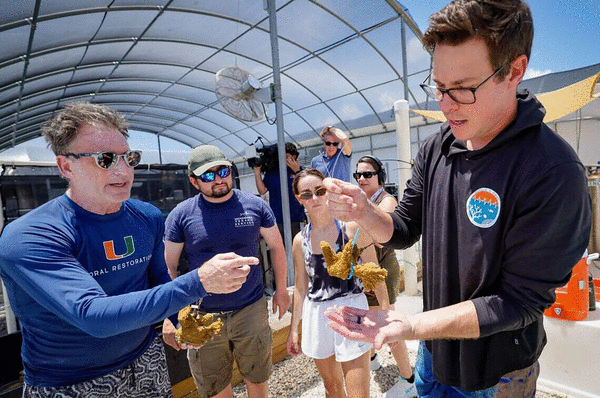
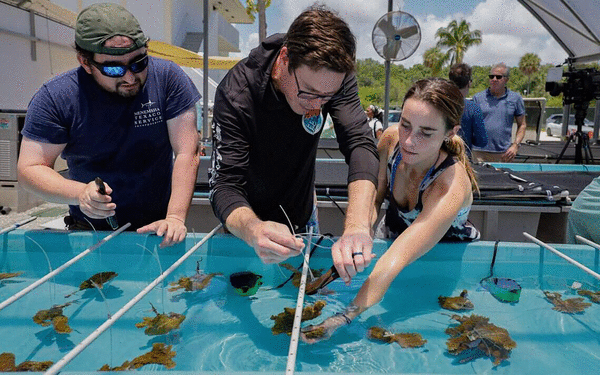
On Wednesday, University of Miami researchers decided to move some of their most important old-stock Elkhorn corals from their three nurseries offshore of Virginia Key and bring them to the safety of their onshore aquariums. But unlike the scramble to rescue coral babies a few years back, these corals were still perfectly healthy. And that’s the point.
“This really isn’t the full-blown emergency you saw in 2023, because we were on our heels,” said Dalton Hesley, a senior research associate with UM’s Rescue a Reef program. “This is us being proactive.”
Hesley and other researchers examined the stubbly Elkhorn coral fragments on Wednesday at their outdoor lab across the street from the Rosenstiel school. They checked the camel-colored corals for any unwanted stowaways, dunked them in a refreshing cleansing bath and strung them up in the tanks they’ll call home for the next few months.
Already, this is a markedly different picture than the last time the UM coral team did this in 2023. Back then, said Diego Lirman, an associate professor at the Rosenstiel school, there were horror stories from the Keys of entire coral nurseries killed in the hot water.
However, the slightly cooler northern waters off Miami-Dade made a difference. While reefs turned into graveyards down south, they mostly held strong up in Miami.
“Last time, we brought in pretty much everything we could,” he said. “Luckily, we ended up not having a lot of bleaching.”
But, to be on the safe side, researchers decided to bring in a few of their key breeding stock — fragments of some of the last naturally occurring Elkhorn coral on the Florida reef — in case things get worse. The 2023 marine heat wave was a death blow to the species, leaving them “functionally extinct,” a recent paper found.
Already, it’s hotter underwater than it was at the same time in 2023, worrying researchers. Lirman said if conditions continue to deteriorate, they will go back out and rescue some of their Staghorn coral babies as well, which are also endangered.
Saving these specific corals is key, he said, because they’re some of the only remaining samples of the original corals on the reef. UM and other coral restoration groups are working together to preserve the genes from these corals to keep their genetic lines going, even if they go totally extinct in the wild.
“These are our VIPs,” Lirman said.
The picture is less rosy down in the Keys, where waters are warmer and coral restoration groups have already been evacuating coral babies for weeks. As of Monday, the Keys is now at a level two on the coral bleaching watch alert chart, which means significant bleaching is expected and coral death is likely.
South Florida, on the other hand, is only at alert level one, which indicates that bleaching is expected.
NOAA Atlantic Oceanographic and Meteorological Laboratory coral scientists noticed signs of bleaching on reefs they monitor as early as July 7.
“Any coral bleaching is concerning, but visible coral stress this early in the summer season does not bode well for the health of our reefs,” Ian Enochs, the head of AOML’s coral program, said in a statement.
“Data from Dr. Derek Manzello’s group at Coral Reef Watch indicates that the Cheeca Rocks Reef is experiencing heat stress even earlier than in 2023, a year when we documented complete bleaching and widespread mortality of soft corals. Given the economic, ecological, and scientific value of Cheeca Rocks, we are monitoring the situation closely.”
____
©2026 Miami Herald. Visit miamiherald.com. Distributed by Tribune Content Agency, LLC.






Comments