Maryland confirms 2 measles cases tied to out-of-state travel
Published in News & Features
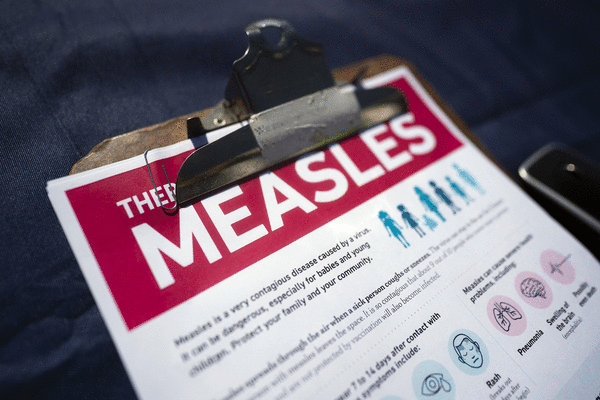
BALTIMORE — Two Maryland residents this week have contracted measles after traveling to a part of the United States experiencing an active outbreak, prompting state health officials to warn of possible public exposure.
The Maryland Department of Health said it is working to notify people who may have been exposed, and urged residents to review potential exposure sites, monitor for symptoms and ensure they are up to date on their measles, mumps and rubella, or MMR, vaccinations.
According to the department, people may have been exposed at J&R Feeds LLC in Mechanicsville between July 16 and July 21, at MedStar Health Urgent Care in Charlotte Hall from 8:30 a.m. to 1:15 p.m. July 20, and at MedStar St. Mary’s Hospital’s emergency department in Leonardtown from 11 a.m. to 6:45 p.m. July 21.
The two new cases bring Maryland’s total number of confirmed measles cases this year to 11, according to the department. Officials said they will not release additional information about the patients to protect their privacy.
Health officials said anyone who was at those locations during the specified times, particularly those who are not fully vaccinated or otherwise immune to measles, should monitor for symptoms for 21 days after a potential exposure.
Early symptoms include a fever above 101 degrees, a runny nose, cough and red, watery eyes. A rash typically appears one to four days later, beginning on the face before spreading to the rest of the body. Symptoms generally develop 10 to 14 days after exposure but can appear anywhere from seven to 21 days later.
Anyone who develops symptoms should avoid going to work, school, child care or public places and should contact a health care provider before visiting a medical office or emergency department so precautions can be taken to prevent further spread of the virus, officials said.
Measles is a highly contagious disease that spreads through the air when an infected person breathes, coughs or sneezes. The virus can remain in the air for up to two hours after an infected person leaves an area.
The department said people who have received two doses of a measles-containing vaccine or were born before 1957 are generally considered protected.
Those who are not fully vaccinated or otherwise immune and believe they may have been exposed should contact their health care provider or local health department as soon as possible to discuss whether post-exposure treatment is appropriate.
©2026 The Baltimore Sun. Visit at baltimoresun.com. Distributed by Tribune Content Agency, LLC.




Comments