Kratom-hooked mom describes traumatic road to kick addiction
Published in News & Features

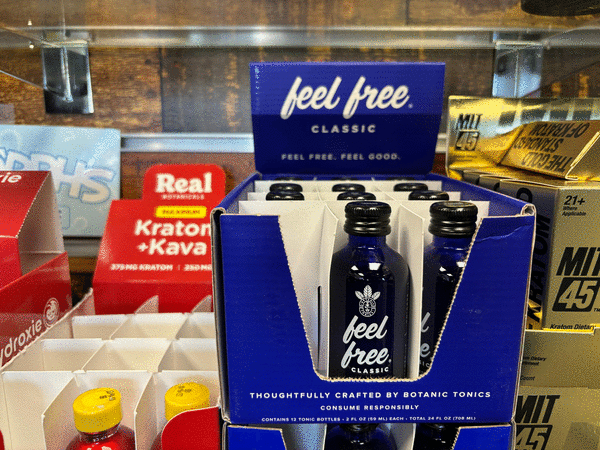



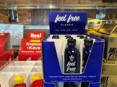
The social media ad for a 2-ounce tonic called "Feel Free" caught Melanie Clark's attention because it promised she could eliminate drinking from her life while still feeling a buzz.
"It was just advertised as a healthy, natural botanical drink," Clark said of the advertisement, which featured a guy paddleboarding down a stream.
It spoke to the 35-year-old Upper Peninsula woman's healthy-living sensibilities.
But the ingredients in the tiny shot-size bottle almost killed her, according to Clark and her family.
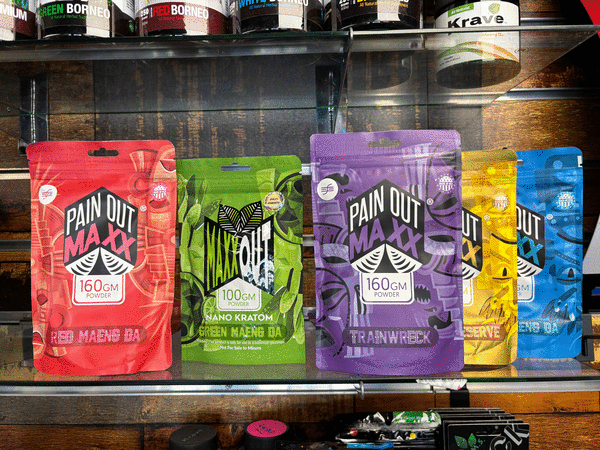
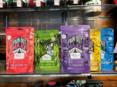
Feel Free is a brand of kratom, an unregulated substance derived from a tree plant in Southeast Asia that is sold in liquid concentrate, tablets and capsules at tobacco shops and convenience stores with the promise of mind-stimulating focus, alertness and energy. Some strains of kratom are also marketed for pain management, as a herbal alternative to doctor-prescribed narcotics.
Kratom (pronounced KRA-tum, with a short "a" sound) is known as "gas station heroin" for its opioid- and stimulant-like effects. Self-described recovering addicts like Clark are now advocating for the Michigan Legislature to ban the sale and production of kratom in the state.
Within three weeks of first taking Feel Free in July 2022, Clark found the herbal supplement to be habit-forming, causing her to rely on the foul-tasting tiny bottles of liquid to get through the day while struggling with postpartum depression.
Clark's life spiraled out of control from that moment, according to Clark's mother and sister.
“This stuff will enslave and kill you before you even know that there’s a problem,” said Clark's mother, Dottie Case. “Just because something is called 'natural' doesn’t mean it’s good for you."
The addiction got so bad that Clark and her husband went to his parents' house in Indiana — where the sale of kratom is banned — just to get her away from the legalized supply of kratom at corner stores in Ypsilanti, where Melanie and Kieron Clark and their children lived at the time.
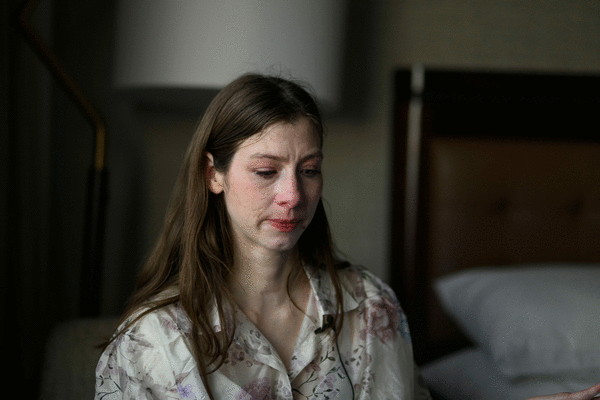
"Just after a few days of that, I completely lost sight of reality, and I wanted to die," Clark told The Detroit News.
Like common drug problems, kicking the habit proved to the be the hardest part, Clark said. Ingesting or eating kratom didn't provide a high; it gave her relief from the illness and mental anguish that the substance triggered.
Withdrawal from kratom caused several health scares, as the slender young woman suffered heart problems and gained 24 pounds in one 24-hour period from water retention and lymph buildup, Case said.
"She got dangerously sick when trying to rehab," Case said. “I’m not exaggerating when I say she almost died several times last year."
How Clark's addiction to kratom started
Clark grew up in the eastern U.P. community of Rudyard, about halfway between St. Ignace and Sault Ste. Marie. She initially studied violin at Western Michigan University before transferring to DePauw University in Indiana to study vocal performance and become a trained opera singer. Clark and her husband started a family as she was finishing college. In her 20s and early 30s, she did contract singing gigs on the side while being a stay-at-home mom.
After her second child was born in July 2022, Clark said she was suffering from a postpartum "fog" mixed with her lifelong attention deficit disorder. She needed an energy boost to get through the daily travails of motherhood and the ensuing isolation. That's when she decided to try the kratom drink she saw marketed on gas station counters in Ypsilanti.
"It tastes absolutely awful, but like I remember my first feeling was like, 'Oh my goodness, this is so strong. I can't believe this is allowed,'" Clark said. "It just made me feel like superwoman in terms of energy, focus. It just turned my brain into something different."
"It just felt like an unbelievable tool," she added.
At first, it was a wonder tonic.
But then Clark found herself "reaching" for the tiny two-ounce bottle each day.
"Soon it's every few days, and then it's one every day, and you know, it just kind of escalated from there," she said.
Within three weeks, Clark said, she needed a shot of kratom once daily, or she'd struggle to get out of bed.
"The woe that it would cause when I wouldn't take it was so ghastly," Clark said. "I mean, like immediate, horrific depression, and just my heartbeat would feel weird, and I would feel so exhausted, and like my brain just wouldn't work. I could hardly do anything."
Botanic Tonics is the maker of Feel Free tonics, based in Broken Arrow, Oklahoma, a suburb of Tulsa. The directions on Feel Free's label says not to consume more than one 2-ounce bottle of the tonic in a 24-hour period.
"We are clear that we make a powerful product and that it is not intended for everyone," the company said in a statement. "We actively discourage use by anyone with a history of substance abuse, as it can be habit-forming, those under 21 years of age, pregnant or nursing women, or anyone who may be sensitive to our active ingredients."
Clark said she bottle-fed her two youngest children during the different periods of her kratom addiction.
Botanic Tonics said it has voluntarily raised the minimum purchase age of its kratom product to 21 and "added visible serving size indicators, clearer ingredient information and comprehensive warnings" to its labels.
"We would rather lose a potential customer than have someone use our products inappropriately," the company said.
Doctor says kratom withdrawal can be 'profoundly intolerable'
Kratom is ingested in a wide variety of forms — tonics, tablets, powders, gummies, and even chocolate bars and honey sticks. It's advertised as a stimulant, but also used as a pharmaceutical alternative for pain management, treating anxiety and depression, or getting off other drugs, such as heroin or fentanyl.
Withdrawal from an addiction to kratom is "profoundly intolerable," said Dr. Eliza Hutchinson, a family physician based in Ann Arbor.
"Most of my patients will say it's like having the worst influenza of your life — times 10," Hutchinson said. "So it's not something that's easy to just get through on your own. People really do rapidly experience dependence when they use this product, even for several weeks or months."
For Clark, her attempt to curb the addiction was a harrowing experience, filled with relapses. Initially, she tried to check herself into a rehab clinic and found a lack of programs for treating a kratom addiction.
Clark eventually moved in with her parents in the U.P. Her parents and sister, Lindsay Case, cared for three children — ages 1, 3 and 11 — at different points during her cycles of addiction and withdrawal.
"I had to stay with family and not leave the house," Clark said.
She stayed clean for a while, then became pregnant with her third child, giving birth to a son in December 2024, setting off another period of postpartum depression.
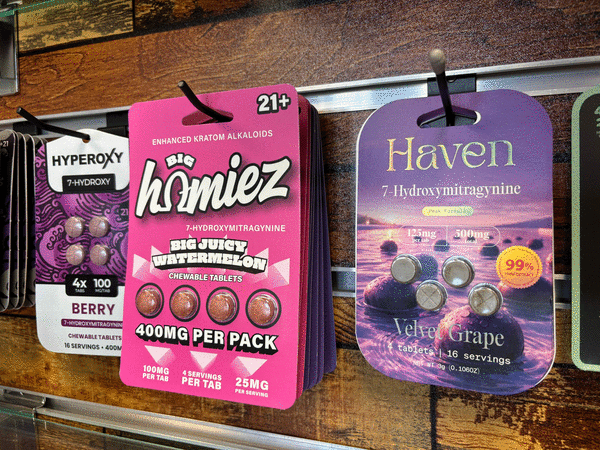
That's when Clark discovered a synthetic form of kratom called 7-hydroxymitragynine — known on the market as 7-OH — that scientists at the University of Michigan said is more potent than the natural plant-derived kratom products on the shelves of convenience stores and tobacco shops.
The 7-OH products, which come in a tablet form, are sometimes referred to as the hard liquor version of kratom. They're also cheaper, Clark said, making them an attractive alternative to the tiny Feel Free bottles that cost about $13 and resemble the popular 5-Hour Energy shots.
The 7-OH tablets typically come in packs of four, with each tablet containing two to four servings, Clark said. Initially, she took the half-tablet serving size each day.
"You take the half a tab, and that's strong and potent and everything. But it doesn't take long until you need to take one tab. And then you're taking multiple tabs a day," she said.
Clark said she was "totally hooked" after the first packet of 7-OH synthetic kratom.
"That stuff, really, that was harder on my body than anything else," she said.
Last July, when Clark was briefly clean, the U.S. Food and Drug Administration moved to declare certain 7-OH kratom products a Schedule I controlled substance, joining heroin, ecstasy and peyote. The FDA also has warned that kratom use can lead to liver toxicity, seizures or substance use disorder.
Public health and law enforcement agencies across Michigan have also been grappling with how to handle individuals with kratom addictions — and just how widespread it might be. Since it’s not illegal, police aren’t thoroughly investigating kratom-related deaths, said Jeff Watson, the police chief of Brownstown Township.
"That's probably why it's not showing up more than it is," Watson said. "But it scares the heck out of me that it's absolutely available to my kids and grandchildren."
How U.P. woman broke her addiction to kratom
Clark said the synthetic kratom caused damage to her kidneys, stress on her heart and sores to break out on her face.
“She looked like a meth addict," said Case, Clark's mother. "Her skin tone was yellow. She couldn’t hide it.”
The facial sores added a new level of shame to her drug addiction, Clark said, as she continued to seek out kratom on a daily basis, often at a Wild Bill's Tobacco chain store where the substance is sold.
"I felt like a ghost of myself," she said. "When you are embarrassed to show your face to the guy at Wild Bill's, you know that's a rough spot to be in."
Last June, Clark and her husband went to his parents' home in Indiana for her to detox. The intervention spiraled out of control, and Kieron Clark ended up calling the police when he deemed his wife a threat to herself.
"I ended up running from them barefoot into the field behind my house and hiding like I was on 'Cops' or something," Melanie Clark said.
That incident prompted Kieron Clark to have his wife involuntarily committed at the psychiatric wing at the University of Michigan Hospital in Ann Arbor. Melanie Clark then went through an outpatient program at Pine Rest Psychiatric Hospital in Grand Rapids, her mother said.
In August, Clark said she relapsed again. That's when a doctor prescribed suboxone, an opiate replacement used to help heroin addicts during withdrawal from the drug.
"Suboxone has been a game changer for me," Clark said. "I don't really feel safe going off of that medication until kratom is banned, because I can't take any risks."
Kratom industry, retailers lobbying against a full kratom ban in Michigan
Six states, including neighboring Indiana and Wisconsin, have outright banned the sale of the substance, which the federal Drug Enforcement Administration said gives users "sedative effects" and "can lead to addiction." In December, Ohio's Board of Pharmacy banned 7-OH and synthetic kratom products from the shelves of retailers and a ban on natural kratom products also is in the works, board spokesman Cameron McNamee said.
Legislation seeking to regulate the substance or put age restrictions on it has languished at the state Capitol for a few years.
In March, the Republican-controlled Michigan House voted mostly along party lines on a bill banning the sale of kratom, in the natural or synthetic form. House Democrats expressed concern about an outright ban without any House committee hearings on the issue.
The American Kratom Association, an industry group that doesn't disclose the names of members, has said it would go along with a ban on 7-OH, the extra-potent synthetic form of kratom, when it exceeds 2% or one milligram per serving, the natural amount of 7-hydroxymitragynine found in pure leaf kratom.
Manufacturers of 7-OH have "deceived" consumers into thinking their product is pure leaf kratom, "and they take it — and it's a drug," said Mac Haddow, a senior fellow on public policy at the American Kratom Association, which goes by AKA.
"To say that they all need to be banned, it just doesn't make any sense," Haddow said. "We're hopeful that the state Senate will see the problem here and take appropriate actions to ensure that we protect access to pure leaf kratom products for consumers who benefit from them, and get rid of the bad stuff."
The House-passed legislation has shifted the debate in Lansing from age restrictions or outlawing 7-OH to an outright ban of kratom in all forms, said state Sen. Kevin Hertel, D-St. Clair Shores.
Lawmakers are getting lobbied by the kratom manufacturers, tobacco stores and some individual users with personal testimonies about how kratom is helping them, often to kick another drug habit, Hertel said.
"I don't think that's a proven fact," said Hertel, who chairs the Senate Health Policy Committee.
The "complete unknowns" about kratom warrant a ban on the sale of the substance in Michigan until the FDA can study its effects, the senator said.
"Some people believe it's a safe substance," Hertel said. "But the reality is it can be dangerous, especially when not used properly — and it is addictive."
The potency of different variations of kratom is unregulated and can change depending on how it's ingested and whether it's put under heat, adding to the danger, said Patti Wheeler, a Florida mother whose 27-year-old son Wyatt Wheeler died in 2022 after ingesting kratom.
"There's just so many variables as to what the efficacy or the potency of kratom may end up being once it's ingested," said Wheeler, who is working on a documentary about kratom while lobbying lawmakers to ban the substance in Michigan.
Wild Bill's, the Troy-based mega chain of tobacco stores, said it supports restricting the sale of kratom to individuals age 21 and older.
"Wild Bill's Tobacco has supported bills that would have regulated kratom in such a manner, but those bills have been tabled for more extreme measures that would deprive adults 21 years and older of all helpful kratom products," the company said in a statement to The Detroit News. "We will comply with any future state regulations, as our priority is always the safety and well-being of our customers and communities, and we are committed to responsible retail practices that align with that goal."
Is Michigan prepared for a ban on kratom?
Researchers at the University of Michigan estimated that as many as 150,000 Michigan residents are current or past users of kratom, posing immediate consequences for a ban on the sale of the substance for individuals who are currently addicted.
The state of Michigan already faces shortages in addiction medicine treatment, such as suboxone, said Sean Esteban McCabe, director of the Center for the Study of Drugs, Alcohol, Smoking and Health at the University of Michigan.
“If we have 100,000 or 150,000-plus people who all of a sudden stop using kratom, we need to think about some unintended consequences and get out ahead of it,” McCabe said. "What we could create is something that's worse than what we have now."
In Clark's mind, nothing could be worse than still having easy access to the substance at a corner liquor store or strip mall tobacco shop.
"I didn't think I was doing something unsafe by using this product," she said. "... I would be so elated to see this stuff get banned."
©2026 www.detroitnews.com. Visit at detroitnews.com. Distributed by Tribune Content Agency, LLC.






Comments