Why Cats Walk Under Your Feet and Seem Determined to Trip and Kill You
Published in Cats & Dogs News
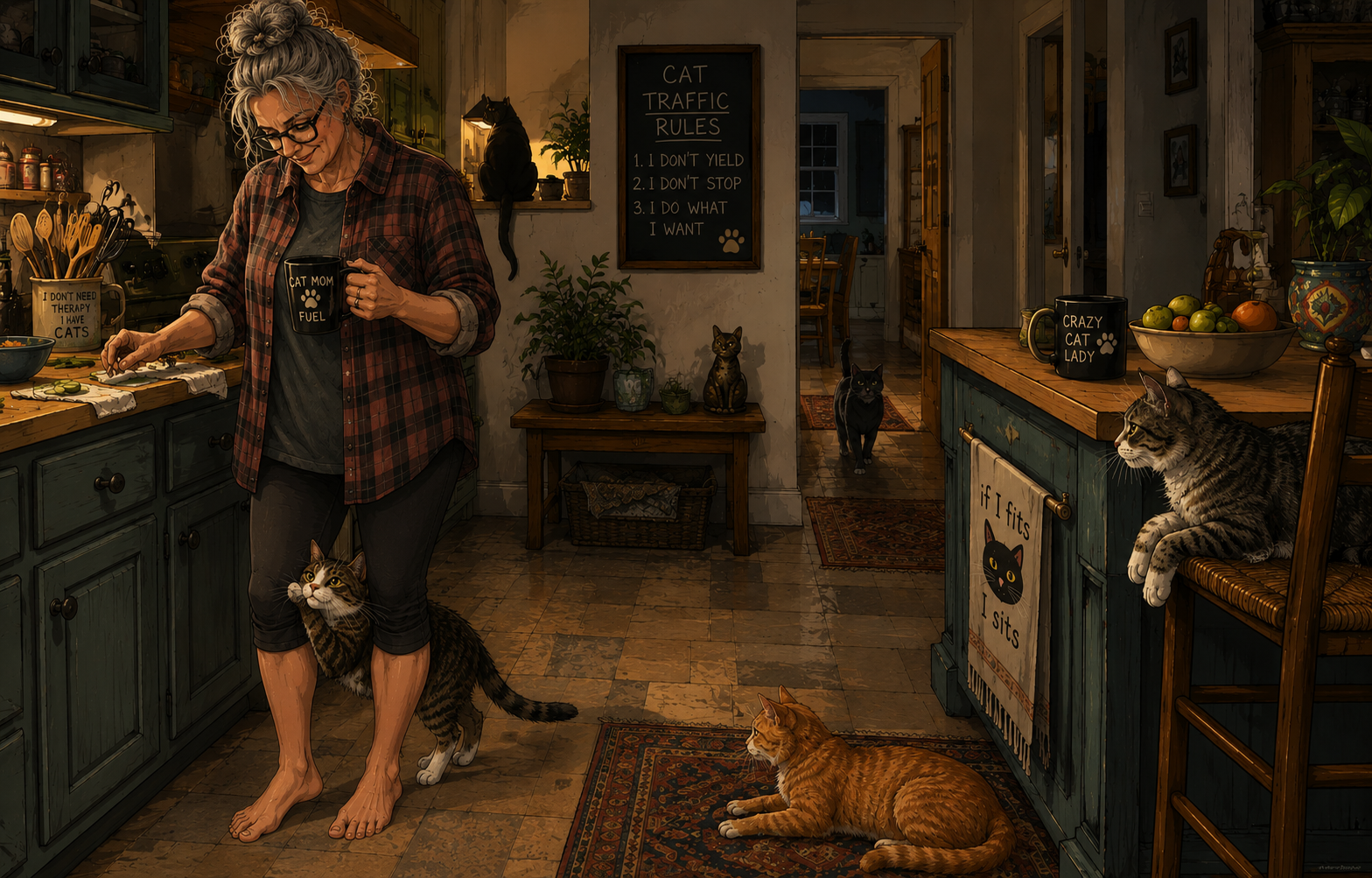
Cats are graceful, agile and capable of leaping onto a narrow shelf without disturbing a single object. Yet many of those same cats appear completely unable to walk through a kitchen without weaving directly between a person’s ankles.
The behavior can feel especially dangerous on stairs, in dark hallways or while someone is carrying hot food. It may seem as though the cat has developed a detailed plan to collect an inheritance. In reality, cats usually walk underfoot for much less sinister reasons involving attention, food, habit and the way they naturally move through shared spaces.
They want your attention
Cats quickly learn which behaviors make people react. Walking quietly beside you may produce nothing. Cutting sharply across your path may cause you to speak, bend down, make eye contact or reach toward them.
Even an annoyed reaction can reward the behavior because the cat has successfully gained attention. From the cat’s point of view, the strategy worked.
Some cats become especially underfoot when their owners return home, wake up in the morning or move toward a favorite sitting area. They may be asking for petting, play or simple acknowledgment.
They think you are heading toward food
The kitchen is a particularly dangerous place for human ankles because cats often associate movement in that room with meals.
A cat may hear a cupboard open, recognize the time of day or notice that a person is walking toward the refrigerator. It then rushes ahead, circles back and repeatedly crosses the person’s path in anticipation.
The cat is not trying to block access to the food. It may be attempting to lead the person toward the bowl while also staying close enough to monitor every movement.
Cats are excellent at recognizing routines. If walking underfoot has ever resulted in a faster meal, a dropped morsel or a treat, the behavior may become firmly established.
They are trying to guide you
Cats sometimes move in front of people because they want them to follow.
A cat may lead an owner toward an empty water bowl, a closed door, a favorite toy or a litter box that needs attention. The cat may look back repeatedly, vocalize or walk a few feet before stopping.
Unfortunately, cats do not always choose a safe or efficient route. Their guiding behavior can resemble a tiny obstacle course, especially if they circle the person’s legs while deciding where to go.
They are showing affection
Cats communicate partly through scent. They have scent glands around the face, body and tail, and they often rub against people and objects they consider familiar.
When a cat brushes against a person’s ankles, it may be greeting them, marking them with its scent or reinforcing a social bond. This behavior is often called bunting when it involves the head or face, but cats may use their entire bodies.
A cat that winds around both legs may be expressing affection. The problem is that the gesture can become hazardous when the person is already moving.
They misjudge your path
Cats are agile, but they are not mind readers. They may predict that a person will continue straight when the person is about to turn. They may also assume they can dart across a path before the next step lands.
Humans and cats move at very different heights and speeds. People look ahead, while cats often focus on feet, nearby objects or the destination. A cat may not realize how difficult it is for a person to stop suddenly.
Older cats, kittens and cats with impaired vision or hearing may be more likely to misjudge movement. A cat experiencing pain, weakness or neurological changes may also move unpredictably and should be evaluated by a veterinarian if the behavior is new or accompanied by other symptoms.
They feel secure near you
A cat may walk close to a trusted person because that person represents safety. This is especially common in unfamiliar environments, busy households or homes with other animals.
Staying beside or beneath a person can provide protection and reassurance. Some cats follow their owners from room to room and settle directly in the most frequently used walkway.
The cat may not understand that lying behind a person’s feet while they cook creates a serious risk. It simply wants to remain nearby.
They are excited or overstimulated
Cats sometimes become more erratic when they are excited. A meal, play session, visitor or open door may trigger quick movements, vocalizing and repeated weaving.
This can be similar to the burst of energy commonly known as the zoomies. The cat is not moving with a practical destination in mind. It is releasing excitement.
A short play session before meals or during predictable high-energy periods may help reduce frantic underfoot behavior.
They may have learned a successful routine
Cats are observant and persistent. If weaving between legs causes a person to stop and fill a bowl, open a door or offer affection, the cat has learned a reliable routine.
Inconsistent responses can strengthen the habit. A person may ignore the behavior most of the time but occasionally provide a treat. That occasional reward can make the behavior even more persistent because the cat never knows when it will pay off.
Changing the pattern requires patience. Reward the cat for waiting in a safer location rather than responding while it is directly underfoot.
How to reduce the tripping risk
Create a designated waiting spot near common activity areas. A small mat, stool or cat bed can give the cat a place to sit while meals are prepared. Reward the cat for using it.
Try feeding on a consistent schedule so the cat does not feel compelled to supervise every trip to the kitchen. Puzzle feeders and interactive toys can provide stimulation and redirect attention.
Move carefully in high-risk areas. Turn on lights in dark hallways, use handrails on stairs and avoid stepping backward without checking. A small bell on a breakaway collar may help some owners locate a quiet cat, although collars should fit properly and may not be appropriate for every animal.
Do not kick, shove or frighten the cat. Punishment can create anxiety without teaching a safer behavior. Instead, pause, redirect the cat with a toy or toss a treat toward the designated waiting area.
Family members should use the same approach. Consistency helps the cat learn that calm waiting receives rewards while weaving does not.
When to speak with a veterinarian
Underfoot behavior is usually normal, but sudden changes deserve attention.
Contact a veterinarian if a cat begins walking unusually close to people while also appearing confused, unsteady, weak or visually impaired. Increased hunger, thirst or vocalization may also indicate a medical problem.
Older cats can develop changes in vision, hearing or cognitive function that affect how they navigate the home. Early evaluation can help identify treatable conditions and reduce the chance of injury.
Your cat probably does not want you dead
Cats may appear to have perfect timing when they step beneath a descending foot, but the explanation is usually ordinary. They want food, affection, guidance, security or a reaction.
The behavior is dangerous because cats are small, fast and often convinced that humans possess better reflexes than they actually do.
With predictable routines, positive reinforcement and a little extra caution, most households can reduce the risk. Your cat may continue to walk directly in front of you from time to time, but it is probably not attempted murder.
It is more likely attempted communication conducted by an animal with poor traffic-management skills.
========
Lenora Vail writes about companion animals, household behavior and the strange negotiations that allow pets and people to live together. She shares her home with two cats who consider every hallway a shared obstacle course. This article was written, in part, utilizing AI tools.








Comments