US and Iran delay nuclear talks as Lebanon clashes worsen
Published in News & Features
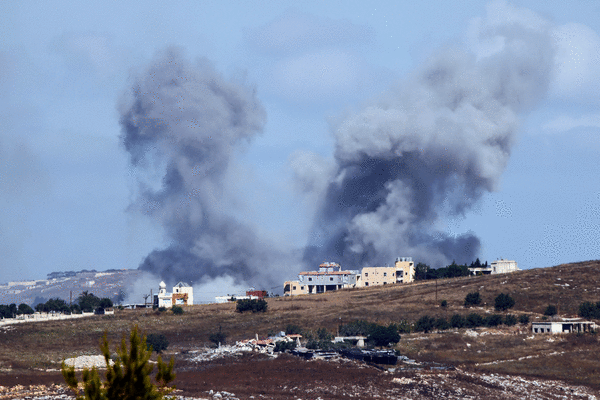
The U.S. and Iran delayed the start of negotiations over a permanent peace deal and Tehran’s nuclear program after fighting intensified in southern Lebanon, a potential setback to efforts to end the war.
The talks, which were meant to take place in Switzerland on Friday, were delayed because of those clashes between Israel and Iran-backed Hezbollah militants, according to two people familiar with the situation, who asked not to be identified due to the sensitivity of the matter.
Iran has insisted on a ceasefire in Lebanon as part of the interim peace deal finalized with the U.S. this week, and didn’t send a delegation to the talks as a result of the fresh hostilities. There’s as yet no indication of a new start date for the discussions.
The postponement of talks represents a blow to U.S. President Donald Trump, who signed a memorandum of understanding on Wednesday despite widespread criticism he was conceding too much to Iran in terms of financial benefits and relief from sanctions. He said the agreement would prevent a global economic crisis, given the critical Strait of Hormuz would reopen to oil and gas shipments.
It’s not yet clear if the developments will affect the strait, where maritime traffic has picked up since Trump and Iranian counterpart Masoud Pezeshkian signed the agreement. Traffic through the waterway — critical for global energy supplies —- appeared to thin early Friday, a day after a surge in renewed oil flows as the two countries vowed to lift a dual blockade.
Oil was little changed, with Brent trading at about $79 per barrel. Prices have still dropped about 9% this week, with traders anticipating the reopening of Hormuz Strait will ease the biggest energy-supply crunch in history.
The fighting in Lebanon was deadlier than usual, with the Israeli military saying four of its soldiers were killed, including a battalion commander. Israel’s attacks killed 18 people, Lebanon’s state-run National News Agency reported, while the Israeli military said it targeted 80 Hezbollah sites.
Strains between the U.S. and Israel over Lebanon are growing. Trump has sworn at Israeli Prime Minister Benjamin Netanyahu in calls, accusing him of almost scuppering this week’s memorandum with Iran by escalating strikes in Lebanon. Israel insists it will keep troops across its borders until it’s sure Hezbollah, designated a terrorist organization by the U.S., is no longer a threat to its northern communities.
Itamar Ben Gvir, Israel’s far-right national security minister, reacted to the latest fighting in Lebanon by saying the Jewish state can’t ignore its security needs, “with all due respect to the U.S.”
“The whole of Lebanon must burn,” he said on X. Israeli politicians are in campaign mode ahead of elections in October, and a significant majority of the public is favor of continuing military operations in Lebanon.
Switzerland’s Foreign Ministry announced on Friday morning the U.S.-Iran talks were “postponed,” without giving a reason. “Switzerland remains ready to facilitate these talks,” it said in a statement. “The relevant preparatory work” at the host resort of Burgenstock is continuing.
Late Thursday, the U.S. said Vice President JD Vance, its lead representative, would not be departing for the face-to-face negotiations in Europe.
Washington and Tehran were meant to begin talks on a so-called “final agreement” for the MOU.
A White House spokesperson cited logistical challenges for the delay. The spokesperson said an American delegation is prepared to depart at the first available opportunity.
The MOU has led to the U.S. lifting a naval blockade of Iranian ports and Iran saying it will reopen the Strait of Hormuz. They have agreed to extend their ceasefire during the new round of talks, which are meant to finish within 60 days but can be extended.
The sides will try to agree on restricting Iran’s processing of uranium, possibly for a decade or more, and destroying or diluting its existing stocks of highly-enriched uranium.
The U.S. and Israel started bombing Iran on Feb. 28, saying they needed to stop the country building an atomic weapon. Tehran’s long denied wanting to do that but has enriched uranium to far beyond the levels needed for nuclear power plants.
The war caused energy prices to soar and pushed up inflation globally, while U.S. allies such as the United Arab Emirates and Qatar were targeted with thousands of Iranian drones and missiles.
Many atomic experts say 60 days won’t be enough to work out a permanent deal with Iran, given the complex and technical nature of the topic. A 2015 nuclear accord between Iran and world powers including the U.S., which Trump regularly derides and abandoned during his first term, took about two years to complete.
As the two nations begin to stake out negotiating positions, Vance and Trump have sought to counter criticism — including from political allies and Israelis — that Iran had gotten the better of them.
“We’re worried about what’s in the best interests of the American people,” Vance told the New York Times Opinion columnist Ross Douthat in an interview published on Thursday.
Vance also downplayed concerns Iran could eventually impose tolls on traffic through the Strait of Hormuz, a move that would turn the crucial passage into a moneymaker for Tehran.
“We believe international waterways should be free of tolls,” he said, noting that the countries in the region “together will figure out a proper security framework for the strait in the future.”
If the chokepoint is not open, Vance added, “there’s not going to be a final deal.”
Crude prices remain roughly 30% higher for the year because it will take months, if not longer, for oil and liquefied natural gas flows through Hormuz to return to normal. Moreover, the U.S. and many other countries have run down emergency petroleum stockpiles at a record rate to keep a lid on prices during the war. Those will have to be replenished, which will add to global demand.
Trump reiterated that global energy pressures influenced his decision to sign on to the MOU deal.
“We wouldn’t have oil for months,” he told Axios. “As long as you’re dropping bombs, that thing is automatically closed,” he said of the strait,” adding “this is the kind of thing that could cause a worldwide depression.”
—With assistance from Jon Herskovitz, Dan Williams, Kate Sullivan and Bastian Benrath-Wright.
©2026 Bloomberg L.P. Visit bloomberg.com. Distributed by Tribune Content Agency, LLC.






Comments