Idaho bill targets students who protest during school. What happened to it?
Published in News & Features
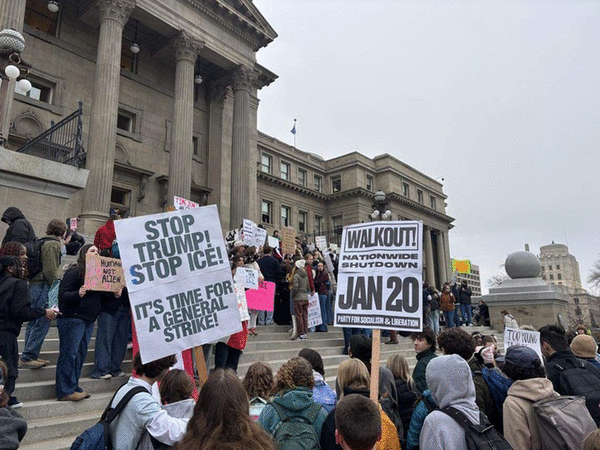
BOISE, Idaho — Lawmakers on Wednesday turned down a bill that would have targeted students who leave school during the day to protest.
Under the bill, which died on a tie vote in the House Education committee, schools would be barred from granting students excused absences if they left to participate in political protests, to work or volunteer for a group known to engage in political protests or to take part in student walkouts.
A student engaging in these activities would receive an unexcused absence for the whole day, and it would be counted against the district’s average daily attendance numbers, which are used to determine funding. The total number of absences relating to protests would then have been reported to the state superintendent.
During a hearing Wednesday, the bill’s sponsor, Rep. Steven Tanner, R-Nampa, argued that recent student walkouts have been large and disruptive. He passed out materials to House Education committee members that he said included news articles about student walkouts over the past few months. The Idaho Statesman requested copies of the materials from Tanner, who did not respond by Wednesday afternoon.
“While we recognize the First Amendment right to protest and to use political speech by all students, it’s a waste of taxpayer money for students to leave their classrooms to do so,” Tanner told committee members. “Students are free to protest at any other time.”
The bill says “political activism has no place in public education,” and that allowing excused absences for students participating in political action “invites political favoritism from school districts.”
Lawmakers raise questions about parental rights
During the hearing, lawmakers asked questions about how the bill would affect parental rights and whether parents have the ultimate authority over whether their child receives an excused or unexcused absence.
“If a parent decides that it’s OK and they feel like their kid’s going to learn more about government and the proper way to address their concerns about something that’s going on in the community, is this, in your opinion, is this a step on parental rights?” Rep. Dan Garner, R-Clifton, asked.
Garner shared his own experiences of participating in a walkout when he was a student over the school’s dress code, which he said banned women from wearing Levi’s. He said he learned more about civics and government that day than he did in government class.
Rep. Chris Mathias, D-Boise, said he was concerned about the state “sticking its nose” in the relationship between parents, children and their schools. Others worried that kids would be restricted from participating in any events related to politics and said the bill would add another burden for school districts.
Tanner disputed that the bill would restrict students’ rights to free speech or inhibit parental rights.
“This is not silencing any voices,” Tanner said.
Students across Idaho have held walkouts over several issues in recent years. In January, students at local high schools left their classrooms to participate in the Free America walkout to protest on issues including affordability, reproductive rights and Immigration and Customs Enforcement, according to previous Statesman reporting.
Students deserve a voice, testifiers say
Several people testified on the bill, including a handful of current and former students who shared their experiences of walking out during school and the importance of being able to engage with the political process.
Olivia Luna, the president of Babe Vote, said students have been at the center of numerous political movements.
“We are concerned with the message it would send to young Idahoans,” she told the committee. “Most high school students that this bill would target aren’t even old enough to vote, and still, decisions are made that dictate their lives every single day.”
Students should be able to voice their concerns without getting “disproportionately punished,” she said.
Students are already marked absent when they are not in school, but the bill would create “serious practical and legal concerns,” said Quinn Perry, the deputy director of the Idaho School Boards Association.
“This bill solves no existing problem,” she said. “Students who leave to protest are already counted as absent. But it does create a new administrative burden, creates enforcement problems, infringes on parental rights and entangle schools in monitoring constitutionally protected activity.”
_____
©2026 The Idaho Statesman. Visit idahostatesman.com. Distributed by Tribune Content Agency, LLC.





Comments