I’ve been studying election integrity for 26 years, and here’s why I expect a normal election this November instead of chaos
Published in Political News
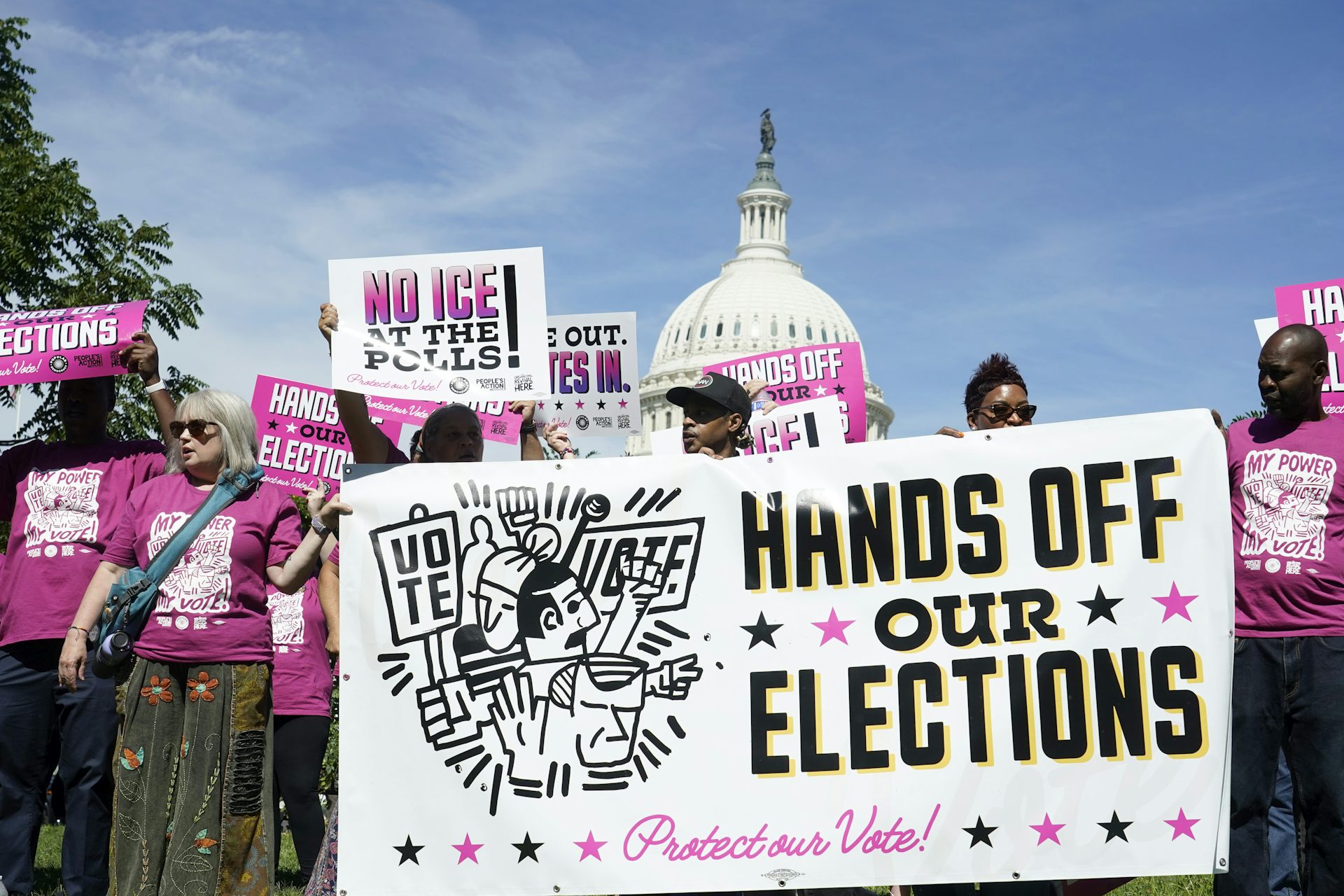
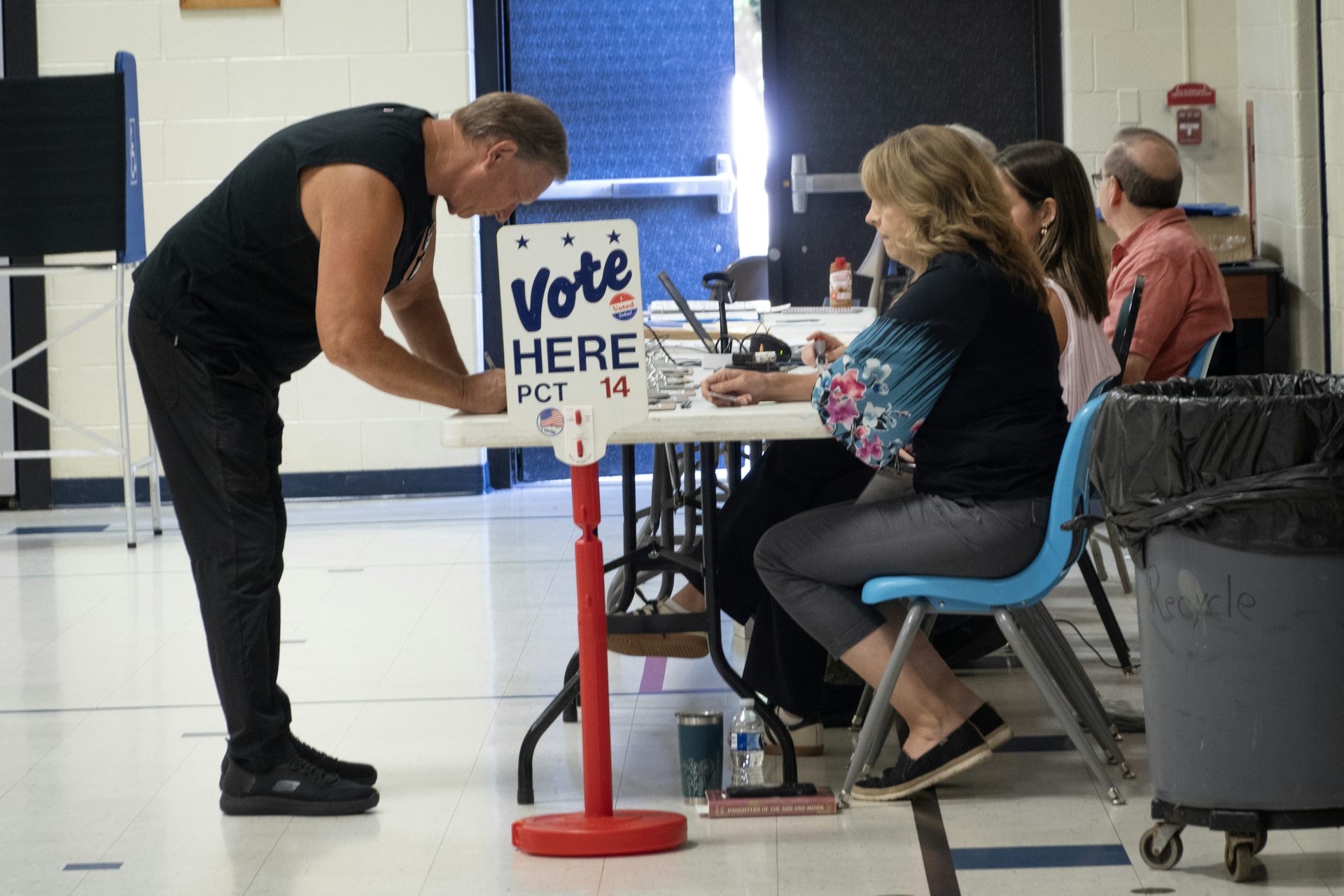
Fear of federal interference in the 2026 midterms, from intimidation stoked by armed officials at the polls to seizure of ballots, has been growing in the United States. That’s led state and local voting officials across the country to draw up plans for scenarios requiring them to summon law enforcement or prepare legal filings so they can keep the polls open.
In an interview with The Conversation’s politics and legal affairs editor Naomi Schalit, election law scholar Justin Levitt takes the temperature down a bit. Levitt says that while voting officials’ preparations mean they are doing their jobs, the anticipated election interference won’t happen – in part because of that preparation.
Schalit: Could we see widespread intimidation and challenging of voters at the polls?
Levitt: It’s extremely unlikely. I completely understand that Americans are freaked out. They are at an electric level of anxiety right now, not just about the world but about the coming elections. But I don’t think the intimidation and challenges they’re fearing or forecasting are going to manifest for a couple reasons.
I have run a nationwide election protection program. It’s real work to get people to dedicate a full day to helping others. It’s that much harder to recruit a group of people to show up and look for fraud, and fraud at scale doesn’t really happen. It’s even harder to recruit people to show up to actively intimidate voters.
Not that many people are in for it – there are keyboard warriors who love to act out online, but to actually show up is a totally different thing. And they’re really risking either getting thrown out of the polling place or going to jail, because intimidating voters is a crime.
What about intimidation and challenges by government officials?
On the government side, which is something people are also really freaked out about, we are a giant country and there are almost 100,000 polling places. The logistics of an intimidation operation don’t work countrywide.
To go from Step A, I’d like to intimidate people, to Step C, intimidate people everywhere? You’re missing a pretty giant Step B.
Here’s what I believe will happen: The federal government will send a group of a dozen goons to a suburban polling place somewhere, and they’ll have a camera crew with them. Bystanders will happily oblige them in filming. That clip will go viral and scare voters into not showing up at the polls because they think that there are individuals intimidating voters all over the place.
If people are worried about intimidation, go outside and see for yourself that in your neighborhood things are very normal. Even if social media depicts pure chaos.
Local and state election officials are preparing for mayhem or interference by the federal government. Are their efforts just based on overwrought imaginations?
No, they are being responsible. It’s their responsibility to prepare for everything so that the voters don’t have to worry about it. And they are as prepared as I have ever seen them. They’re preparing for a lot of truly outlandish scenarios, and some that are more realistic, so that they can be ready to make sure that the election is smooth and secure and feels very normal.
Could ballots be seized by state or federal officials?
Ballot seizure is also very much on people’s minds, and I think it’s particularly salient because the feds did it in Fulton County, Georgia, and because local sheriffs did it in Riverside, California. But there are two big reasons that’s not going to happen this fall.
First, the seizures in both Fulton County and Riverside were of old ballots. Fulton County’s ballots were 6 years old. California was more recent. It was a 2026 seizure for the 2025 elections, but those elections were still over and results had already been tallied.
That’s very different from an attempt to seize ballots while results are still pending, which is flatly unconstitutional. I just worked on an article with the former chief of the public integrity section at the U.S. Department of Justice. We did a lot of research and we think there’s never before been a federal warrant to seize ballot material when the results are pending. And that’s because judges don’t like to sign off on things that are illegal.
These seizures, in Fulton County and in Riverside, California, surely took the judges in those districts by surprise. Judges see applications for search warrants all the time, all day, every day. But warrants for election materials when the results are still pending are vanishingly rare. The warrants in Fulton and Riverside did us a favor because there are very few judges anywhere who are going to be surprised right now. Those seizures were big news.
In Fulton County, the judge allowed it, but he said very, very clearly this would be different if we were talking about a pending election where results weren’t still in the door. In California, the trial judge signed off on it. But the California Supreme Court came back just about a month ago, said this was absolutely, flatly illegal, there is absolutely no reason why a sheriff needs to seize these ballots. It is unlawful under California state law in a way that mimics other states’ laws too.
If somehow ballots get seized during the election process before they are counted and certified, that would mean that the chain of custody was broken and they would no longer be valid. Is that correct?
In the extraordinarily unlikely event that there’s actually a seizure, we’re in a little bit of terra incognita. It’s not entirely clear what happens. There will be immediate efforts legally to get the ballots back.
But the election system is built with belts and suspenders. If there’s a seizure of some materials, that doesn’t mean there’s a seizure of all materials or all materials relevant to a count. Sometimes there are paper ballots that are backed up by electronic copies, or vice versa. So what’s really important is that the election officials have a set of reliable records they can count.
The federal government may come in and say, “Give us the materials,” and the states are likely to say, “How about we make you copies?” And that’s fine. They can go off and have their copies and do whatever they want with them as long as the states are still able to count the records. It’s not really clear what would happen if there’s an extended lapse where the ballots are out of state custody. It’s not that those ballots are immediately invalid, but there’d be a fight about it.
I’ve been covering politics for a long time, and in the past 10 years the number of times we’ve gone into terra incognita was entirely unanticipated. Which is why I have to ask certain questions that seem completely implausible.
I’ve been working on elections for a couple decades now. My list of things to watch out for in 2000 was long. My list of things to watch out for in every subsequent election grew longer. The last couple of years, my list of things to watch out for has spilled off the page and onto the floor. For election officials, it’s a lot. They are stressed out, they’re underpaid, they’re overworked.
But all that said, they’ve got this. They’re actually as prepared as I have ever seen, including dealing with things that they haven’t ever seen before and should never have to be seeing.
I understand why people are afraid. I understand why people think there are risks. And that’s because it’s not normal to have the president fostering this much concern about the democratic process and who is this unattached to the democratic process.
But the good news is the process doesn’t depend on the president. It depends on us.
This article is republished from The Conversation, a nonprofit, independent news organization bringing you facts and trustworthy analysis to help you make sense of our complex world. It was written by: Justin Levitt, Loyola Law School Los Angeles
Read more:
What the law says about armed officers at polling places
Meet the ‘independent voters’ who will likely decide which party triumphs in the 2026 midterm elections
2 midterm elections that brought on new eras in US politics
Justin Levitt does not work for, consult, own shares in or receive funding from any company or organization that would benefit from this article, and has disclosed no relevant affiliations beyond their academic appointment.













































Comments