Dan Rather has followed the news wherever he goes, in a career that highlights 75 years of evolving journalism
Published in Political News
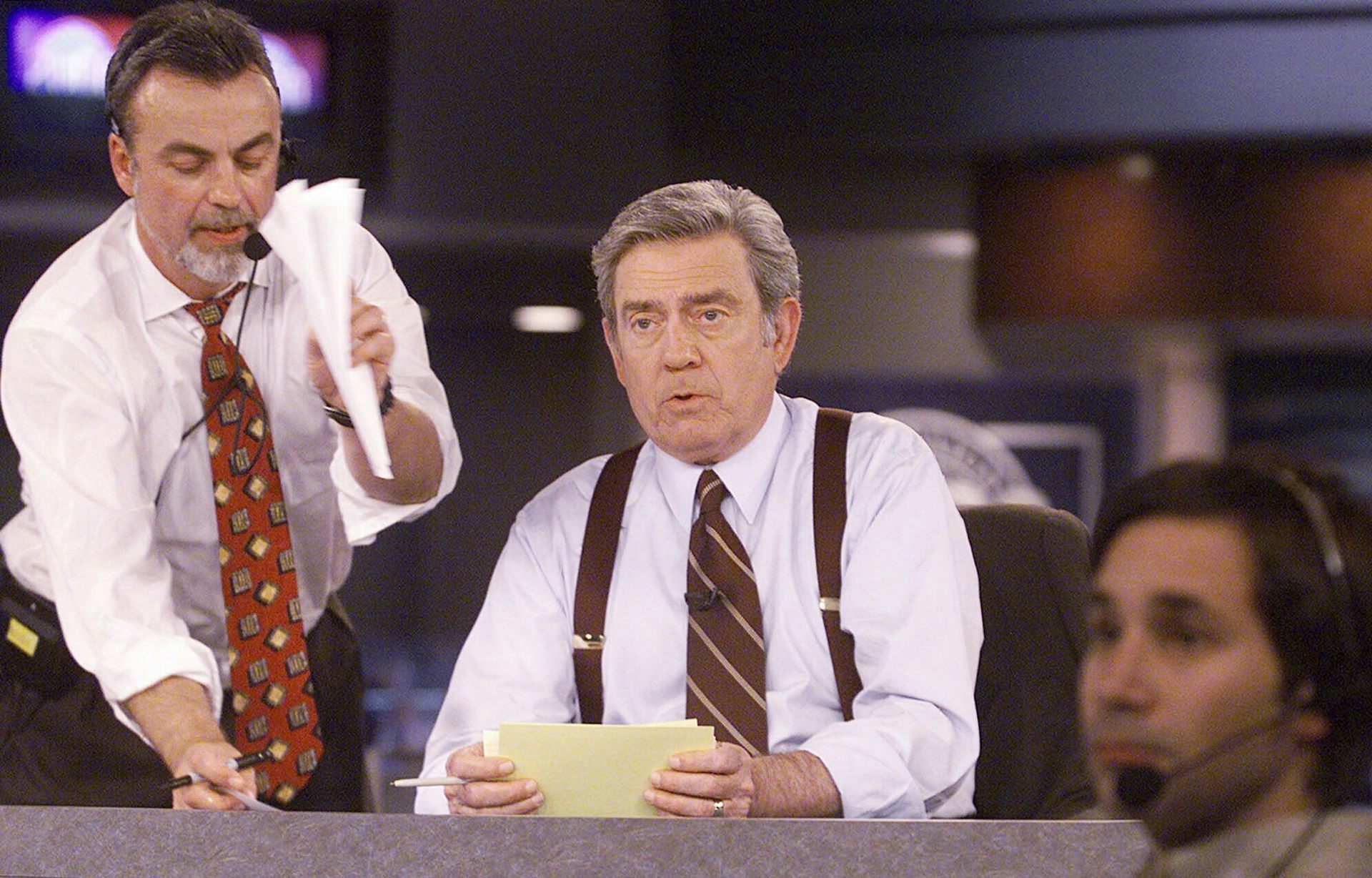
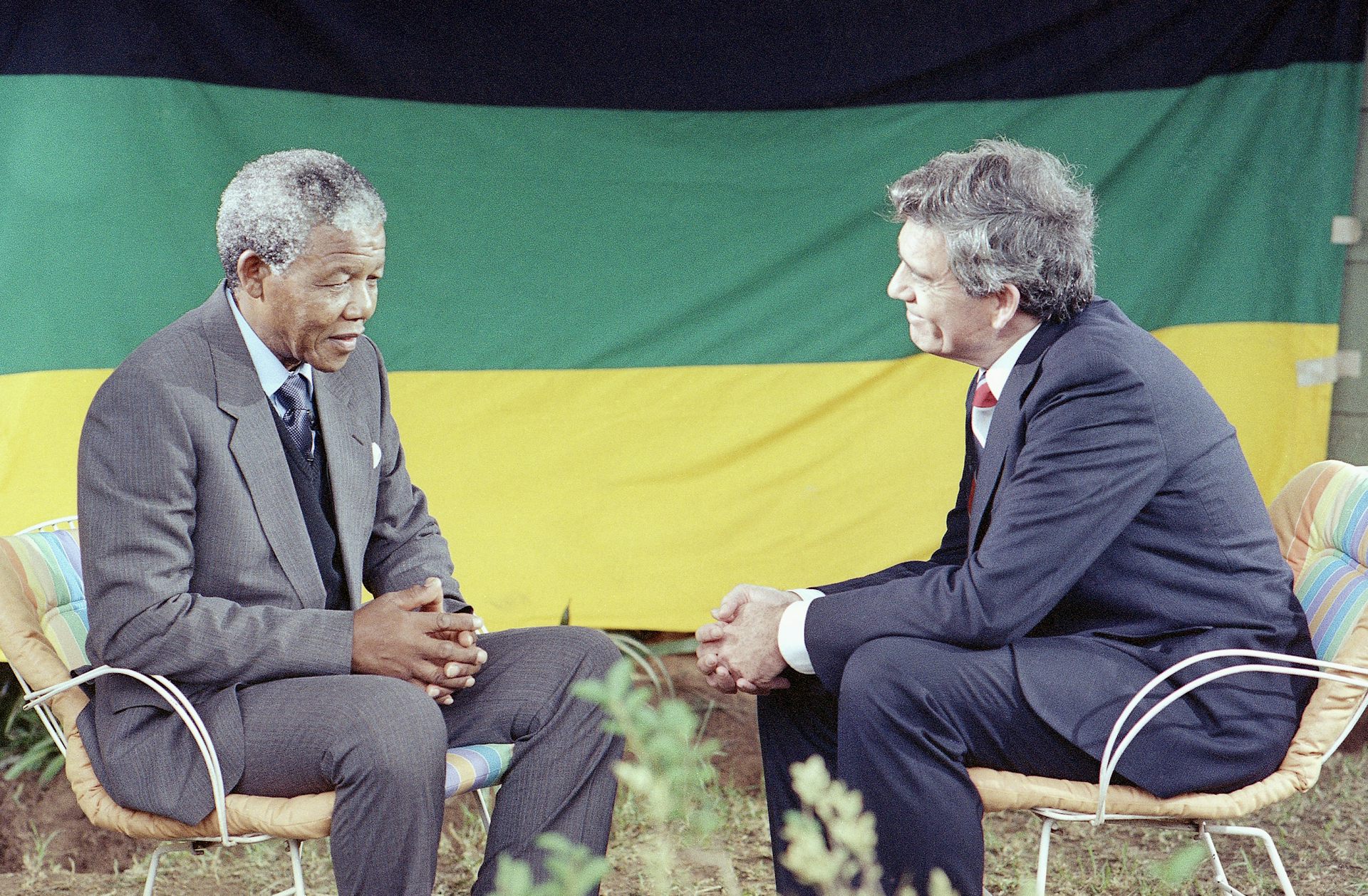

In television news, there are two roles in front of the camera: reporter and anchor.
During four decades at CBS, Dan Rather played both roles. On March 9, 1981, he took over the position of nightly news anchor from Walter Cronkite, one of the most influential faces in network television. Although Rather held that job for 24 years, first and foremost he embraced being a reporter.
Today, as his 95th birthday birthday approaches on Oct. 31, Rather remains engaged with news as a social media commentator, with plenty to say about the Trump administration and the state of journalism.
Rather began as a regional reporter in Texas and became chief of the network’s Southern bureau in 1963. In the first of many high-profile career moments, he organized the network’s local coverage of President John F. Kennedy’s Nov. 22, 1963, visit to Dallas, where Kennedy was assassinated.
After covering the Nixon White House, the Vietnam War and other domestic and international stories, Rather became one of television’s “Big Three” nightly news anchors in 1981. For the next two decades, Rather on CBS, Peter Jennings on ABC and Tom Brokaw on NBC, were prominent faces of the last era in which legacy media companies truly set the news agenda.
In his reporting tenure, Dan Rather repeatedly tangled with U.S. presidents. He brought that reporter’s attitude to the anchor role. Rather didn’t just preside over news stories – he was immersed in their preparation and aware of their potential impact.
I teach communication and have written about the history of television and the intersection of media and politics. In my view, the most-cited moments in Rather’s long career reflect the on-edge, on-the-scene, news-gathering spirit of legendary CBS newsman Edward R. Murrow, rather than the avuncular style of a corporate American media host.
Murrow first became known for reporting directly from the London Blitz bombings via radio in 1940 and 1941. At home through the 1950s and 1960s, Murrow delivered unflinching TV documentary reports on subjects that included Sen. Joseph McCarthy’s pursuit of alleged communists in the federal government and harsh working conditions faced by migrant farmworkers.
As a reporter, Rather also covered stories with major national impact. Following the Kennedy assassination, he solidified his credentials as CBS’s White House correspondent during the Johnson and Nixon administrations and, in 1966, he was sent at his request to report from Vietnam.
Back stateside, Rather covered the divisive and bitter 1968 presidential campaign. As a determined floor correspondent at the Democratic National Convention in Chicago, he was knocked down on camera by security guards while trying to interview a Georgia delegate whom the guards were removing from the convention floor.
Rather found his strongest reporting voice during the Nixon administration, pressing for details about the Watergate break-in and subsequent White House efforts to cover up the episode. His questions began to venture into the sensitive topics of potential resignation or even impeachment.
Over time, Rather was cast as Nixon’s most prominent onscreen adversary. When Nixon resigned in August 1974, Rather acquired a lasting reputation for helping to hold a U.S. president accountable.
After Nixon’s resignation, Rather’s presence at CBS News grew. He served as weekend news anchor and chief correspondent for the documentary series “CBS Reports,” and he joined the weekly news magazine “60 Minutes” in 1975.
One of his most-discussed reports was a 1980 story on the Russian occupation of Afghanistan. To cover the war firsthand, Rather and his team dressed in local garb and crossed the border from Pakistan into Afghanistan, where they interviewed resistance fighters and visited battle sites.
Critics praised the segment for showing U.S. audiences the stakes in a faraway conflict; they also rebuked Rather and “60 Minutes” for showboating. Washington Post media critic Tom Shales wrote, “It’s hard to decide whether Murrow is smiling down approvingly or spinning in his grave.”
In 1981, Rather won the competition to succeed Walter Cronkite as “CBS Evening News” anchor, a position he would hold for 24 years.
Rather’s style and demeanor were noticeably different from Cronkite’s reassuring cadence. Even behind the anchor desk, Rather’s inquisitive manner and reporter’s instincts for confrontation were well known. Those traits could be seen as either powerful assets or indicators of biased coverage.
Rather also continued to report, through CBS vehicles such as “48 Hours,” a show that investigated crime and justice stories, and the spinoff show “60 Minutes II.” His pursuit of international and domestic stories earned numerous Emmy and Peabody awards – more than a dozen in the 1980s alone – and he also received special honors, including his 2004 induction into the Television Academy Hall of Fame.
Rather’s trajectory changed abruptly after he reported a 2004 “60 Minutes II” segment about then-President George W. Bush’s service in the Texas Air National Guard in 1968-1974. The segment raised questions about whether Bush – whose father was former president George H.W. Bush – had received preferential treatment that kept him from being sent to fight in the Vietnam War.
Critics challenged the authenticity of some documents that CBS cited in the report, and an external review panel concluded that the network had failed to authenticate them properly. The network apologized; Rather defended the report initially but conceded after several weeks that the materials should not have been used. The debacle became known as “Rathergate.”
Rather’s CBS contract was not renewed. He left the anchor chair in 2005 and the network in 2006, asserting in his departing press statement, “I will do the work I love elsewhere.”
Before leaving CBS, Rather urged citizens and journalists alike to take on the tough battles. “Whether it’s City Hall, the Statehouse or the White House, part of our job is to speak truth to power,” Rather said in a 2006 speech in Seattle.
Cable news offered Rather an alternative. Over the next 15 years he hosted several in-depth reporting and interview programs on cable channels. There, he embraced being a news reporter who could call his own shots and criticize people in positions of power in politics and business.
In his 80s, Rather took to social media, attracting hundreds of thousands of followers via Facebook, the social platform X, formerly Twitter, and Steady, a newsletter distributed via the Substack platform. He quickly adopted the language of short-burst online communication, using snark and style in the service of delivering solid journalism.
Today, the Trump administration is widely viewed as waging war on the mainstream media. President Donald Trump regularly calls journalists the “enemy of the people,” has tightly limited reporters’ access at the White House and the Pentagon, and has sued numerous media outlets for what he calls unfair or defamatory coverage.
In response, many large media companies are taking steps that critics see as pulling punches or currying favor with the Trump White House. For example, in the fall of 2025 CBS News adopted new rules that bar editing recorded interviews before they air.
This step came after the network’s parent company paid Trump US$16 million to settle a lawsuit over its editing of a 2024 interview with Democratic presidential candidate Kamala Harris. CBS also hired Kenneth Weinstein, a prominent conservative and former think tank executive, for a new ombudsman position.
In a Substack post, Rather called the changes evidence that CBS “has tipped over the precipice: that corporate overlords in concert with an autocratic president are demolishing support for independent journalism in favor of financial gain, and in so doing undermining a key foundation of our democracy.” His warning echoed Murrow’s famous 1958 speech urging broadcast leaders to use the power of the medium to teach, illuminate and inspire, rather than letting it become “nothing but wires and lights in a box.”
Dan Rather has pursued that mission throughout his career, even as the players and technologies have changed. He has consistently embraced the challenges, and satisfaction, of being a journalist intent on holding powerful people accountable – including the heads of news organizations.
Harry Castleman, co-author with Walter Podrazik of “Watching TV: American Television, Season by Season,” contributed to this article.
This article is republished from The Conversation, a nonprofit, independent news organization bringing you facts and trustworthy analysis to help you make sense of our complex world. It was written by: Walter Podrazik, University of Illinois Chicago
Read more:
What should journalists do when the facts don’t matter?
Even as Jimmy Kimmel returns to the airwaves, TV networks remain more vulnerable to political pressure than ever before
ABC’s and CBS’s settlements with Trump are a dangerous step toward the commander in chief becoming the editor‑in‑chief
Walter Podrazik is a board member at the Library of American Broadcasting Foundation. He is Television Curator at the Museum of Broadcast Communications in Chicago, and serves on the development for its current Johnny Carson Centennial and Evolution of Late Night exhibits. He is president of the Society of Midland Authors.





































Comments