The long afterlife of QAnon conspiracy theories haunting American politics
Published in Political News
On Election Day in 2024, as voters cast their ballots, Elon Musk posted a campaign music video supporting Donald Trump’s bid for president.
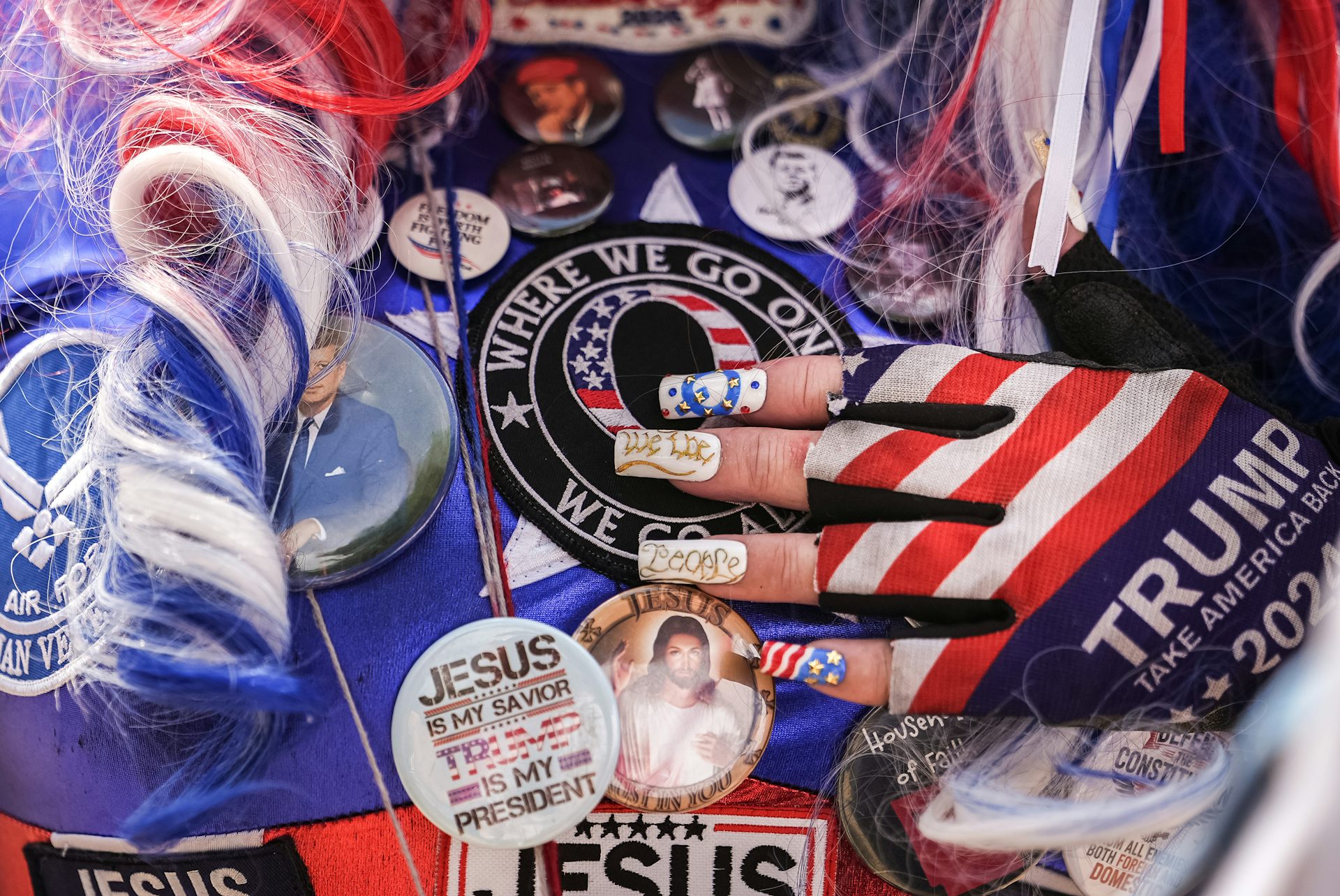
Set to Van Halen’s “Jump,” with a montage of 1980s cultural references and images of Trump in various strongman poses, the video includes a line about “PATRIOTS” in which the “O” turns into a “Q,” a reference to the online conspiracy theory QAnon.
Started on the online forum website 4chan in 2017, QAnon spread false, far-right theories on social media about a shadowy cabal of satanic pedophiles among the political elite, which Trump was purportedly fighting alongside a mysterious ally named “Q.”
As a scholar of conspiracy theories and extremism, I’ve watched QAnon seep from the margins into mainstream American politics over the past decade. While Q stopped posting in 2022, the movement did not disappear. As we near the 10-year anniversary of QAnon, these theories continue to haunt America’s politics.
Building on the 2016 “Pizzagate” conspiracy theory, which claimed Democrats were trafficking children in the basement of a pizza restaurant based on interpretations of Hillary Clinton’s leaked emails, QAnon appeared on 4chan in October 2017 with claims that Clinton was about to be arrested.
That’s when someone calling himself Q claimed to be an intelligence operator trying to expose the “deep state,” a purported shadow government secretly controlling global events in pursuit of a satanic agenda. QAnon invited users to build the theory by decoding messages on social media. That work, Q claimed, would expose a satanic cabal of pedophiles among the elites.
The theory is an example of what author Naomi Klein has called a “conspiracy smoothie,” mixing existing theories into a vast conspiracy map, which absorbs existing conspiracy theories about events such as 9/11 or the JFK assassination into itself. The result is a sprawling theory combining paranoid interpretations of current events with historical conspiracies.
Polls suggest that 20% of Americans had favorable views of QAnon as late as 2022.
Many of Trump’s nominations for high-ranking posts were figures who had previously been considered on the fringes of national politics. Some of them have brought conspiracy theories into the highest echelons of government.
FBI Director Kash Patel, for example, has been sympathetic to QAnon. He appeared on a show hosted by a QAnon influencer before being selected to run the agency. And Robert F. Kennedy Jr. has advocated anti-vaccination conspiracy theories also shared by QAnon.
I’m particularly fascinated by the ghost of QAnon – how the theory continues to haunt politics today. Philosophers call this tendency “hauntology”: Political ideas and movements may die, but they continue to haunt our present.
Q’s ideas have not dissipated. It’s what I call QAnon’s afterlife, or the transformation of QAnon from a conspiracy theory to a political vocabulary. In fact, the movement’s vocabulary quickly began to appear in official government circles at the start of Trump’s second term.
In March 2026, for example, the official X account for the White House posted a photo of a mustachioed fighter pilot with the QAnon tagline “Patriots are in Control.” While the phrase may pass as mundane, I believe it is a clear reference to QAnon language, first used by Q in October 2017.
The U.S. Department of Labor posted the same phrase over an image of Trump in January 2026. Lori Chavez-DeRemer, who has publicly advocated deep state conspiracies, ran the department until she resigned on April 20, 2026.
And Musk, the former head of the Department of Government Efficiency, celebrated America’s 250th birthday with an AI-generated video called “Sweet Land.” This post generated buzz because it referenced QAnon and prompted an online scavenger hunt for Q symbols.
Amid the U.S. war with Iran, some government officials have turned to QAnon for inspiration.
The official account for the Pentagon’s chief technology officer, Emil Michael, has posted propaganda using Q catchphrases as military slogans. For example, the department posted a picture of a Marine saluting Trump with the phrase “Trust the Plan.”
On Truth Social, Trump posted a meme of himself on the deck of a battleship with the words “It was the Calm Before the Storm,” a cryptic phrase first used by Trump while meeting with military leaders in October 2017. Almost exactly one month later, the phrase appeared as a central QAnon concept.
The use of Q phrases by government agencies during wartime has excited online conspiracy theorists. They see it as an official endorsement that “the storm” will soon be upon us, a time of upheaval and punishment of the shadowy deep state. For these conspiracy theorists, Trump and Q will bring about “the storm,” to be followed by a golden age.
Whether or not these references to Q posts by official government accounts are truly ideological or simply trolling is less relevant than the effect they have.
Official uses of Q language have invigorated conspiracy theorists to advance new theories, undermining public health, governance and civil society.
And the Jeffrey Epstein files, which have exposed the late financier’s private network and financial dealings, have only lent credence to QAnon theories among believers. That’s because Q referenced Epstein Island in drops of information on 8chan and other message boards.
I believe these ghostly eruptions of QAnon conspiracy theories into the public will only continue to divide Americans at a time of social and economic crisis.
This article is republished from The Conversation, a nonprofit, independent news organization bringing you facts and trustworthy analysis to help you make sense of our complex world. It was written by: Matthew N. Hannah, University of Wisconsin-Madison
Read more:
How the QAnon movement entered mainstream politics – and why the silence on Epstein files matters
Why the chemtrail conspiracy theory lingers and grows – and why Tucker Carlson is talking about it
Fauci’s COVID‑origins hearing shows how conspiracy theories became political weapons
Matthew N. Hannah does not work for, consult, own shares in or receive funding from any company or organization that would benefit from this article, and has disclosed no relevant affiliations beyond their academic appointment.





























Comments