Why ‘democratic neutrality’ is an overlooked threat to American democracy
Published in Political News
In recent years, a growing number of elected officials have questioned or outright denied the results of elections, sought to undermine freedom of speech, and attempted to bend electoral rules to benefit themselves.
Only a sliver of Americans say they support these kinds of antidemocratic actions. For example, just 8% of Americans support making it harder for their political opponents to vote.
So how do politicians who espouse antidemocratic views continue to win elections if these policies are so unpopular?
As scholars affiliated with the Rooney Democracy Institute at the University of Notre Dame, we analyzed surveys of over 48,000 Americans conducted by YouGov, NORC at the University of Chicago and Bovitz between September 2022 and July 2025 to try to get an answer.
A key finding emerged: A significant swath of Americans were actually indifferent toward antidemocratic practices.
This is an important distinction. Prior research tended to assume that if a person doesn’t support antidemocratic practices, then they must oppose antidemocratic practices. In other words, if only 8% of the public supports making it harder for political opponents to vote, then roughly 92% of Americans must oppose making it harder for opponents to vote.
However, our research shows that there is actually a big chunk of Americans – at times a proportion as large as 52% of voters – who neither support nor oppose antidemocratic practices. While only a small number of Americans outright support violating core democratic norms, many Americans express no opinion about politicians who undermine democracy.
We call this attitude toward antidemocratic practices “democratic neutrality,” and we believe it’s an overlooked and understudied threat to democracy.
We see democratic neutrality as key to explaining the success of antidemocratic politicians in America.
To illustrate: Only about 1 in 10 Americans agree that politicians should be loyal to their political party over the Constitution. But politicians who flout constitutional norms have won races at all levels of the government.
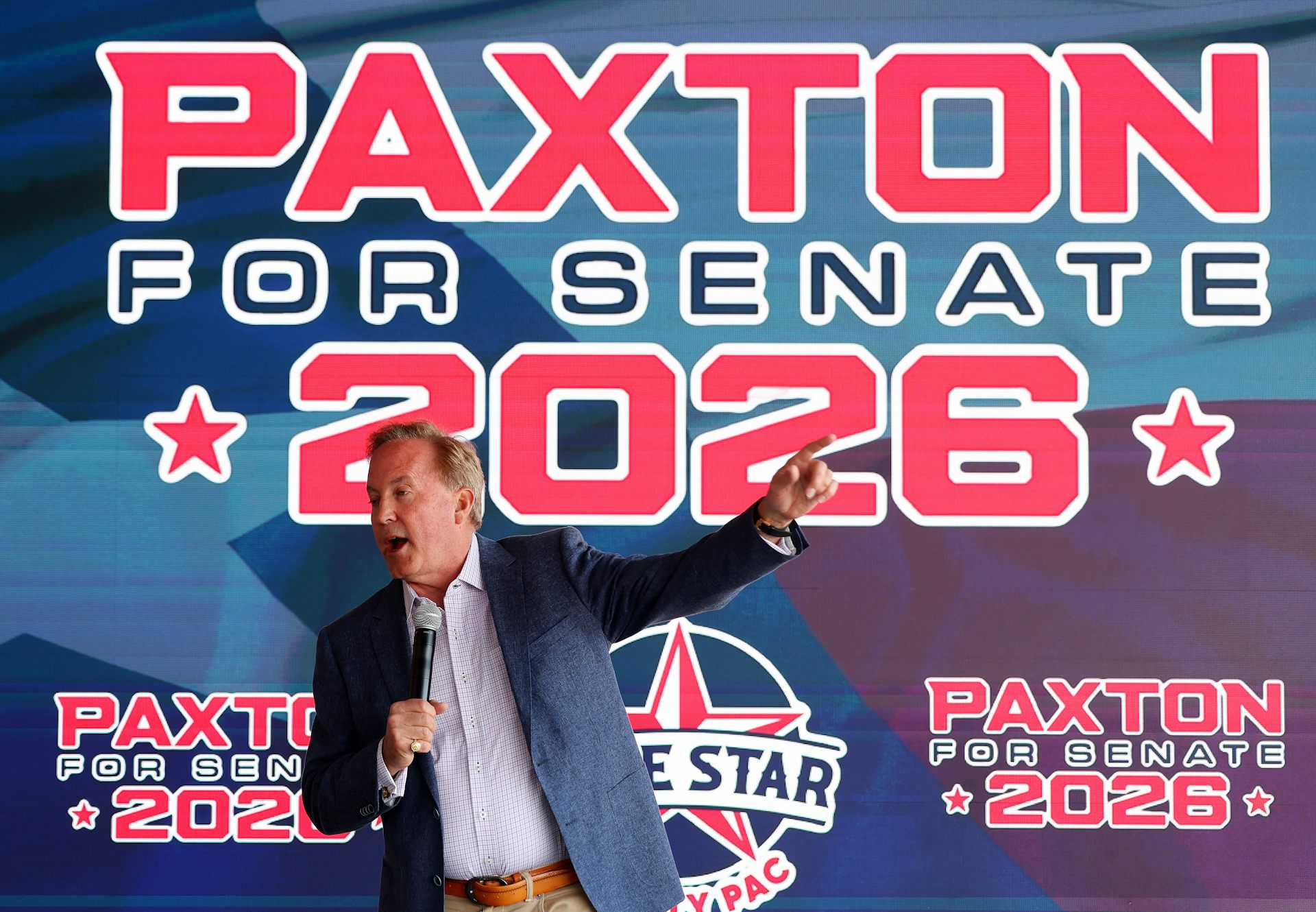
Dozens of Republicans won 2026 primary elections despite continuing to reject the outcome of the 2020 presidential election. The group includes Texas Attorney General Ken Paxton, who asked the U.S. Supreme Court to invalidate the certified election results in four states won by Joe Biden. In May 2026, Paxton defeated incumbent GOP Senator John Cornyn to become the party’s nominee.
We show that this apparent contradiction has a straightforward explanation.
Around 25% of the public expresses neutrality when asked whether politicians should be more loyal to their party or the Constitution. When those who prioritize their party over the Constitution and those who are neutral toward the idea are considered together, more than one-third of Americans are open to voting for a politician who prioritizes partisan, rather than constitutional, loyalty.
One-third of the population is more than enough to win a partisan primary. And given the deeply polarized political climate and declining electoral competition in the U.S. – including increases in gerrymandered legislative districts – winning a partisan primary is often tantamount to electoral victory.
The prevalence of democratic neutrality is troubling because in survey experiments with hypothetical candidates, most Americans who express neutrality toward antidemocratic policies vote the same way as the small number of Americans who outright support antidemocratic policies.
We were also able to show that when candidates for elected office take antidemocratic stances, only Americans who explicitly oppose antidemocratic practices punish those candidates at the ballot box. Americans who are neutral toward or supportive of antidemocratic practices do not.
When we accounted for neutrality across multiple antidemocratic practices, from political violence to voter suppression, the picture became even more dire. Nearly two-thirds of Americans express neutrality or support for some form of antidemocratic practice.
In other words, a clear majority of the public is willing to tolerate a politician who undermines core aspects of American democracy.
Using what’s called regression analysis, we were able to dig deeper into the behaviors and attitudes associated with democratic neutrality. We found that democratic neutrality appears to be tied to a variety of factors.
Some Americans appear willing to tolerate politicians undermining democracy if it means those politicians enact policies they support. Others seem ambivalent about democracy, indifferent to the issue or unsure what qualifies as an antidemocratic policy. And consistent with prior research, some people may actually support antidemocratic policies but express neutrality because of social pressure.
Regardless of why Americans express neutrality, those who do so are just as likely to vote for authoritarian politicians as the relatively small number of Americans who explicitly support undemocratic practices in some form.
Our research indicates that fringe extremists and the few politicians who actively promote authoritarian ideas are not solely to blame for America’s democratic troubles.
The millions of Americans who simply remain neutral when democracy is threatened are a greater threat to the country’s system of government. These democratically neutral voters are, in our view, complicit in the continued erosion of democratic norms in the U.S, even if they do not openly express support for antidemocratic policies.
Indeed, our research indicates that neutrality is not a passive stance. Preventing further democratic erosion requires voters to reject candidates who undermine basic democratic principles, even – and especially – if they are candidates from one’s own party. As former President Theodore Roosevelt warned, “… to be neutral between right and wrong is to serve wrong.”
This article is republished from The Conversation, a nonprofit, independent news organization bringing you facts and trustworthy analysis to help you make sense of our complex world. It was written by: Matthew Hall, University of Notre Dame; Brittany Solomon, University of Notre Dame, and Tyler Leigh, University of Notre Dame
Read more:
Members of Congress undermine the country – and their own legitimacy – with antidemocratic rhetoric
An antidemocratic philosophy called ‘neoreaction’ is creeping into GOP politics
Learning your political opponents don’t actually hate you can reduce toxic polarization and antidemocratic attitudes
The authors do not work for, consult, own shares in or receive funding from any company or organization that would benefit from this article, and have disclosed no relevant affiliations beyond their academic appointment.








































Comments