Republicans control Congress, so why is Trump’s SAVE America Act stuck?
Published in Political News
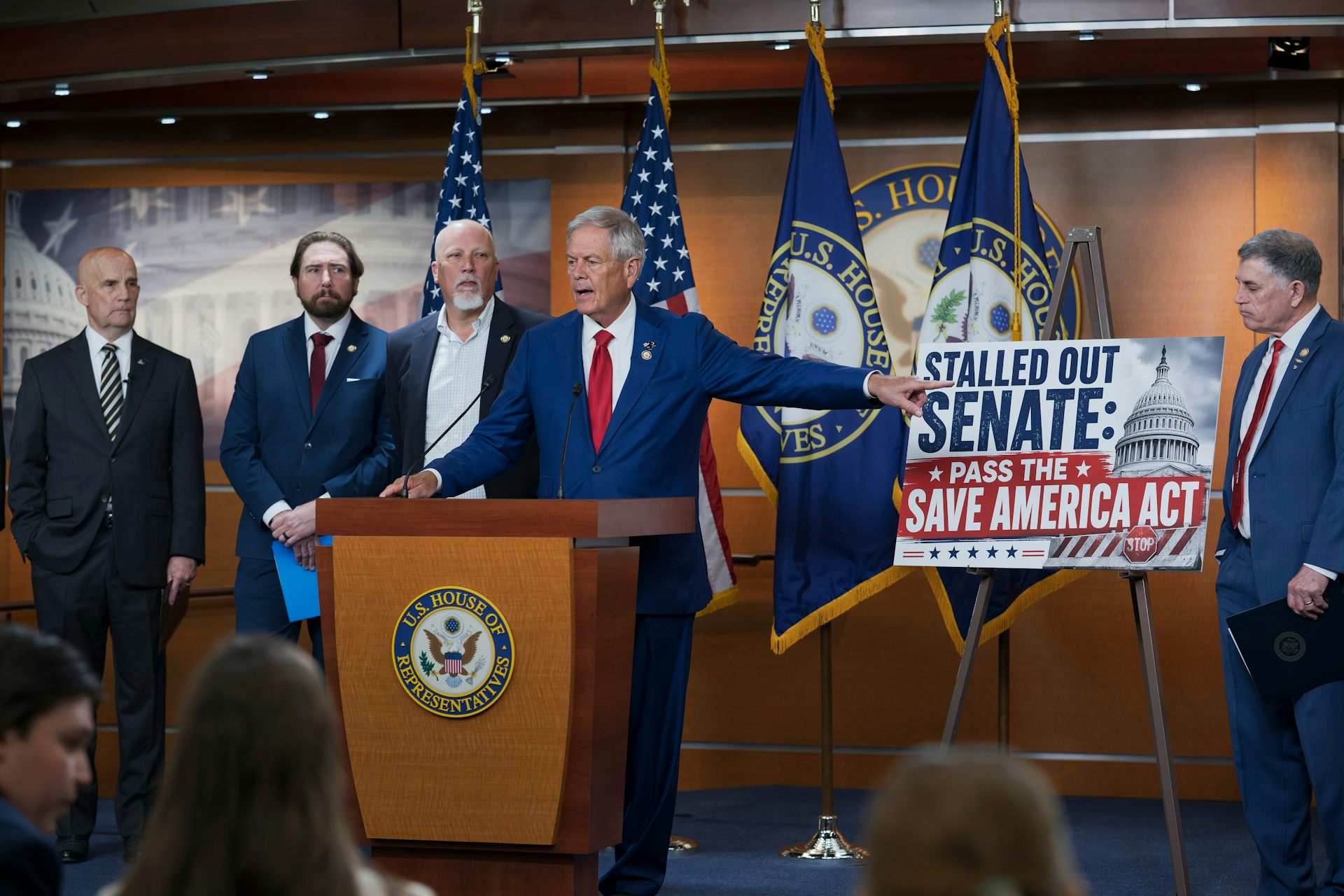
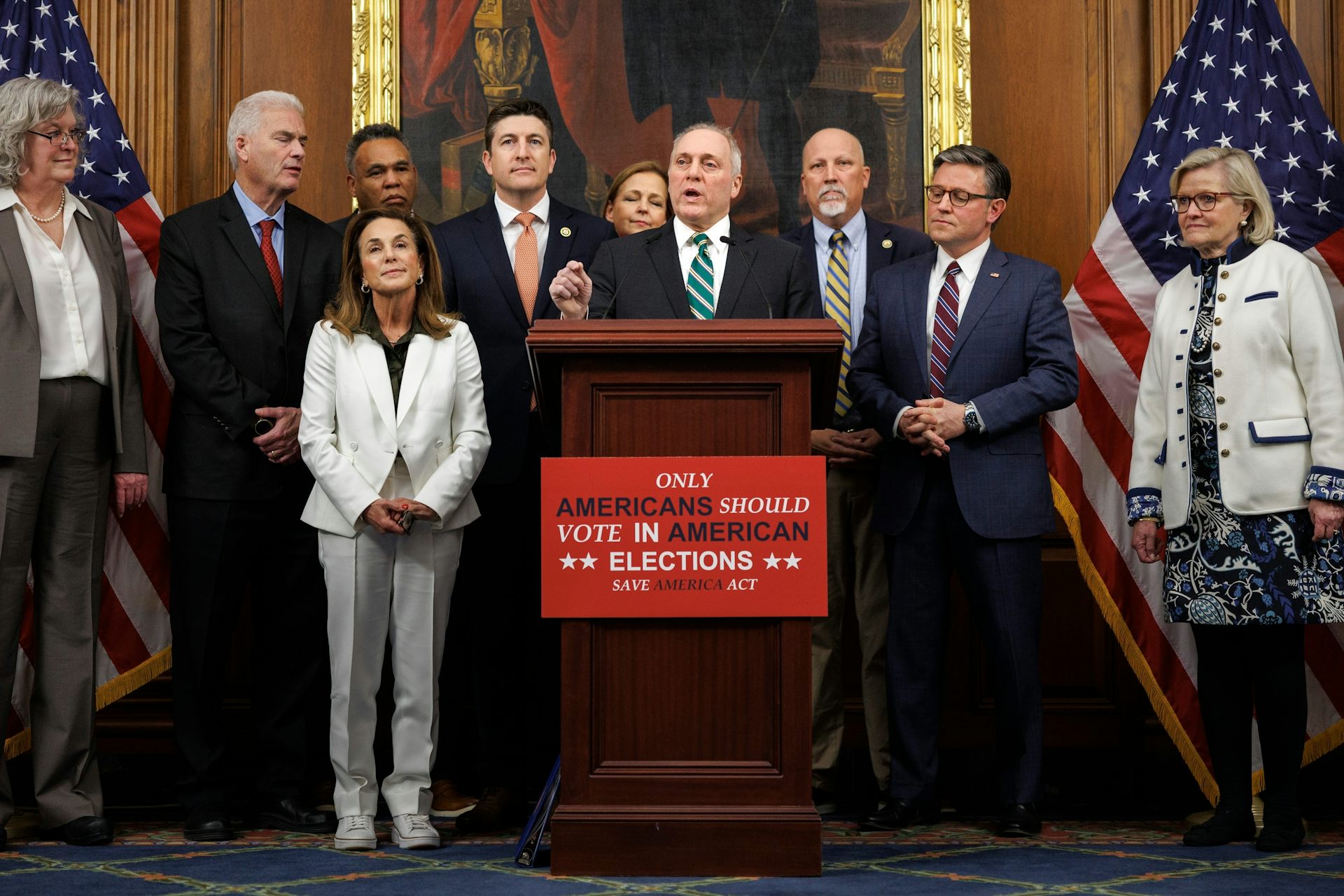


President Donald Trump’s obsession with unfounded claims of election fraud has defined his second term in office. But in recent months his fixation has moved from executive nominee litmus tests and executive orders reinforcing proof of citizenship to vote into legislation – dragging Congress into the fray.
The Safeguard American Voter Eligibility Act, or the SAVE America Act, featured heavily in Trump’s primetime speech on July 16, 2026.
It’s become the focus of the administration in recent months, eclipsing prior legislative efforts by proposing stringent and widespread voting changes. The proposed law, which would federalize elections, require additional documentation in order to vote and curtail mail-in registration and ballots in all states, faces major logistical, legal and political hurdles.
The act, which is stuck in limbo between the U.S. House and Senate, has dominated and derailed the summer’s legislative calendar. In the House, Republican members delayed votes on major legislation in an effort to pressure the Senate to take the bill up for a vote, and it has become a sticking point in other unrelated legislation.
The controversial act has also soured the relationship between Trump and members of his party, leading him to refuse to sign a bipartisan housing bill passed by Congress. Although the bill became law without his signature, Trump’s preoccupation with the SAVE America Act ultimately denied congressional Republicans an opportunity to tout a bipartisan, popular policy win.
Yet, despite mounting political pressure, Congress hasn’t budged.
This tension between Trump’s priorities and congressional inaction is noteworthy because Republicans control both chambers. But as a political scientist who studies the evolving power of congressional leadership, I find inaction on the SAVE America Act to be more than a reflection of Trump’s waning popularity among Republican lawmakers. Rather, congressional hesitation on what would be the largest election reform in decades reflects an awareness of constituent needs and lawmakers’ own reelection risks.
House Republicans have been quick to blame the Senate – and the 60-vote filibuster threshold the legislation must overcome to receive a vote on the Senate floor – for the inaction.
House Speaker Mike Johnson has brought the legislation to the floor for at least three votes in an effort to pressure the Senate to take up the legislation. In July 2026, Johnson took a more creative approach, relenting to conservative lawmakers by including portions of the SAVE America Act in a House-passed bill to fund the State Department.
These actions are largely theatrical. Senate Majority Leader John Thune has said since February 2026 that there aren’t enough votes to move the SAVE America Act through the Senate, telling Fox News in June that “the votes currently aren’t there.” Although Senate Republicans could vote to remove the filibuster, which Trump has also requested, they have not.
Even in the House, the slim margins of Republican control have made it challenging for Johnson to keep the party together on the controversial issue. And Johnson’s gambit to attach the SAVE America Act to important legislation risks not only derailing bipartisan policy but another government shutdown, too.
If Republicans were serious about electoral reform, including moderate reforms that the majority of Americans do support, their approach would be like that used for other major legislation: bipartisan. Instead, partisan passage of a controversial bill, with a known Senate blockade, presents half-hearted strategy that avoids true responsibility.
The SAVE America Act would be confusing, time-consuming and expensive, and it would not provide funding to help states implement changes.
Changing election processes warrants precision and time, too. As Republican Sen. Thom Tillis noted, “Do you honestly believe that we can have this thing up in 50 states? There’s no funding. There’s no specific implementation instructions.”
Beyond logistics, the legality of federalizing election processes is murky.
Congress does have the power to mandate election requirements. But under Article 1, Section 4, of the Constitution, while Congress can outline parameters, states are responsible for election administration.
For example, the National Voter Registration Act of 1993 reinforced citizenship as a requirement, but states maintained responsibility for creating their own form and enrollment process. The SAVE America Act attempts to circumvent this by requiring federal possession of voter rolls.
Beyond legal challenges, the SAVE America Act introduces very real implications for American voters – and the members of Congress who represent them.
While the act’s stated goal is to ensure only citizens vote, citizenship requirements for voting are already federal law. In practice, many scholars believe the bill would make it more difficult for eligible voters to engage in the democratic process.
For rural Americans, most of whom are represented by Republican members of Congress, the act would sharply restrict mail-in registration and mail-in voting. More than 5 million Americans would need to drive an hour or more to register to vote, with some voters facing drives as long as eight hours.
For women who changed their name after marriage, a trait more likely to be associated with Republican women, voting would require marriage certificates in addition to birth certificates.
First-time voters, young voters on college campuses and voters who have recently moved could also face the hurdle of finding and presenting this documentation in person.
Members of Congress, particularly those who represent rural areas, are likely aware of this reality. Disenfranchising or, at best, confusing their voters risks their own electoral success, too.
One of Trump’s first acts following the Supreme Court’s ruling in Trump v. Slaughter in June 2026, which allowed the president to remove executive branch officials without cause, was to fire the remaining members of the bipartisan, Senate-confirmed Election Assistance Commission.
The agency is the point of contact for states regarding election administration processes, offering resources, guidance and expertise on voting logistics. If the SAVE America Act were to pass, this office would be integral to ensuring changes are unbiased and fair across all 50 states.
Coupled with warnings that Trump may invoke emergency powers over election administration, aggressive actions by the Department of Justice to control voter rolls, partisan redistricting, and now a vacated election commission, the SAVE America Act risks further disrupting elections. All while these elections have already been secure and overwhelmingly free of fraud.
As Tillis noted to reporters, “They’re being disingenuous to suggest to the American people they could possibly be operational by this election. And so then it begins to make me wonder … if we’re just beginning to undermine the underlying integrity of any of our elections. And I think that’s dangerous, and I think it’s wrong.”
Does Congress’ hesitation to pass the SAVE America Act reflect a weakened Trump grip on the Republican party? Possibly. The president is more unpopular than he has been at any point during his second term. Ignoring Trump on the SAVE America Act may be a risk worth taking to some members.
But for most Republican members of Congress, appeasing Trump remains key to primary and electoral success. The president’s record on primary endorsements – even for Senate incumbents – remains strong, as he continues to define the party. Among constituents, some provisions of the SAVE America Act are popular among MAGA-aligned voters, making it an important electoral issue for members representing deep-red districts.
By publicly supporting the act, but relying on the Senate to serve as a doorstop to House-passed legislation, Congress falls into a familiar pattern that allows conservative members to appeal to the president while using procedure to block legislation that would make major changes to voting, mere months from Election Day.
Congress’ hesitance to pass the SAVE America Act is more than a test of its relationship with Trump. It’s an example of Congress doing what it was intended to do: represent its constituents.
This article is republished from The Conversation, a nonprofit, independent news organization bringing you facts and trustworthy analysis to help you make sense of our complex world. It was written by: SoRelle Wyckoff Gaynor, University of Virginia
Read more:
Citizenship voting requirement in SAVE America Act has no basis in the Constitution – and ignores precedent that only states decide who gets to vote
Who thinks Republicans will suffer in the 2026 midterms? Republican members of Congress
Voters lose when maps get redrawn before every election instead of once a decade − a trend started in Texas, moving to California and likely spreading across the country
SoRelle Wyckoff Gaynor does not work for, consult, own shares in or receive funding from any company or organization that would benefit from this article, and has disclosed no relevant affiliations beyond their academic appointment.


















































Comments