How the US Supreme Court decides its cases – a step-by-step guide
Published in Political News
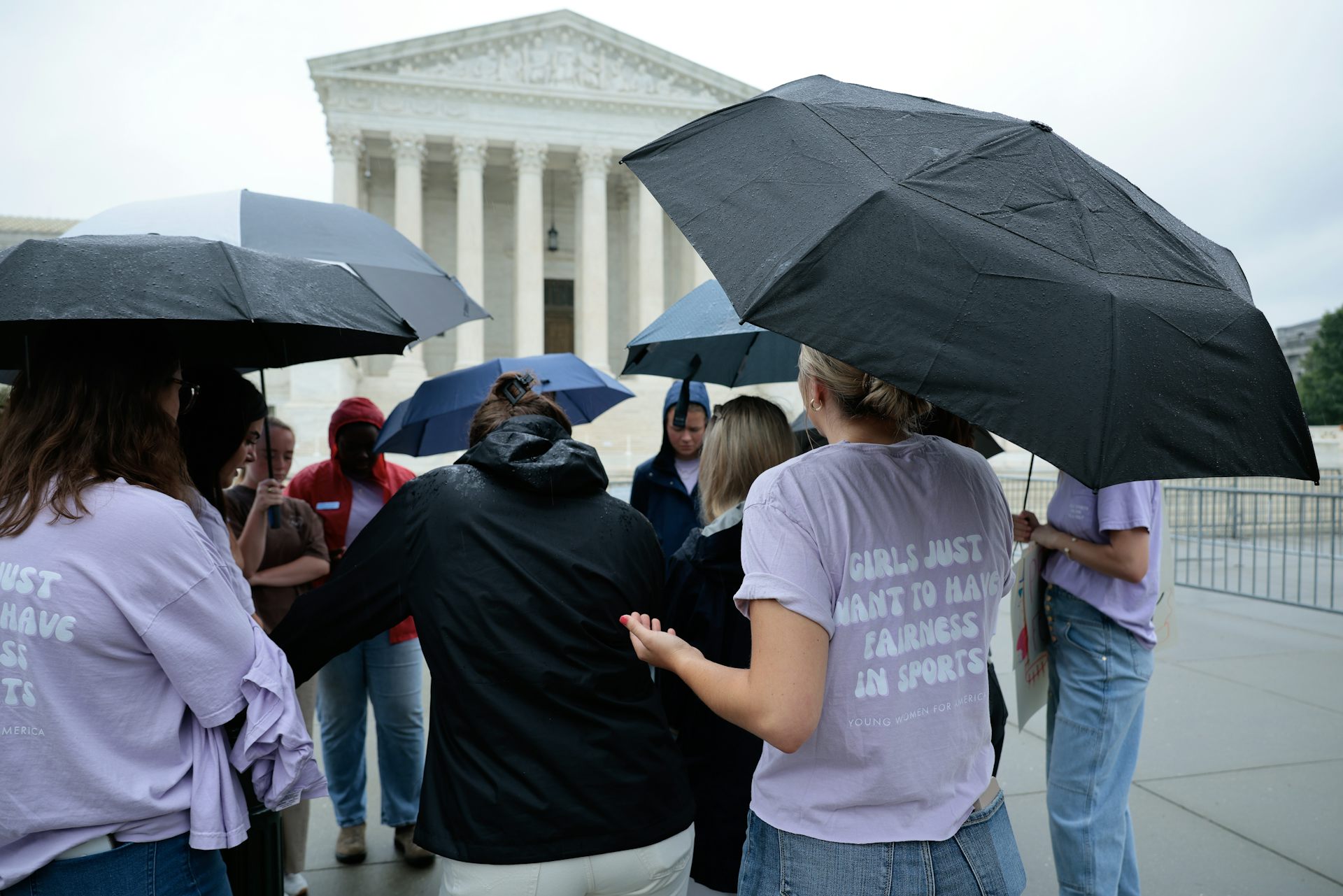
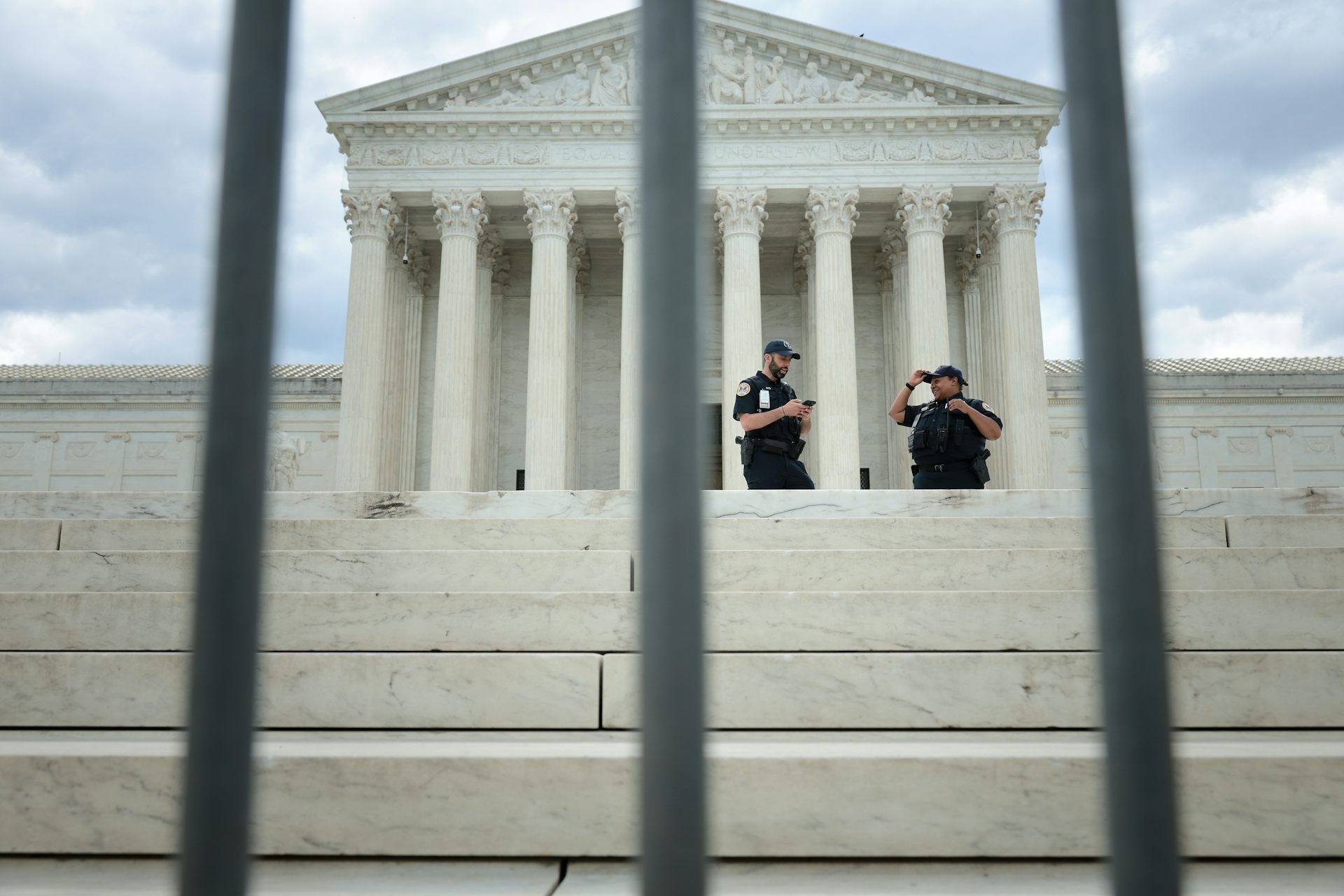


Each June, the nation turns its attention to the U.S. Supreme Court as it hands down some of its most consequential decisions.
Long before a landmark Supreme Court ruling dominates the headlines, it is shaped by a highly structured legal process, much of which takes place out of public view. This procedure involves strict gatekeeping rules, a series of private conferences, written briefs, oral arguments and, finally, the announcement of an opinion.
As a legal and Supreme Court scholar, I know that understanding how the nation’s highest court actually makes policy requires stepping into this exceptionally regulated, sometimes hidden routine. It is through this process that the court evaluates, and eventually decides, increasingly high-stakes cultural and political battles.
Here’s how it all unfolds:
The Supreme Court is a reactive institution. This means that it must wait for individuals, businesses, governments and the like to bring cases to the court before it can issue a ruling.
The way this most commonly works is that the party who loses in a lower court files a writ of certiorari to the Supreme Court. This is a legal document that outlines why the court should review the case. The party who won in the lower court can file a brief in opposition, arguing that the lower court made the right decision and therefore the case does not warrant Supreme Court review.
Sometimes, interest groups weigh in by filing amicus curiae, or “friend of the court” briefs. Amicus briefs help signal that a case has broad national importance. The court is more likely to review cases accompanied by amicus briefs.
In recent years, the high court has received about 4,000 of these petitions per term, and it decides less than 80 cases. This means the odds of getting the court to hear any given case are quite small – about 2%.
To handle the large volume of petitions, the justices rely heavily on their law clerks. These are young lawyers – typically only a few years out of law school – who write short memos for the justices recommending that they grant or deny each petition.
On most Fridays throughout their term, the justices meet to discuss these petitions. This is a private conference with only the nine justices in attendance. Here, the court employs a rule of four: It takes the votes of four out of the nine justices to agree to review a case.
Following the conference, the court releases its list of cases granted and denied certiorari, known as the orders of the court. For cases denied certiorari, the lower court decision stands. Cases granted certiorari move onto the merits stage.
The primary way the parties to a case try to persuade the justices is through their legal briefs. The petitioner, who lost in the lower court, tries to convince the justices that the lower court made some sort of legal error that should be reversed. The respondent, the lower court winner, argues that the lower court decision was correct and should be affirmed.
Interest groups, businesses and other interested entities that aren’t parties to the case can weigh in through a second type of amicus curiae brief. These briefs often highlight the public policy implications of a case, and they provide a way for these groups to pursue their ideological goals.
In recent terms, there has been an average of about 16 amicus briefs per case. And some cases see more than 100 amicus briefs, such as in Obergefell v. Hodges, the court’s 2015 same-sex marriage case, which had 148 briefs.
After briefing, oral arguments take place. Most oral arguments take an hour, with the time divided evenly between the petitioner and respondent. During oral arguments, the justices pepper the attorneys with questions and frequently preview how they might vote in the case.
A few days after oral arguments, the justices meet again in a private conference to discuss cases and cast preliminary votes. The chief justice speaks first, followed by the rest of the court in order of seniority.
A majority forms in this conference, although the justices are free to change their votes until the opinion is announced, and occasionally do so.
Perhaps most importantly, a justice in the majority is assigned to draft the majority opinion. If the chief justice is in the court’s majority, the chief makes the opinion assignment. The chief justice can assign the opinion to another justice in the majority or to himself. If the chief justice is in the minority, the most senior justice in the majority makes the opinion assignment.
Majority opinions typically go through a series of revisions, as justices bargain and negotiate over its content. They do this by providing written feedback to the majority opinion author. If a justice in the court’s initial majority grows unhappy with the content of the draft opinion, they can defect by joining the minority.
In addition to the majority opinion, justices may write concurring and dissenting opinions. Concurring opinions are written by justices in the majority and are often used to highlight a different legal basis for the court’s decision. Dissenting opinions are written by justices who are in the minority and disagree with the outcome of the case and the majority’s reasoning.
The final step is the public release and announcement of the court’s opinions. This occurs on a rolling basis throughout the court’s term – from October to late June or early July – but the most important cases usually come down in June.
During opinion announcement, the majority opinion author usually reads a summary of the court’s opinion. On rare occasions, dissenting justices may read from their opinions. Reading a dissent from the bench signals that a justice is particularly unhappy with the majority’s decision.
For instance, on June 29, 2023, Justice Sonia Sotomayor read from her fiery dissent in Students for Fair Admissions v. Harvard College. In that opinion, Sotomayor criticized the court’s majority for effectively ending affirmative action in college admissions. According to Sotomayor, affirmative action programs are constitutional because they help to achieve the 14th Amendment’s guarantee of racial equality by mitigating the enduring effects of racial discrimination.
The blockbuster rulings that dominate the news cycle each June are not sudden flashes of judicial willpower. They are the product of a lengthy and carefully structured process in which thousands of petitions are screened, less than 80 cases are argued, and draft opinions are negotiated and refined behind closed doors. By the time a decision is announced from the bench, it reflects months of legal argument, deliberation and compromise.
Understanding that process helps demystify the court and reveals how nine unelected justices can shape the meaning of the Constitution and, in turn, influence the everyday lives of millions of Americans.
This article is republished from The Conversation, a nonprofit, independent news organization bringing you facts and trustworthy analysis to help you make sense of our complex world. It was written by: Paul M. Collins Jr., UMass Amherst
Read more:
Medication abortion: Decisions from federal courts, the FDA or Trump’s Department of Justice could try to end access via telehealth
Supreme Court’s decision on birthright citizenship will depend on its interpretation of one key phrase
Supreme Court’s ‘shadow docket’ brings hasty decisions with long‑lasting implications, outside of its usual careful deliberation
Paul M. Collins Jr. does not work for, consult, own shares in or receive funding from any company or organization that would benefit from this article, and has disclosed no relevant affiliations beyond their academic appointment.





















































Comments