Trump doesn’t own the government – even though he acts as if Congress is not his equal in constitutional power and authority
Published in Political News
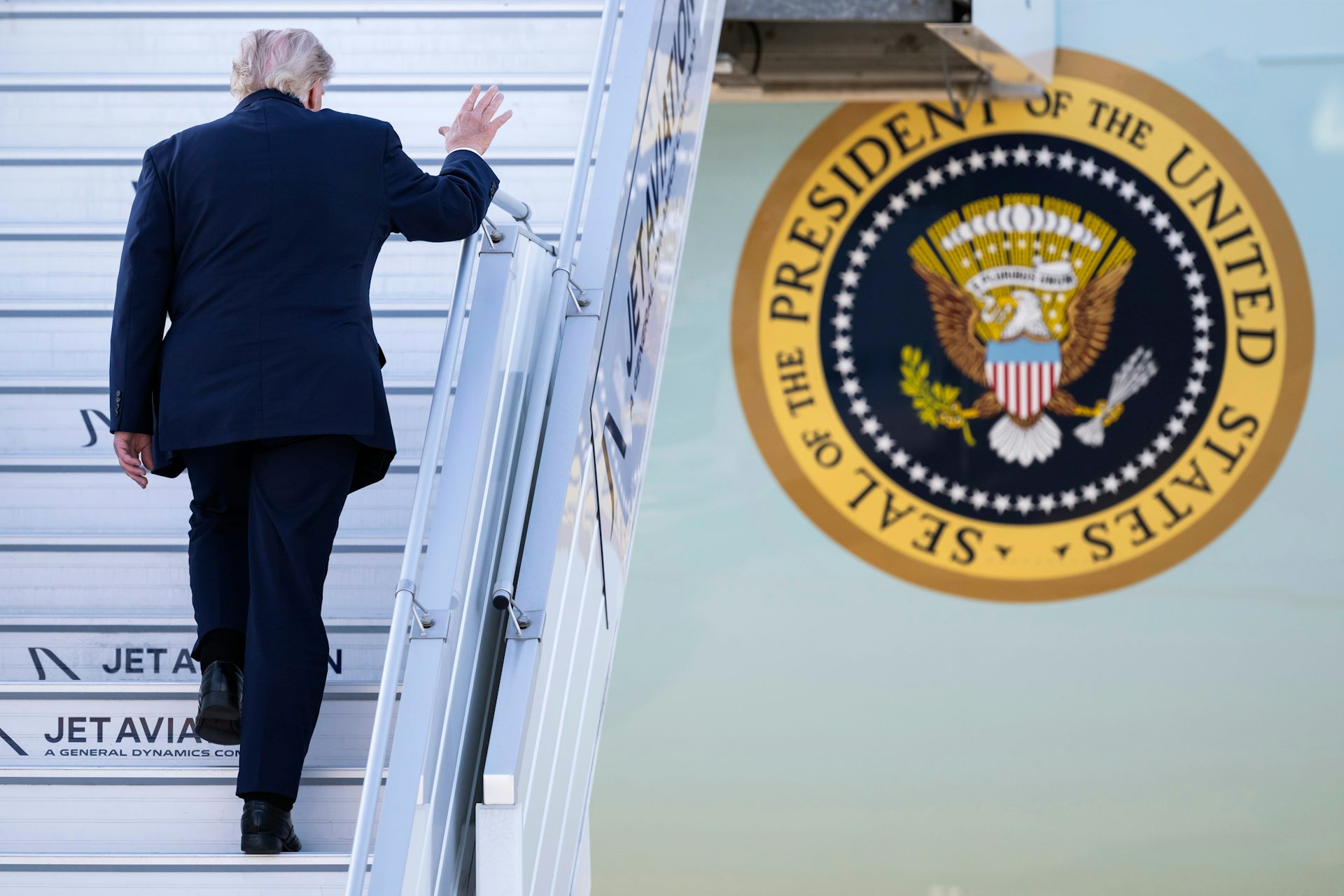
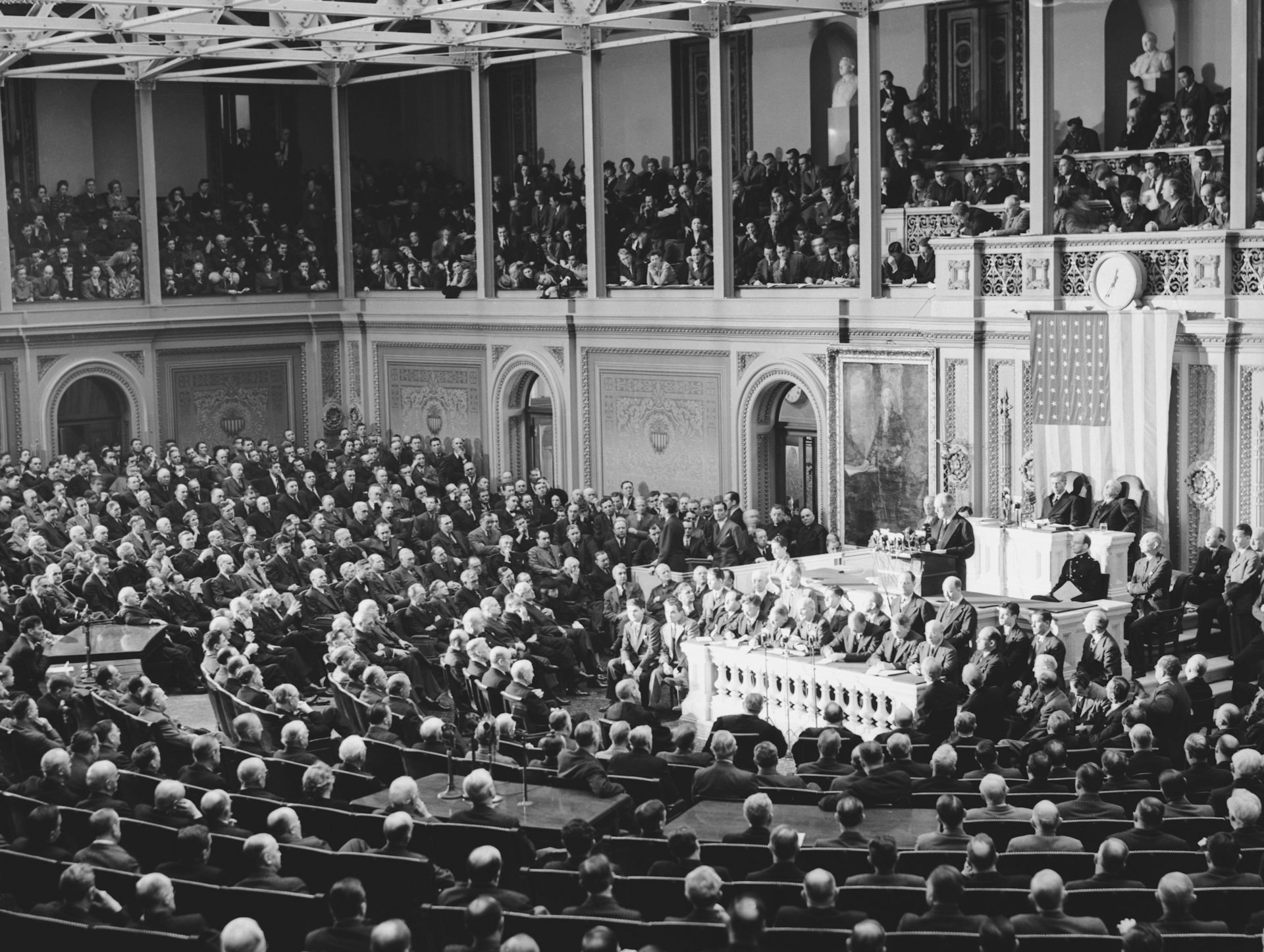

In a recent exchange with reporters about the newly brokered Iran agreement, President Donald Trump was asked whether he planned to submit the deal to Congress.
“I never thought about sending – never even thought about it, but I will,” Trump said. “I will send it to Congress. I like the idea.”
The most revealing phrase in the president’s statement was not “I will send it.” It was “I never thought about it.”
In a constitutional system built around separated powers, the consent of Congress should be more than an idea the president remembers after a reporter asks. Especially when it comes to questions of war, peace and foreign policy, Congress is where the public’s representatives play a crucial role in national decision-making.
Exactly what role Congress has in this particular agreement is not yet clear. The Constitution gives the Senate formal responsibility for approving or rejecting treaties. But presidents also enter many international agreements without submitting them for a Senate vote. As a result, lawyers and lawmakers often disagree about when congressional approval is legally required and when a president can act on his own.
But the legal question is not the only issue. Trump’s comment was revealing because it suggested that Congress had not been part of his thinking from the beginning.
That fits a larger pattern in Trump’s rhetoric. In his public remarks, he rarely describes Congress as a coequal branch of government. It appears as an obstacle, an audience, a pressure point, a rubber stamp or an afterthought.
As a scholar of media and presidential rhetoric, and an endowed professor for the Frank Church Institute, a center established to honor the former senator who once chaired a committee that aimed to ensure Congress’ role overseeing executive branch activities, I pay close attention to how presidents talk about power. The language they use often reveals not only what they intend to do, but how they understand America’s constitutional system itself.
The U.S. Constitution does not imagine the president as the owner of the government with absolute, top-down, decision-making privileges. Instead, it places the president within a system of separated powers. Authority is divided among institutions, and no single office stands above the others.
The modern expansion of presidential power did not begin with Trump. Presidents of both parties have claimed broad unilateral authority. This is especially true when it comes to foreign affairs, war powers, immigration, emergencies, tariffs and administrative actions.
Nor did Trump invent the practice of presidents bypassing Congress by appealing directly to the public. Political communication scholars call this tactic “the rhetorical presidency.”
The basic idea is straightforward. As mass media became central to politics, presidents increasingly used public communication to build support for their agendas and pressure Congress from the outside.
To illustrate the contrast between the era of presidential pressure directly on Congress versus going to the public for that support, Abraham Lincoln actively lobbied legislators to pass the 13th Amendment, which made slavery illegal.
Franklin Delano Roosevelt engendered support for his New Deal programs through press conferences and fireside chats broadcast nationally on radio.
That development changed the presidency. Presidents became not only administrators of government but constant public performers of leadership.
Trump represents a further turn in this theory. He does not merely go over or around Congress to make a public case for his actions. He often speaks as though Congress has no independent claim on national authority, and that the legislature’s main role is to offer him unconditional support. To wit, after Congress voted to limit Trump’s authority to use force in Iran, he called supporters of the measure, including some Republicans, “unpatriotic.”
Like Trump, other presidents have also personalized power. In 2006, President George W. Bush drew criticism when he defended keeping Donald Rumsfeld as defense secretary by saying, “I’m the decider, and I decide what is best.” The line became famous because it seemed to compress executive authority into one person’s will.
But Trump’s attitude seems more expansive than was Bush’s. He speaks as though being president means being the person who knows more than anyone else, who can act more decisively than anyone else, and who deserves to be questioned less than anyone else. He told Axios that there are “no limits” to his ability to exert power that he has yet found.
When Trump speaks this way, presidential power sounds like personal superiority. His words obscure the fundamental constitutional principle that no government official is beyond scrutiny, correction or institutional constraint.
Congress is not simply a rival power center to the presidency. It is the branch through which citizens are most directly represented in national government. Members of Congress are elected from states and districts. Their roles include hearing from constituents, taking account of local concerns, debating policy, authorizing spending, overseeing the executive branch and making laws.
When a president treats Congress as optional, he is also treating representation as unnecessary. And when representation is unnecessary, accountability can also fall by the wayside.
Congress is where public authority becomes governmental authority. In a representative democracy, the people are sovereign. Public power, meaning the authority government exercises on behalf of the people, does not originate with the president. It originates with citizens and is carried into government through elections, deliberation, law and consent.
Questions about Iran have exposed this tension. When Congress has tried to limit or review Trump’s authority to use lethal force against Iran, the debate has not only been about military strategy. It has also been about whether congressional authorization and oversight still count as legitimate parts of decision-making about military force – and sending American troops into situations in which they could die.
Congress is not infallible, and the Constitution does not suggest that its judgment should automatically prevail over presidential will. Moreover, not every international agreement requires the same kind of congressional involvement.
It is also possible that the public supports the new Iran deal, and so the president has its implicit consent.
But even if these things are true, the point is more fundamental. In saying, “I never thought about it,” the president returned to a claim about power that has defined his political rhetoric since 2016, when he declared that only he could repair what was broken in America: “I alone can fix it.” It’s a philosophy that says the president acts first, and other institutions are invited to catch up later.
The danger is not simply that he is sidelining the role of Congress. It is that this understanding of power makes the constitutional system resemble a hierarchy rather than a republic. And when the institutions through which citizens exercise their authority can be treated as optional, it is ultimately the people who are pushed to the margins of self-government.
That undermines the democratic order. The president does not stand above the people. He serves within a constitutional system designed to keep public authority from becoming personal power.
This article is republished from The Conversation, a nonprofit, independent news organization bringing you facts and trustworthy analysis to help you make sense of our complex world. It was written by: Stephanie A. (Sam) Martin, Boise State University
Read more:
Presidential words can turn the unthinkable into the thinkable − for better or for worse
Repeated government lying, warned Hannah Arendt, makes it impossible for citizens to think and to judge
Congress began losing power decades ago − and now it’s giving away what remains to Trump
Stephanie A. (Sam) Martin does not work for, consult, own shares in or receive funding from any company or organization that would benefit from this article, and has disclosed no relevant affiliations beyond their academic appointment.






















Comments