Craig and Flanagan spar on immigration, fraud, corporate PAC money in first debate
Published in Political News
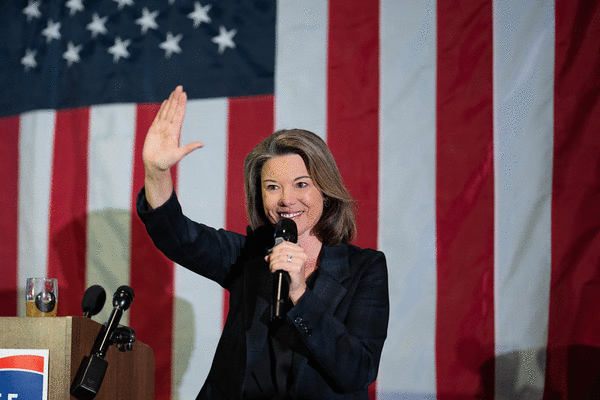
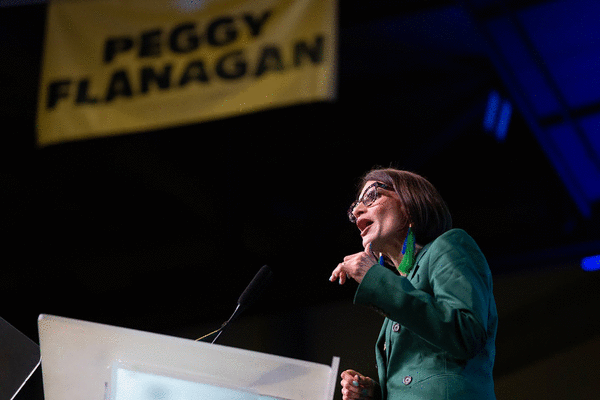

MINNEAPOLIS — Questions over their records on immigration, accepting corporate PAC money and fraud dominated the first Democratic debate in the U.S. Senate race between Rep. Angie Craig and Lt. Gov. Peggy Flanagan on Friday night.
The debate came at a pivotal moment in the race to succeed retiring U.S. Sen. Tina Smith, giving voters one of their first opportunities to see the two leading Democratic contenders face off.
Flanagan has the backing of the Minnesota DFL Party, Smith and support from many of the state’s progressive groups and lawmakers. Craig has leaned on her fundraising prowess and record of winning tough races in a swing congressional district as she argues she is best positioned to hold the seat for Democrats.
The campaign has increasingly centered on disagreements over immigration, campaign fundraising and electability as the candidates vie for support ahead of the Aug. 11 primary.
Immigration and the Laken Riley Act
As the debate on TPT’s “Almanac” opened, Craig was asked why it took her so long to express regret for what’s become Flanagan’s main line of attack against the congresswoman in the race: Craig’s 2025 vote for the Laken Riley Act, legislation allowing undocumented immigrants arrested for certain nonviolent crimes to be detained by federal authorities.
“I couldn’t help but regret giving this administration any additional authority,” Craig said, explaining that she came to that decision after having regularly visited the detention facility at the Bishop Henry Whipple Building and on the heels of Operation Metro Surge and the fatal shootings of Alex Pretti and Renee Good.
“I felt like I needed to be honest with Minnesotans that I did regret that vote,” Craig added.
Flanagan, the progressive Democrat in the race, was asked about her position on Immigration and Customs Enforcement (ICE) and whether she thinks it should be dismantled. Questions over whether the agency should be abolished have become somewhat of a progressive litmus test for Democrats.
But the lieutenant governor sidestepped the question and used the time to lean further into her attack on Craig’s vote on Laken Riley.
“The congresswoman stood by this vote for a long time, including when ICE was in the streets terrorizing Minnesotans,” Flanagan said. “She didn’t regret the vote during the height of Operation Metro Surge, including the day after Alex Pretti was killed.”
Corporate PAC money
The debate shifted to questions over corporate PAC money, which Flanagan has pledged to forgo.
Craig has sought to poke holes in the lieutenant governor’s pledge by accusing her of raising corporate PAC money when she previously chaired the Democratic Lieutenant Governors Association (DLGA), including from a group that runs ICE detention centers across the country. Flanagan has denied these claims.
“I did not solicit that money, and I told the DLGA that they should return it,” Flanagan said when asked if Craig’s claims were true.
Flanagan went on to accuse Craig of taking “corporate PAC money throughout her career because these corporate PACs understand that she’s going to do their bidding.”
Fraud
Craig has made fraud one of her central lines of attack against Flanagan.
When Flanagan has faced questions over whether she, too, should take responsibility for the state’s fraud crisis as the lieutenant governor, she has focused on what Gov. Tim Walz has done in response, a similar line she used Friday evening.
“I want to be really clear that Minnesotans are angry about fraud. I’m angry, too,” Flanagan said when asked what she knew about fraud as Walz’s second in command and when she knew about it.
“The governor says that the buck stops with him, and he took the lead here,” she continued. “I took the lead on issues like paid family and medical leave, housing and homelessness.”
Pressed on whether she ever had any conversations with Walz or his cabinet members about fraud, Flanagan also avoided directly talking about herself.
“The governor and the Legislature have taken action,” Flanagan said. “There has been legislation that has passed to stop fraud, to prevent it from happening in the first place.”
Craig used the fraud discussion to contrast their leadership, pointing out that she expressed regret for her Laken Riley Act vote, while Flanagan has not taken responsibility for the fraud crisis.
“It’s still stunning to me that the lieutenant governor continues to shift every bit of the blame to the governor for the fraud that has occurred in Minnesota,” Craig said.
The electability argument
The question of who’s the more electable Democrat has been a major theme in the race. On Friday, both Craig and Flanagan pitched their brands of Democratic politics and experience.
“The lieutenant governor has never faced a competitive race on the ballot by herself, not in her entire political career,” Craig, who’s run in tough races her entire political career, said of Flanagan.
“Do we really want someone who has served as the number two in the state government who takes no responsibility or accountability for anything that was happening under her watch?” Craig added.
But Flanagan cast herself as a progressive outsider and said she thinks voters want candidates who will “be bold” and back progressive policies, including Medicare for all and universal childcare.
“When we talk about the choice in this election, I think the choice is between an institutional corporate Democrat who’s been a Washington insider and a progressive champion who’s ready to push and get things done,” Flanagan said.
Israel and AIPAC
Flanagan talked about the American Israel Public Affairs Committee (AIPAC), a deep-pocketed PAC that backs candidates who support the U.S.-Israel relationship.
The lieutenant governor said she does not accept AIPAC money because “my values don’t align” with the group. She also said she believes in a two-state solution, that arms sales to Israel should be blocked and humanitarian aid should be allowed into Gaza.
“I believe that what’s happened to the people of Gaza is horrific,” Flanagan said. “That the people of Israel, the children of Israel, deserve to live in peace. Palestinians deserve the right to self-determination.”
But Flanagan stopped short of calling the conflict in Gaza a genocide, a term other progressive Democrats have used.
Craig denied AIPAC has contributed to her Senate campaign and sidestepped questions over whether she’s received money from the group in her House races. AIPAC has supported Craig in her past congressional runs.
The congresswoman said she believes “the best thing that can happen for Middle East peace” is for Israeli Prime Minister Benjamin Netanyahu to lose his upcoming election. Craig said she supports Israelis and Palestinians living together “in peace,” whether it’s in Gaza or the West Bank.
“The international community has got to band together to help rebuild Gaza,” Craig said. “Ensure that Palestinians in Gaza have the humanitarian support that they need, and those are the things that I’ve been working on as a member of Congress.”
What do they like about each other?
Craig applauded Flanagan’s “advocacy” for free and reduced-price school lunches, saying it was “notable and laudable, and I really appreciate that.”
Meanwhile, Flanagan applauded the congresswoman for being a leader in pushing for funding for the Individuals with Disabilities Education Act, a federal program that governs special education.
©2026 The Minnesota Star Tribune. Visit startribune.com. Distributed by Tribune Content Agency, LLC







































Comments