Commentary: No single person should have the power to launch nuclear weapons
Published in Political News
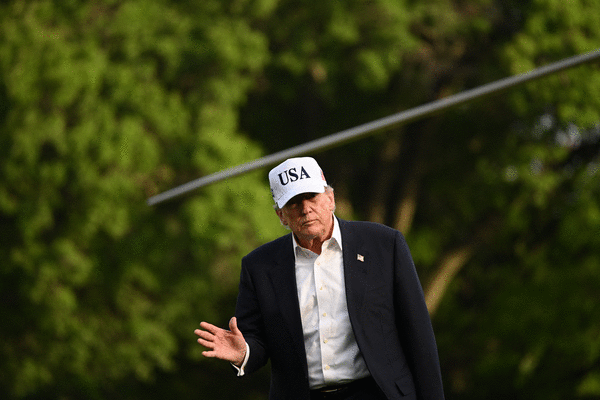
“A whole civilization will die tonight, never to be brought back again.” — Donald Trump, April 7, 2026
Too often, we sip our morning coffee while reading a bizarre Truth Social post by President Trump, often posted between midnight and dawn. His missives inevitably become grist for that evening’s late-night shows. The jokes can be funny, yet in the light of day, the realities are anything but.
Because threats to destroy a civilization, made by the man with the sole authority to order the use of America’s nuclear arsenal, are not easily explained away as some “madman” negotiating ploy. They are more than unhinged. They are reckless. And we are less safe when nothing stands between a reckless president and a nuclear weapon.
It is not the juvenile images of the president as a “Star Wars” Mandalorian or Rambo-like warrior that should most concern us. It is the state of mind of the president in those moments. Because under the procedures for ordering the use of nuclear weapons, any president — including this president — does not need to consult any other official before giving the go-ahead to launch a nuclear attack.
The president’s mad rhetoric and demonstrated willingness to act unilaterally, unconstrained by anything other than his own morality and his own mind, as Trump has put it, leads to one conclusion: In the generations since World War II and the dawn of the Atomic Age, we have never been at greater risk of a president ordering the use of a nuclear weapon against another nation — even if that nation has neither threatened nor attacked us.
Yes, President Lyndon Johnson had his bouts of anger and discouragement; President Richard Nixon had his battles with internal demons and illegal actions, which led to his resignation. But we have never seen anything like Trump’s impulsive, irrational, early morning outbursts.
Added to that, Trump has exercised unprecedented executive power in initiating military hostilities. The process through which these attacks in Iran were ordered contradicted the intent of America’s founders in giving Congress the power to declare war. By any reasonable definition, Trump’s “excursion” into Iran sure looks like a war.
And there is more cause for alarm: As poorly as the Iran war was conceived, operationally, it required advanced military planning with multiple civilian and military officials. A nuclear launch order, on the other hand, could take only minutes, and solely at the command of the president.
Yes, a military officer in the nuclear chain of command might refuse such an order as unlawful. But is this really a viable check on a determined president willing to fire and replace anyone standing in his or her way?
Continuing to accept or rationalize this dangerous reality, or to take solace in Trump’s sporadic attempts to walk back his most outrageous rhetoric, puts every American and millions of foreign citizens in real danger of calamity. And puts the United States in danger of becoming a pariah following the launching of a nuclear first strike.
What can be done? First, this president and this administration, or more realistically a succeeding one, can strengthen the existing structure under which the U.S. may use nuclear weapons — to include when possible, consultations with a small team of senior cabinet and legislative officials before the president authorizes any strike, to ensure that any such order is both lawful and wise.
Congress can also pass legislation without delay requiring prior consultation with congressional leadership for the first use of an American nuclear weapon. There could be exceptions: for example, if war had already been declared against our enemy, as in World War II; or to defeat a truly imminent nuclear attack on the U.S. or its allies. Requiring congressional authorization, or at least prior consultation for nuclear first use, would guard against a president consulting only an executive branch of “yes” men and women to approve a prebaked outcome.
Of course, the president might well veto such a measure. But doing so would only demonstrate that he actually desires the power to launch a nuclear attack without any consultation or congressional authority. That in itself would provide another strong argument for overriding such a veto.
Even if the chances of this president — or any other — launching a nuclear first strike of any size on any given day is very small, that number grows when an unbalanced president, under great stress, considers his or her options. The stakes are immense and the potential consequences, catastrophic.
Think about it the next time a presidential rant ruins your coffee. Surely, now is the time for precautionary action.
____
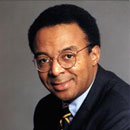
Steven Andreasen, who served as the National Security Council’s staff director for defense policy and arms control from 1993 to 2001, teaches public policy at the University of Minnesota. Anthony Lake was a national security advisor in the Bill Clinton administration.
_____
©2026 Los Angeles Times. Visit at latimes.com. Distributed by Tribune Content Agency, LLC.















































Comments