A democracy or a republic? History shows that some Americans are asking the wrong question
Published in Political News
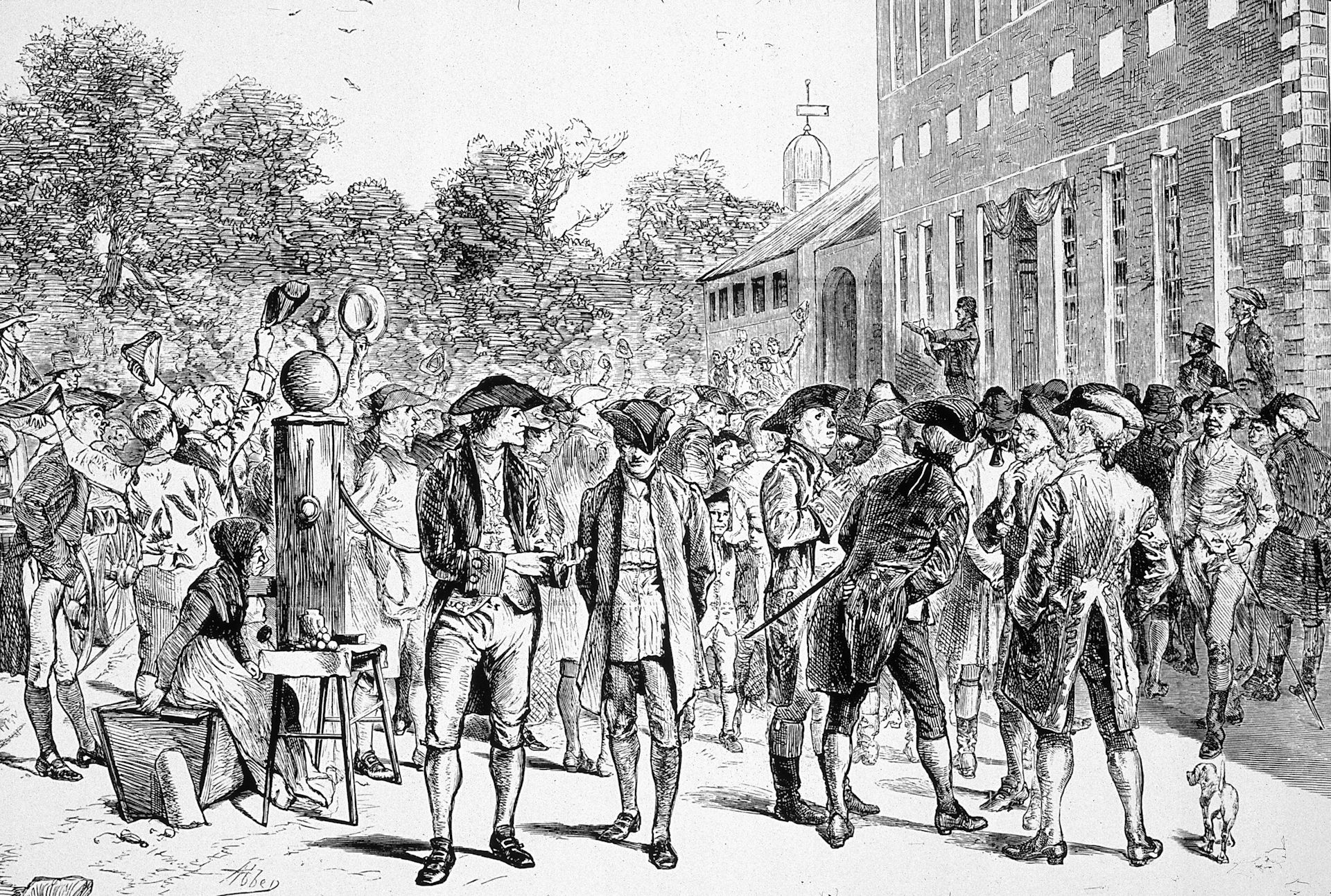

As the nation observes its 250th birthday, historians can help settle one present-day dispute: Is the United States a democracy or a republic?
For years, advocates have argued the point.
Yet the question itself is misleading. It assumes that the categories constructed by political theorists neatly describe actual practice.
As a historian of early America, I know this nation has always been unwieldy, its institutions hammered out from conflicting ideals and the pragmatic lessons of lived experience. Just as Britain today is both a monarchy and a democracy, so the U.S. has always been a hybrid.
Ideals of both republicanism and democracy have shaped the nation. To understand how requires a history lesson.
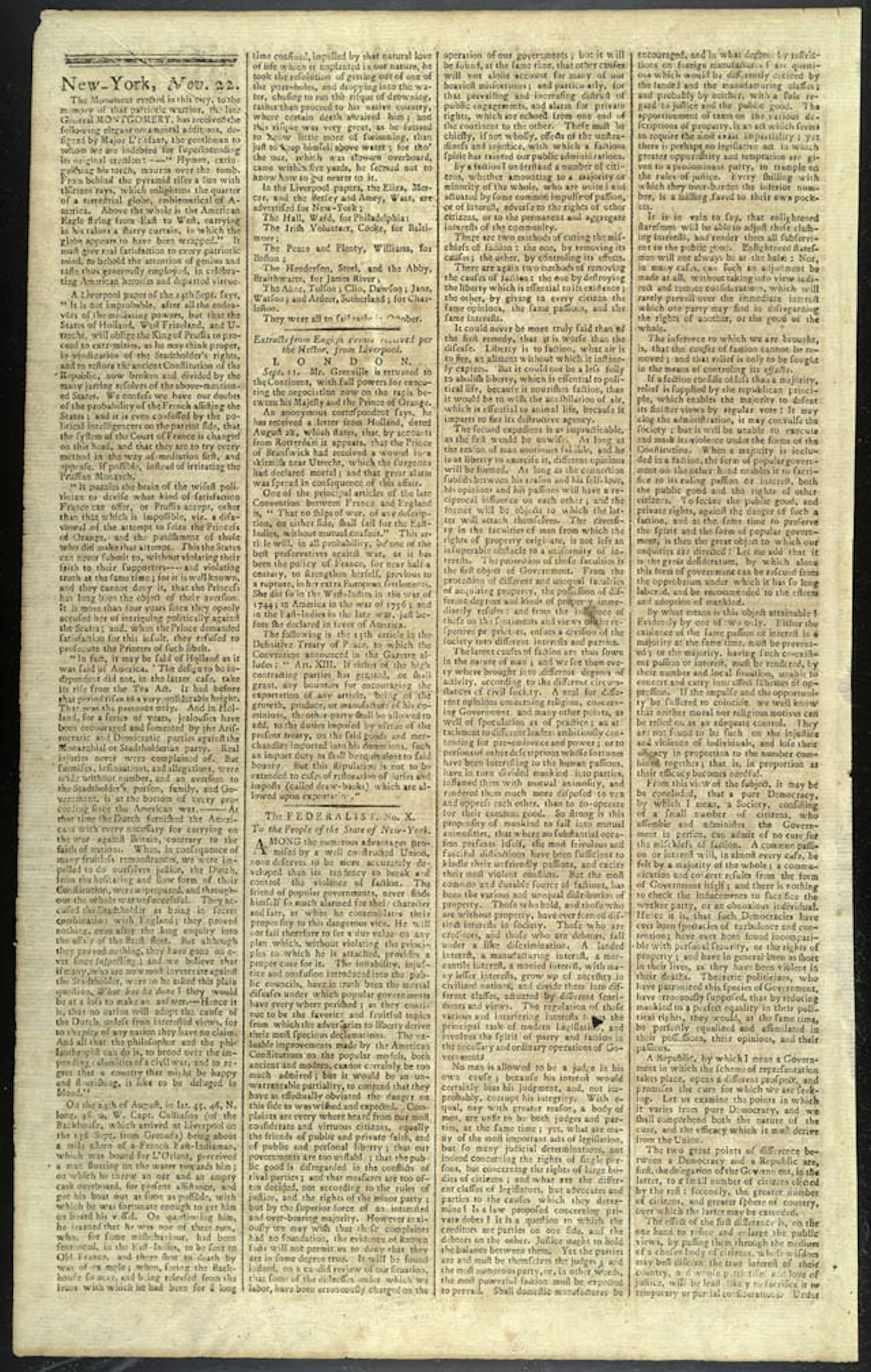
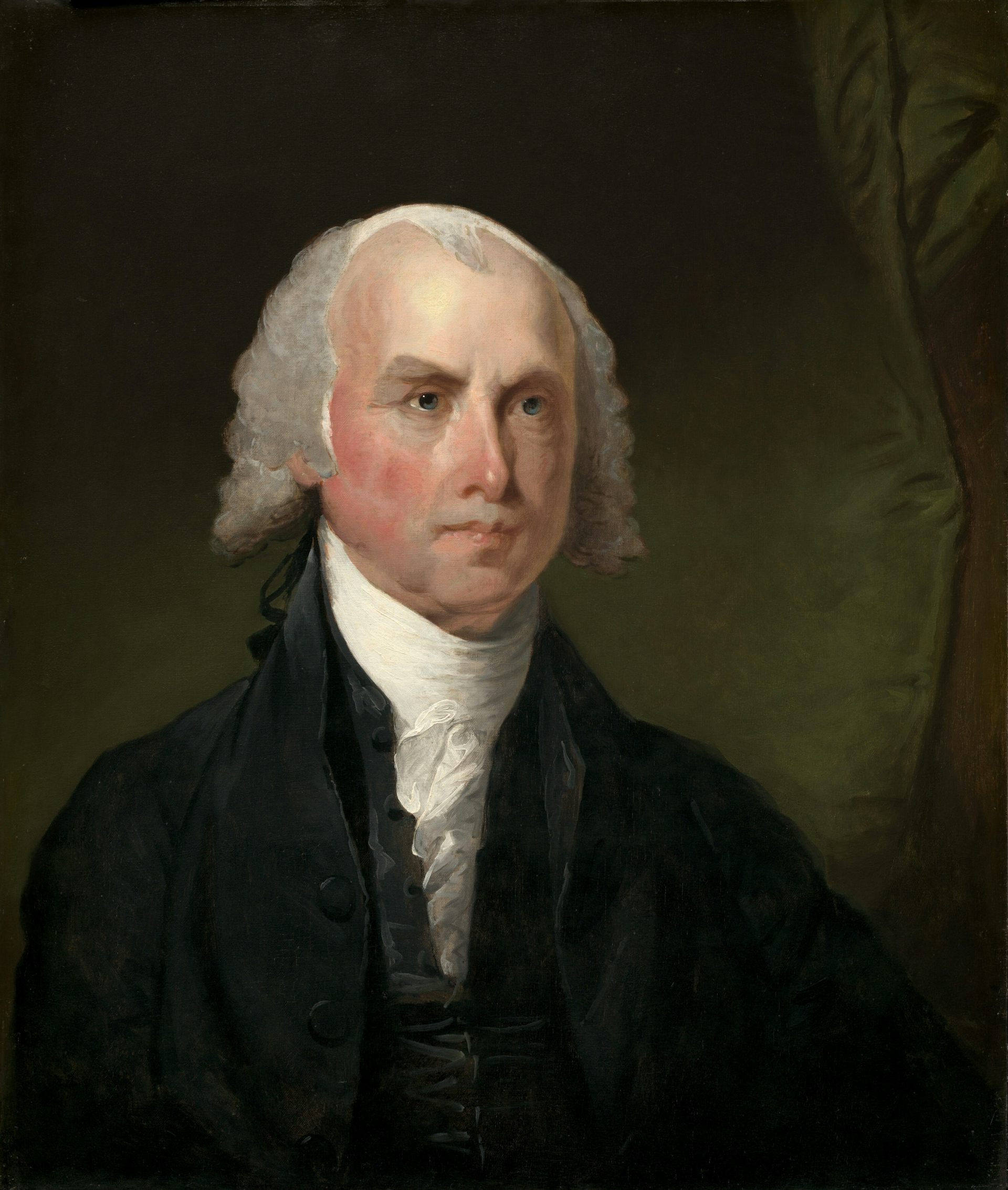
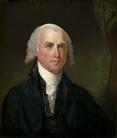
Let’s start with a famous definition. Here is the often-quoted “Father of the Constitution,” James Madison, urging Americans to ratify the new frame of government proposed by the Constitutional Convention in 1787.
In Federalist essay No. 10, Madison distinguished two sorts of governments for his readers.
One was a “pure democracy,” which he described as “a society consisting of a small number of citizens, who assemble and administer the government in person.” A New England town meeting might qualify for this definition, where voters assembled to choose town officers and approve local bylaws.
The other type of government was a “republic,” defined as “a government in which the scheme of representation takes place” – meaning where the people’s chosen representatives made governing decisions for them.
That seems cut and dried. Surely no one thought the entire population of 13 states could work like a town meeting.
But Madison here was saying only that the possibility of a “pure” democracy was impractical. He was by no means banishing all democratic ideas and institutions.
As the French theorist Montesquieu had noted, republics were of varying sorts. Some republics were aristocratic, controlled by a relative few who were set above the rest. Other republics were democratic, engaging many more in the ongoing affairs of government.
What was at stake in the U.S. in 1787 wasn’t a “pure” democracy nor a “pure” republic. The issue was how aristocratic – and how democratic – the American scheme of representation would be.
Who would be represented – the many or the few?
America had never been the home of an aristocracy in the British sense. Besides, the Revolution had discredited the very idea of hereditary power. There would be no House of Lords, filled with titled men born into political power and a special set of legal privileges denied to ordinary people. The people alone would be sovereign, and all authority to govern derived, directly or indirectly, from them.
Even so, the problem of aristocracy remained. After all, it had been the lower house of Parliament – the House of Commons, not of Lords – that had sparked the imperial debate when it tried to tax and legislate for the Colonists.
Not nobility, members of the Commons still formed a remote and ambitious elite. None was elected by American voters or even necessarily informed about the Colonists’ lives. Apologists for Parliament claimed that the Commons “virtually” represented the Colonies anyway.
But the Colonists watched the Commons ignore American grievances while favoring private interests – East India Company shareholders, for example – that served wealthy British gentlemen such as themselves.
Many concluded that the members of the House of Commons did not “actually” represent either the poor of Britain or the growing population of the continental Colonies.
In contrast, “patriot” Americans pointed to the legislative assemblies established in each colony soon after its founding.
Needing to attract British settlers, and following the British model, each colony established an elected house of the legislature to provide a check to governors and upper houses that were appointed by the king or a wealthy Colonial proprietor.
Law and custom required that delegates to these assemblies live among their constituents. Although they were men of some fortune and standing in their districts, assemblymen might plausibly “actually represent” their lesser neighbors.
In the lead-up to the Revolution, patriots used new measures to ensure their representatives’ fidelity: They called for vigilant popular oversight of government decision, publicized those decisions in the press, wrote constituent instructions for legislators and winnowed out noncompliant officeholders at election time.
With independence, Americans created a patchwork of new, representative state governments. South Carolina empowered its wealthy planter elite by setting a high property-holding requirement for voters and a higher one for officeholders. Pennsylvania and Vermont adopted unprecedentedly democratic systems that allowed a large proportion of the white male population to participate in government.
By 1787, some Americans thought there was too much popular democracy – too much power given to nonelite members of society, especially within state governments.
The Constitution adopted restraints on democracy – a Senate appointed by state legislatures, an electoral college that put the choice of president at a remove from the people, a supremacy clause that allowed national laws to supersede, or contravene, state laws.
At the same time, a commitment to democracy was also evident in the U.S. frame of government.
The Constitution set no property requirements for federal officeholders. It left suffrage requirements up to individual states, some of which already extended the vote to all male taxpayers.
Equally important, the ratification process produced a consensus that a bill of rights was necessary to protect ordinary people’s rights and liberties from government overreach.
These first 10 amendments would defend individual rights but also collective rights of the people, such as their right to assemble, to petition the government or even to change it.
The Bill of Rights also protected a free press. It ensured that ordinary free men would still serve in armed militias when their state needed protection. And they would still sit on grand and petit juries to enforce the law or prevent its overreach.
These were the sorts of institutions that the lawyer John Adams called “democratical.”
Within a few decades, the common phrase for the American system became “democracy.”
Madison had been inconsistent in how he used the term. In the 1790s and 1800s he called himself a “Democratic Republican,” in opposition to the allegedly aristocratic party, the Federalists.
Decades later, Madison was frustrated when pushed to define the U.S. government more precisely. Ordinary “political vocabulary” fell short, he wrote. The American system was “so unexampled in its origin, so complex in its structure, and so peculiar in some of its features” that it was best understood as something new.
How aristocratic? How democratic? The question of 1787 has returned repeatedly to face Americans.
Elites with aristocratic aspirations have repeatedly tried to build permanent governing hierarchies. American history is partly the story of these contests – Free-Soilers against a slaveholding elite, reformers against wealthy “barons” of the Gilded Age, critics of inequality against billionaires who shape government policies today. In such cases, Americans have often turned to more and better democracy, their necessary resource for pressing their political leaders to actually represent the people.
Following Madison’s advice, Americans today can refuse to be misled into describing the U.S. in a single, inadequate term.
They might prize both of these historic commitments: to a republic that insists on the people’s right to be represented rather than ruled, and to a democracy that ensures that ordinary people might collectively make it so.
This article is republished from The Conversation, a nonprofit, independent news organization bringing you facts and trustworthy analysis to help you make sense of our complex world. It was written by: Barbara Clark Smith, Smithsonian Institution
Read more:
To American revolutionaries, patriotism meant fair dealing with one another
Why free speech rights got left out of the Constitution – and added in later via the First Amendment
Jury trials, a critical part of democracy, are disappearing
Barbara Clark Smith does not work for, consult, own shares in or receive funding from any company or organization that would benefit from this article, and has disclosed no relevant affiliations beyond their academic appointment.

















































Comments