The ever-evolving Latino vote is rapidly shifting away from Trump and Republicans
Published in Political News
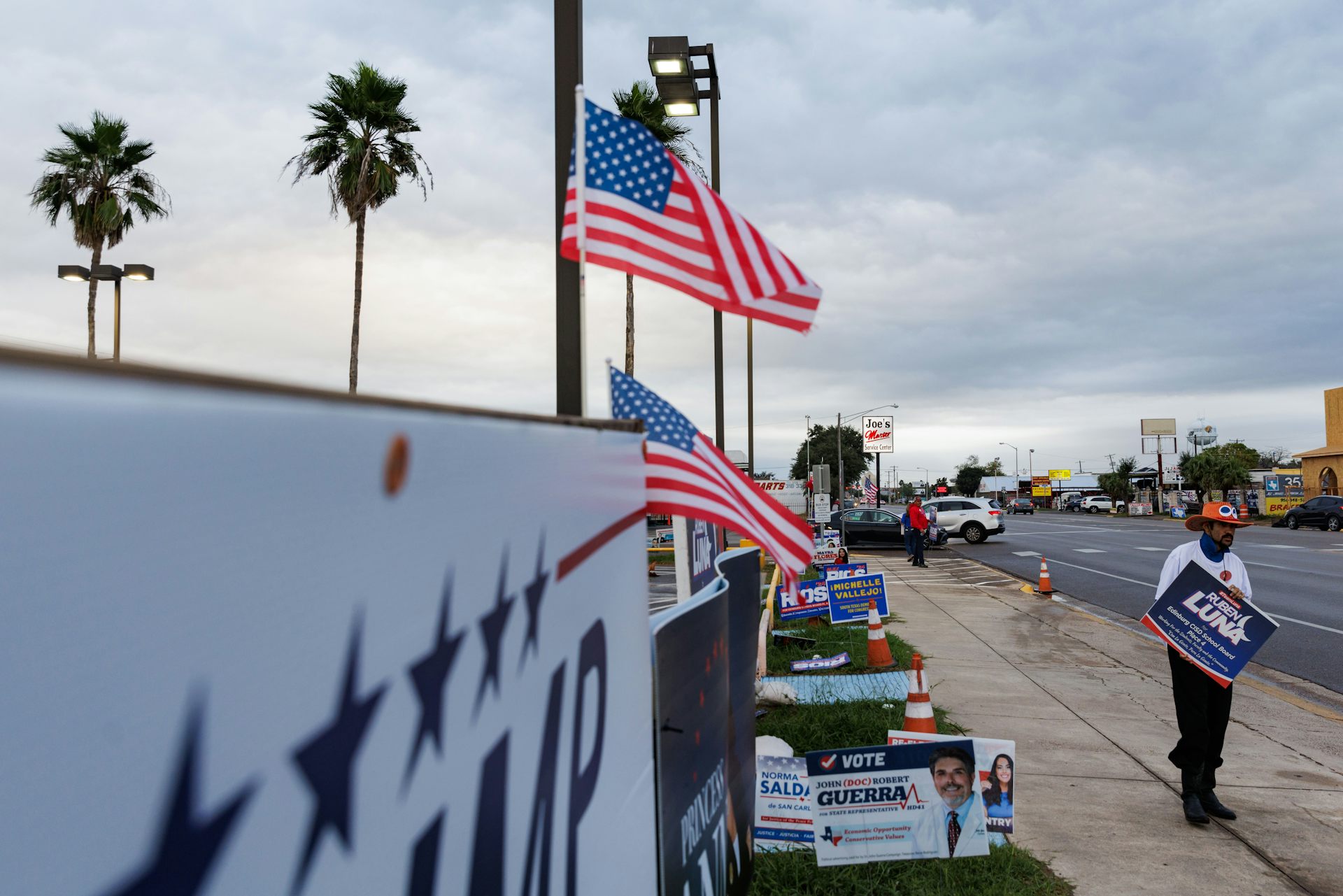



In 2024, Donald Trump dramatically improved his performance among nearly all groups of voters from four years earlier. Trump’s growth among Hispanic voters was especially notable, increasing by more than 10 points from 2020 to 2024, at least according to exit polls.
This led to a considerable amount of commentary speculating that Hispanic voters, historically more supportive of Democrats, might continue shifting toward the GOP.
News reports suggesting Latinos were critical to Trump’s 2024 victory were, in our view, overblown. Even if Latinos had not shifted, Trump still would have won in 2024.
Yet there is no question that over the past three election cycles, Latino voters – Latino men under 40, in particular – have shifted right. That change has benefited GOP candidates, even as the majority of Latinos still voted for Democrats.
However, evidence from general elections in 2025 in places such as New Jersey, New York and Virginia, as well as special elections in 2026, suggest an abrupt correction is underway, with some of the Latino voters who backed Trump now swinging back to the Democrats.
As political scientists and pollsters who study Hispanic voting trends, we are concerned with the question of whether these latest movements are real or simply a function of fluctuating Latino Democratic turnout rates. In other words, are Latinos broadly changing their votes back to Democrats, or are Latinos who remained loyal to the Democrats now more angry and fired up?
Survey and election data suggest it’s a bit of both. So what does this portend for the future of American politics?
The history of the Latino vote nationwide had for decades been one of long-term stability. Historically, Democrats enjoyed an approximate 65% to 35% advantage over Republicans.
That advantage shrank marginally after Republican President Ronald Reagan signed the Immigration Reform and Control Act in 1986, providing a path to citizenship for millions. But the more familiar two-thirds advantage for the Democratic Party returned following passage of Proposition 187, a 1994 anti-immigrant initiative in California that ultimately mobilized Latinos against Republicans.
Another effort at GOP outreach to Hispanic voters culminated in President George W. Bush taking approximately 40% of the Latino vote in 2004. That growth, however, soon eroded in the wake of anti-immigrant legislation passed by the Republican-controlled House in 2005 and 2006.
The successful campaigns of Democrat Barack Obama in 2008 and 2012, as well as Hillary Clinton’s unsuccessful 2016 campaign against Trump, saw Democrats reaping a relatively high level of Latino support, peaking at a 3-to-1 advantage in 2012.
That made Trump’s improvements among Latinos in 2020 and 2024 feel, for some, particularly unexpected. He lodged notable breakthroughs in parts of Florida, where he carried Miami-Dade County, and Texas, where he flipped the historically Democratic Rio Grande Valley.
It should not have been such a surprise. There has been a history of sizable shares of Latinos supporting Republican candidates. For instance, both former President George W. Bush and his brother, former Florida Gov. Jeb Bush, performed well with Latinos in Texas and Florida.
For two decades, Democrats have campaigned among Latinos on the promise of comprehensive immigration reform and an economic policy that would level the playing field, including raising the federal minimum wage, providing universal pre-K education and promoting affordable housing.
Many Latinos feel they are still waiting for these Democratic policies to be enacted, let alone improve their lives.
Democratic trifectas in 2009-10 and 2021-22 – when the party held both chambers of Congress, along with the presidency – failed to produce meaningful movement on immigration policy. Many Latinos felt their daily lives had not improved, as they faced high costs of living, expensive housing markets and rising health care costs. While House Democrats did pass numerous bills to address these topics, Senate moderates proved difficult to persuade.
Given these shortcomings, running on the message that “the GOP are bad guys” only gets Democrats so far. In 2024, surveys and focus groups of Hispanic voters made it clear that not everyone was convinced by this characterization. The frustrations of working-class families during the Biden administration were real, whereas fears of mass deportations and other social chaos that a second Trump term might portend were, at that point, conjecture.
The Trump campaign specifically promised widespread action against immigrants, but many of our Latino focus group participants felt this was bluster. They believed that Trump’s actions would be targeted against blatant criminals and that his policies would not affect their families and friends.
They did not believe the worst-case scenarios presented by Vice President Kamala Harris and other Democrats during the campaign. Despite often not liking Trump, his economic promises felt good during the 2024 affordability crisis.
Many Latinos are now quite upset with Trump. The 2025 gubernatorial elections in New Jersey and Virginia point to dramatic 25-point changes in the Latino vote in the Democrats’ direction, compared with Trump’s 2024 performance.
In December 2025, the first Democrat was elected mayor of Miami since 1997, with Latino support. A Democrat won a heavily Republican state legislative district in Texas in February 2026 with an estimated 79% of the Latino vote. Most recently, Latino voter turnout surged to record levels in the March Democratic primary in Texas.
Majorities of Latino voters believe that their economic fortunes have declined since Trump returned to the White House. Moreover, they expect the situation to worsen over the next year. In March 2026, The Economist reported that Trump’s support among Latinos had fallen to 22%.
In a bipartisan poll by UnidosUS released in November 2025, only 14% of Latino voters said their lives were better after one year under Trump, while 39% said they had gotten worse. Looking ahead, 50% expected things to get worse still in 2026, while only 20% were optimistic about their economic future. Two-thirds of Latino voters felt that Trump and the Republicans were not focusing enough on improving the economy for people like them.
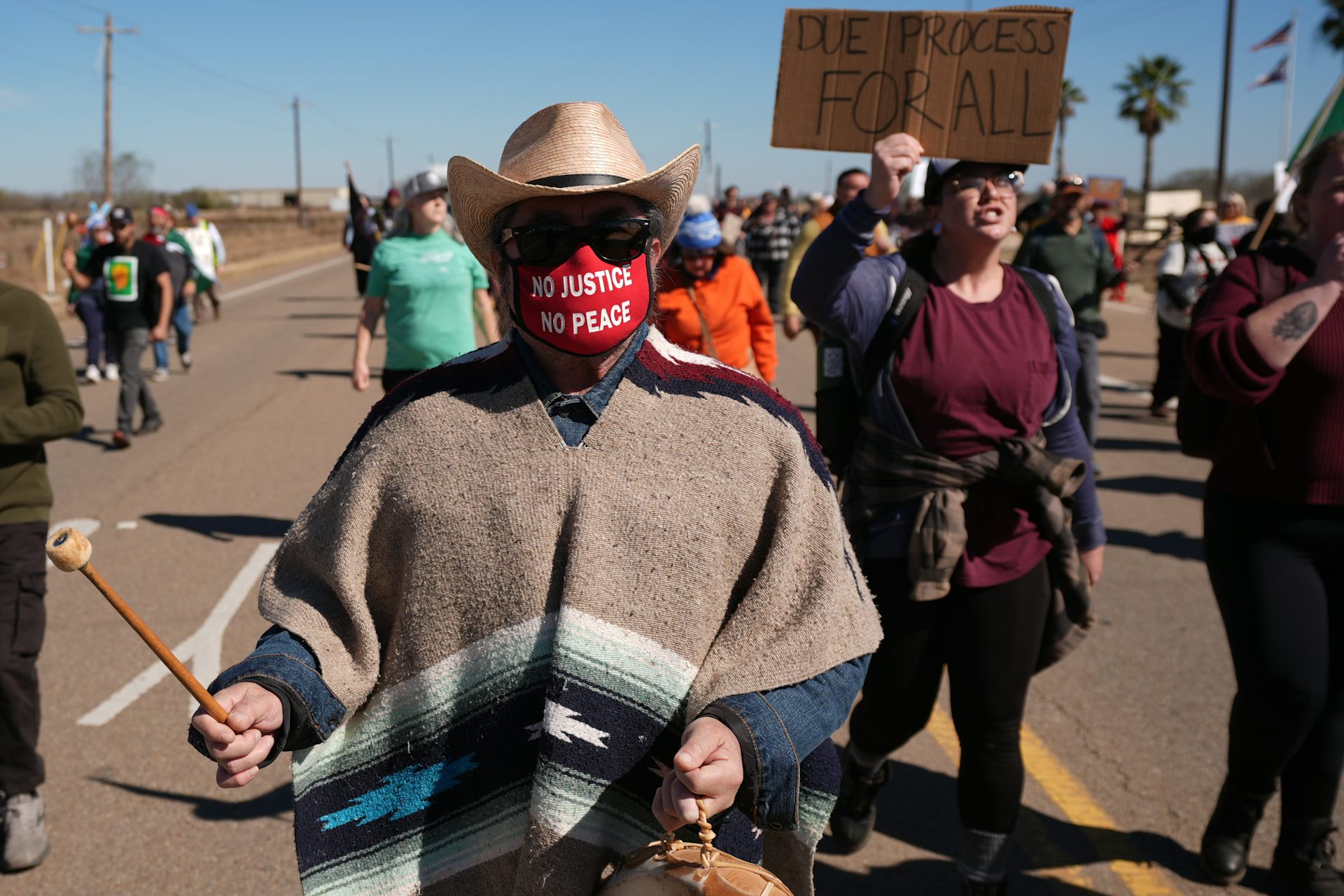
What’s more, mass deportations have happened under the second Trump administration. The vast majority of those detained for deportation, including those who have died, had no criminal record.
Latinos are overwhelmingly opposed to federal troops in U.S. cities, according to our polling; 41% fear legal residents and U.S. citizens getting caught up in enforcement actions. The No. 1 immigration concern for Latino voters remains a path to citizenship for Dreamers – the undocumented immigrants brought to the U.S. as children – and for immigrants who have worked and paid taxes in the country for more than 20 years but lack formal status.
Among Latinos who actually voted for Trump, many would not do so again. Our poll suggests that 22% of Latinos who voted for Trump in 2024 would not vote for him again. By contrast, Democrats retain support from 93% of their 2024 Latino voters.
The long-term effects of the Trump presidency on the Latino electorate are difficult to predict, but for now party preferences have shifted firmly back toward the Democrats. Among voters in the UnidosUS poll, 55% said they felt the Democrats “care a great deal” about Latinos, compared with 29% saying they felt that way about the GOP. At the same time, 33% of Latino voters see the GOP as “hostile,” compared with just 7% who believe this about the Democrats.
If the recent leftward shift is sustained, or the earlier shift to the right was illusory, the effects on the politics of 2026 could be large, potentially putting control of Congress in the hands of Latino voters. There are 46 House districts where the number of registered voters who are Latino exceeds the total margin of victory for those seats in 2024, with 23 currently held by Republicans and 23 currently held by Democrats.
Latino voters need to believe that politicians truly care about their concerns and will work to implement a plan to create equal opportunities for the nation’s largest minority group to achieve the American dream. We believe the candidates able to make that pitch convincingly will be the most successful.
This article is republished from The Conversation, a nonprofit, independent news organization bringing you facts and trustworthy analysis to help you make sense of our complex world. It was written by: Matt A. Barreto, UCLA Luskin School of Public Affairs and Gary M. Segura, UCLA Luskin School of Public Affairs
Read more:
Why did so many Latino and Hispanic voters help return Donald Trump to power?
ICE immigration tactics are shocking more Americans as US‑Mexico border operations move north
Deportation fears create ripple effects for immigrants and their communities
Matt A. Barreto is principal and co-founder of the polling firm BSP Research. BSP Research has conducted polling for non-profit and advocacy organizations, businesses, and candidates. Barreto has, in the past, directly consulted with Democratic candidates for House, Senate and the presidency.
Gary M. Segura is principal and co-founder of the polling firm BSP Research. BSP Research has conducted polling for non-profit and advocacy organizations, businesses, and candidates. Segura has, in the past, directly consulted with Democratic candidates for House, Senate and the presidency.




















































Comments