Congress once fought to limit a president’s war powers − more than 50 years later, its successors are less willing to assert their authority
Published in Political News
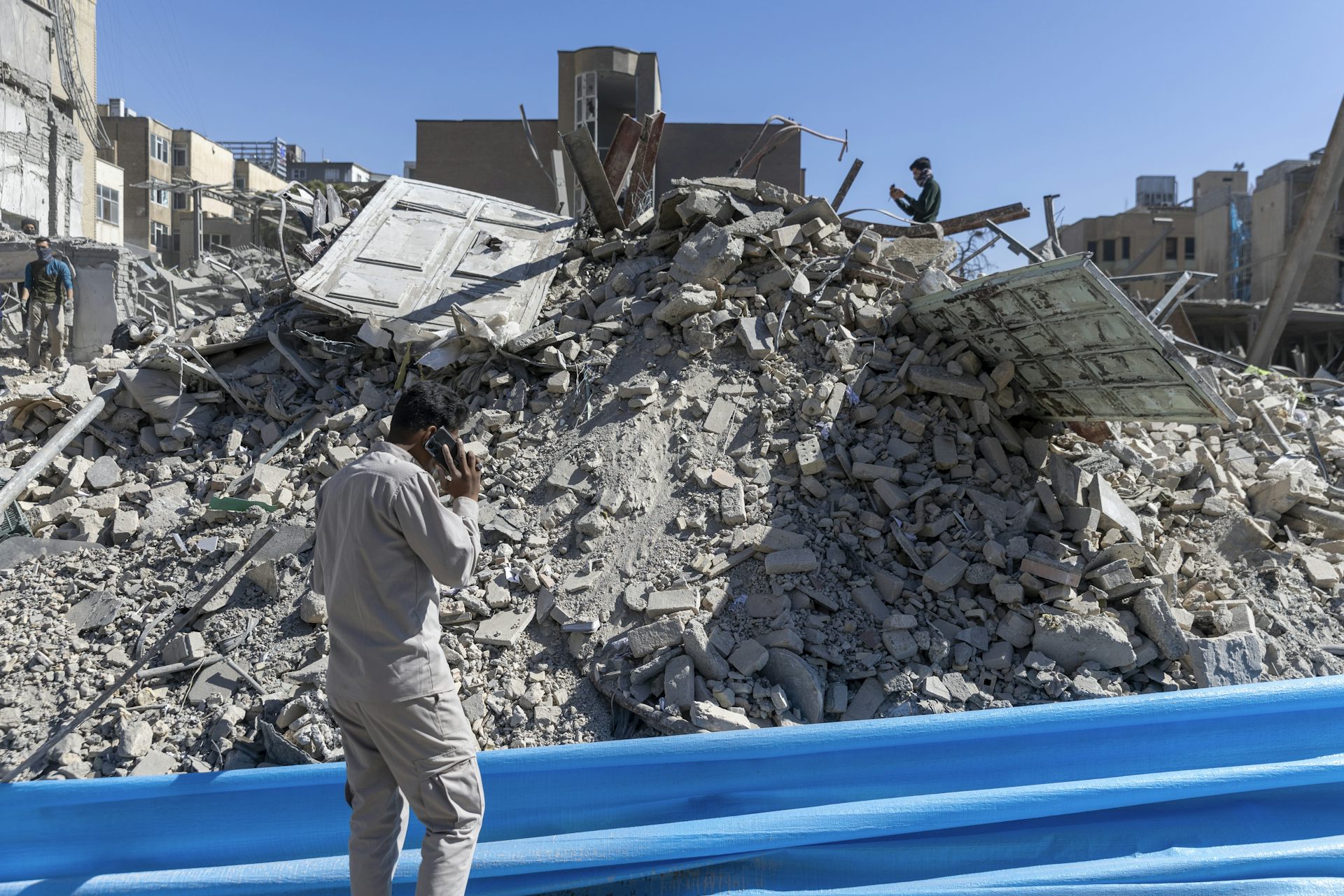

Article 1 of the U.S. Constitution gives Congress the power to declare war, not the president. But most modern presidents and their legal counsel have asserted that Article 2 of the Constitution allows the president to use the military in certain situations without prior congressional approval – and have acted on that, sending troops into conflicts from Panama to Libya, with no regard for Congress’ will.
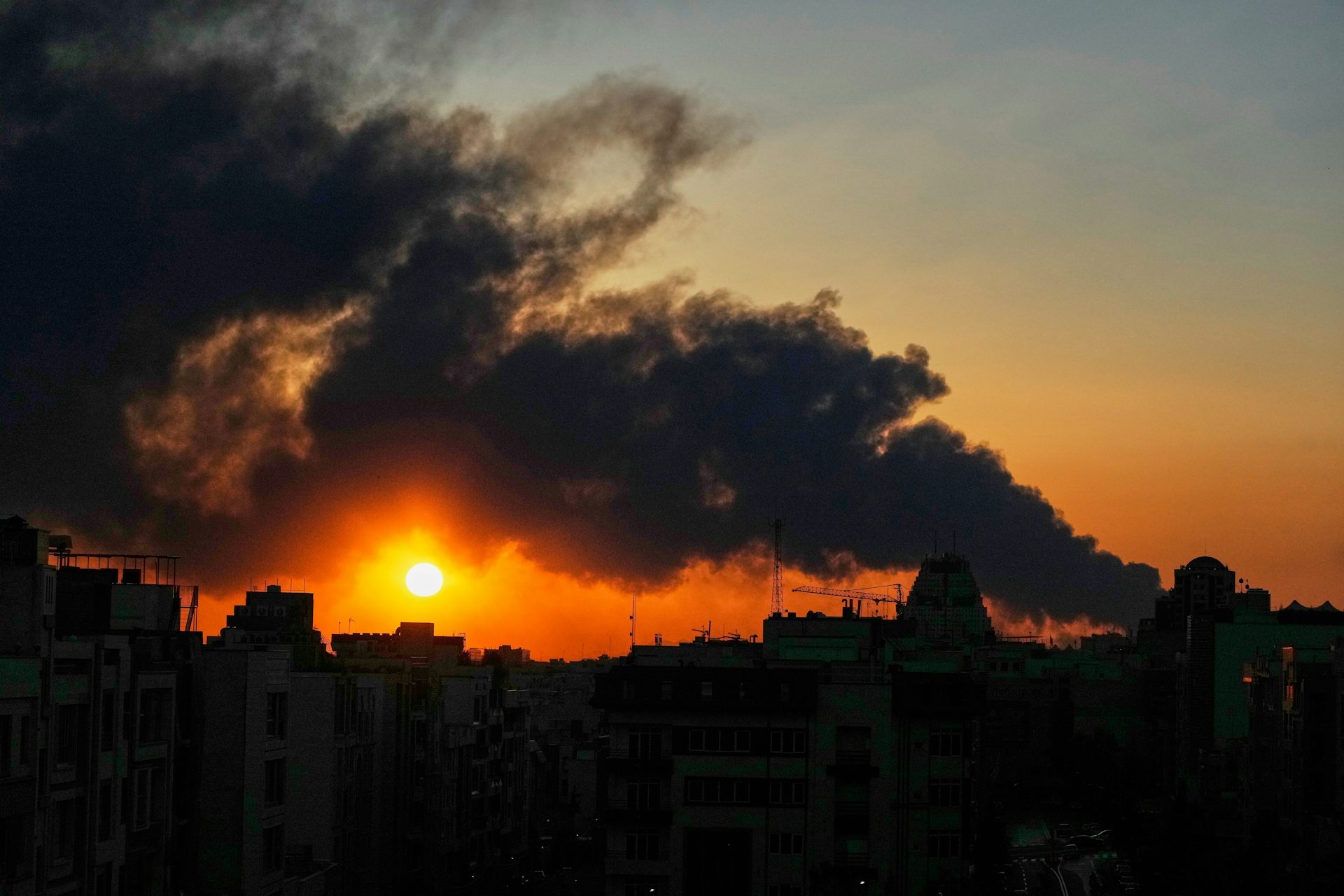
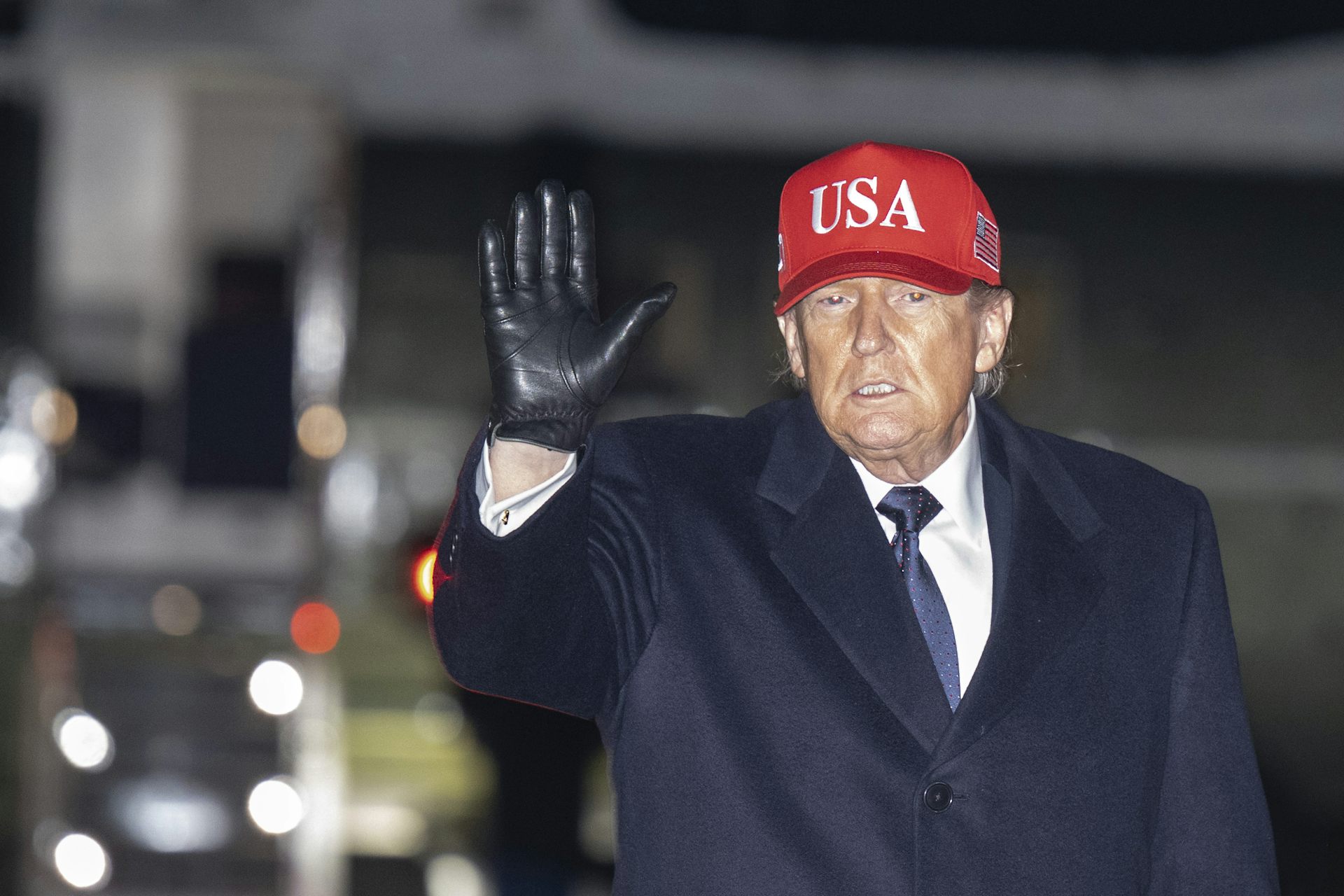
Congress has for the most part registered only feeble and ineffective opposition to such executive action. The current move in Congress to deny President Donald Trump the ability to continue the war with Iran – led by Democrats, but with some Republican support – will likely fail, as have previous efforts during other conflicts.
But there was a time when Americans saw Congress stand up to a president who unilaterally took the country to war.
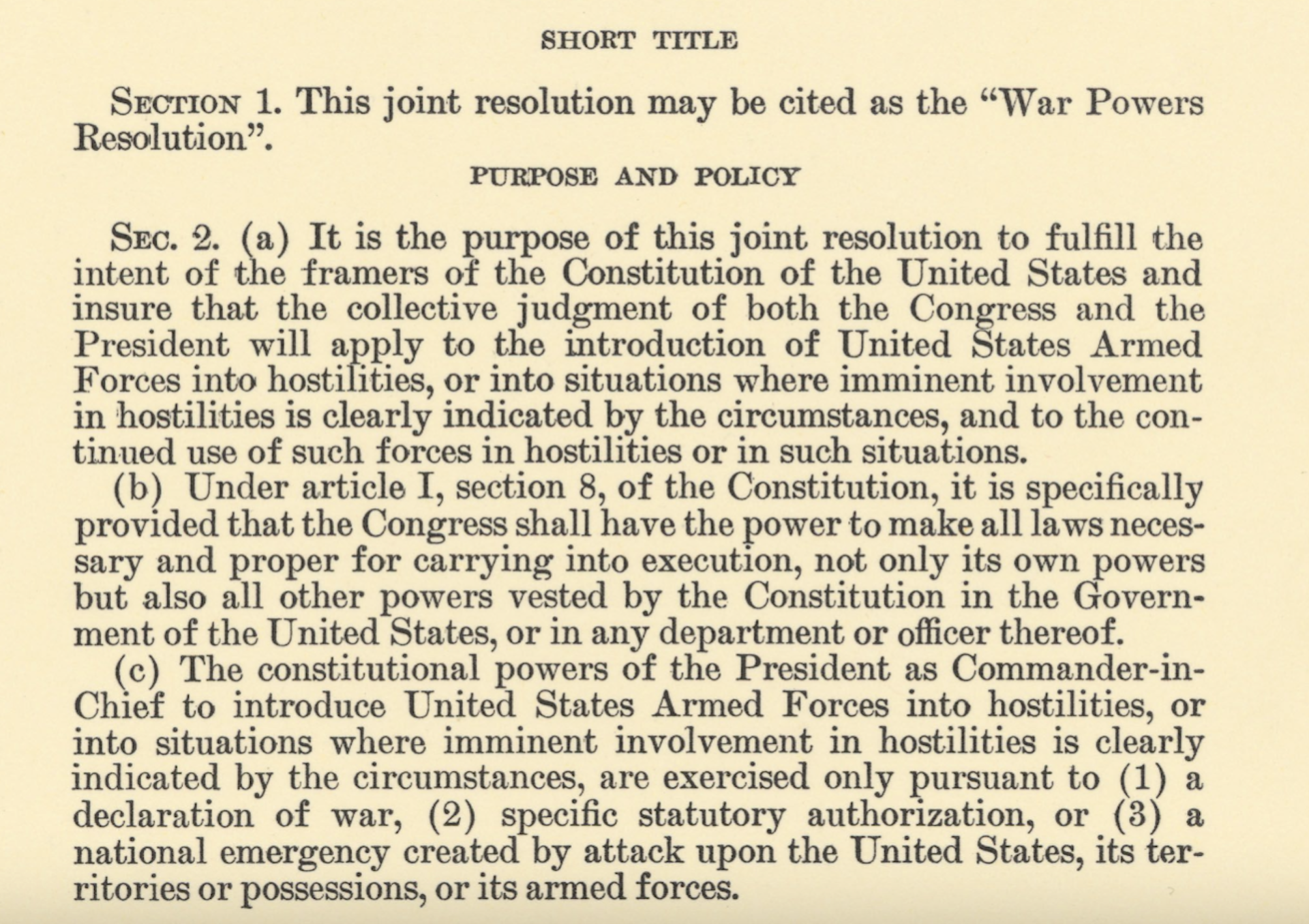
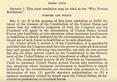
It was at the tail end of the Vietnam War, when Congress passed the War Powers Resolution of 1973, asserting that it was legislators – not the president – who had the power to declare war.
Once it passed both houses, President Richard Nixon vetoed it, claiming it was unconstitutional.
In response, the legislative branch overturned the veto with the two-thirds majority vote needed to prevail.
Compared to Congress’ limp response to Trump’s actions in Iran, and its similar failure to assert itself during Trump’s military action in Venezuela, it was a breathtaking act of legislative assertion.
When they debated the War Powers Resolution, members of Congress were seeing the erosion of their control over the decision to engage in military operations large and small. With a strong bipartisan consensus, they determined they had to collectively use their powers, including the power of the purse, to thwart executive overreach.
Congress’ actions came in response to the growing protests against the Vietnam War in general and Nixon’s decision to expand the war by sending U.S. troops to invade the neutral country of Cambodia to disrupt the supply lines of the Viet Cong, the communist guerrilla force that accounted for a large number of the 58,000 Americans killed in the war.
Nixon had begun covert carpet bombing of Cambodia in 1969, and then announced in 1970 that he would send ground troops into the country the next year.
Congress – and the country– reacted extremely negatively. Members of Congress collaborated across party lines to draft legislation in an attempt to assert their power. It was a slow process, however, involving long periods of deliberation.
They used many different methods to attempt to constrain the president. Within months of the introduction of troops to Cambodia, Congress attempted to pass amendments that would restrict his ability to invade neighboring countries. Prompted by protesting and the illegal actions in Cambodia, Congress began crafting legislation that would draw down troops in Vietnam.
With these moves, lawmakers placed immense pressure on the president. This eventually led to the drafting and eventual signing of the peace agreement ending the Vietnam war in 1973.
This was not enough for Congress, however.
Congress wanted to create a document ensuring presidents could not unilaterally make war. They wanted legislative consultation.
They intended the War Powers Resolution to act as a permanent constraint. So, in the resolution they spelled out the specific actions in which presidents can start a conflict:
• First, if there is an invasion of the United States, the president can respond. In this instance, the president can act prior to congressional authorization.
• Second, if Congress provides an “Authorization for the Use of Military Force,” the president can assume he has authorization – but only as long as it is in effect.
• Finally, if Congress declares war, the president can act.
Lawmakers did, however, provide some flexibility. In the War Powers Resolution, they said a president can initiate and carry out hostilities for 60 days and has a further 30 days to draw down the troops. Once the executive has initiated hostilities, Congress must receive information about that action within 48 hours.
This opens the door for presidents to engage in smaller-scale or short operations without stepping outside the lines set in the law.
Presidents from both parties have availed themselves of this flexibility. As far back as 1975, when President Gerald Ford rescued the SS Mayaguez, the merchant ship captured by Cambodia’s Khmer Rouge, presidents have acknowledged the law and dutifully reported their military actions to Congress.
Like his predecessors, Trump sent a letter to Congress after his June 2025 missile attacks against Iran, as well as at the start of the currently open-ended conflict.
Presidents since the passage of the War Powers Resolution have not, however, acknowledged that they have to get congressional approval of their actions, with few exceptions. Predominantly, without congressional approval, they limit their actions to the 60-to-90-day window.
President Barack Obama, however, attempted to circumvent the window when his bombing campaign in Libya in 2011 dragged on, as well as when he bombed the Islamic State group in 2014. In the first instance, he claimed the War Powers Resolution did not apply. In the second, he claimed each bombing campaign was discrete, rather than part of a larger campaign.
The balance of power between the legislative and executive branches changed considerably with the passage of the 2001 Authorization for Use of Military Force related to the Sept. 11, 2001, terrorist attacks, and the 2002 Authorization for Use of Military Force that gave legislative permission for President George W. Bush to invade Iraq.
Because Congress did not put sunset dates into these authorizations, subsequent presidents Obama, Trump and Joe Biden used those same authorizations for a host of later military actions in the Middle East and elsewhere.
And legislators are deeply divided in the current discussions about demanding the cessation of hostilities against Iran.
Republican House Speaker Mike Johnson says that limiting the president at this time is “dangerous.” Former congresswoman Marjorie Taylor Greene – who has fallen out of favor with Trump’s MAGA base and the president himself – took the opposing view, posted on social media, “Now, America is going to be force fed and gas lighted all the ‘noble’ reasons the American ‘Peace’ President and Pro-Peace administration had to go to war once again this year, after being in power for only a year.”
Has the U.S. entered a moment when members of Congress reassert themselves the way they did at the tail end of the Vietnam war?
It is possible that they will follow James Madison’s advice about the power relationship between Congress and the president. Writing in the Federalist Papers, Madison said that “ambition” has “to counter ambition.” He continued, “The interest of the man must be connected with the constitutional rights of the place. It may be a reflection on human nature, that such devices should be necessary to control the abuses of government.”
As I explain in my book about congressional war powers, the constitutional system creates an invitation to struggle. Now, as the U.S. wages war on Iran, Congress must decide whether it wants to struggle, as it did during the Vietnam War, or remain compliant and in the president’s shadow.
This article is republished from The Conversation, a nonprofit, independent news organization bringing you facts and trustworthy analysis to help you make sense of our complex world. It was written by: Sarah Burns, Rochester Institute of Technology; Institute for Humane Studies
Read more:
I wrote a book on the politics of war powers, and Trump’s attack on Venezuela reflects Congress surrendering its decision‑making powers
Presidents of both parties have launched military action without Congress declaring war − Trump’s bombing of Iran is just the latest
Biden’s use of military in Yemen upsets congressional progressives, but fits with long tradition of presidents exercising commander in chief’s power
Sarah Burns has received funding from the Institute for Humane Studies.


















































Comments