Massachusetts reports first West Nile virus mosquito case of year
Published in Science & Technology News
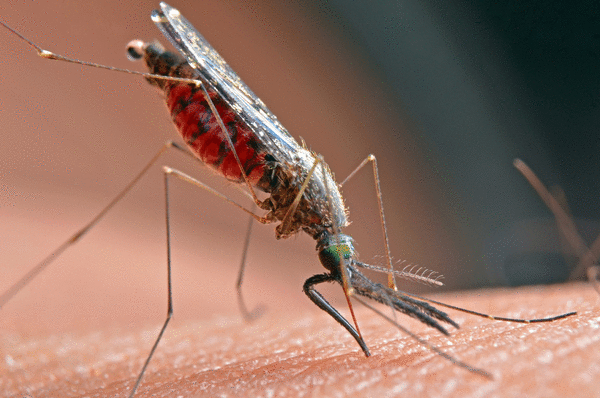
BOSTON — Time to pull out the bug spray.
Bay State health officials have announced that West Nile virus was detected in mosquitoes for the first time this year.
The presence of WNV was confirmed by the Massachusetts State Public Health Laboratory in a mosquito sample collected in Clarksburg — out in Berkshire County.
The Department of Public Health is now urging residents to use bug spray when outside.
“With warmer weather and summer officially beginning this week, it is the time of year when we typically begin detecting West Nile virus in mosquito populations,” said Public Health Commissioner Robbie Goldstein. “These findings serve as an important reminder that people should take steps to protect themselves from mosquito bites.
“WNV can cause serious illness, especially in those who are more vulnerable,” he added. “Taking simple measures such as using a mosquito repellent with an EPA-registered ingredient, wearing clothing to reduce exposed skin, draining standing water, and repairing window screens can help reduce the risk of mosquito-borne illness throughout the summer.”
WNV is usually transmitted to humans through the bite of an infected mosquito. There were nine human cases of WNV last year. No human or animal cases of WNV have been detected so far this year.
No evidence of Eastern Equine Encephalitis has been found so far this season. There were no human cases of EEE last year.
While WNV can infect people of all ages, people over the age of 50 are at higher risk for severe disease. Most people infected with WNV will have no symptoms.
When present, WNV symptoms tend to include fever and flu-like illness. In rare cases, more severe illness can occur.
“With West Nile virus, it is difficult to predict the amount of activity we will see,” said State Epidemiologist Catherine Brown. “We encourage everyone to make it a habit to check the mosquito-borne diseases webpages on mass.gov so you know when and where WNV activity is occurring in the state.”
Residents should be aware of peak mosquito hours — dusk to dawn is peak biting times for many mosquitoes. People should consider rescheduling outdoor activities that occur during the evening or early morning in areas of high risk.
Also, clothing can help reduce mosquito bites. Wearing long sleeves, long pants, and socks when outdoors will help keep mosquitoes away from your skin.
-------
©2026 MediaNews Group, Inc. Visit at bostonherald.com. Distributed by Tribune Content Agency, LLC.






Comments