Why Did Grandma Wash the Walls? 7 Once-Routine Cleaning Practices Rarely Seen Today
Published in Home and Consumer News
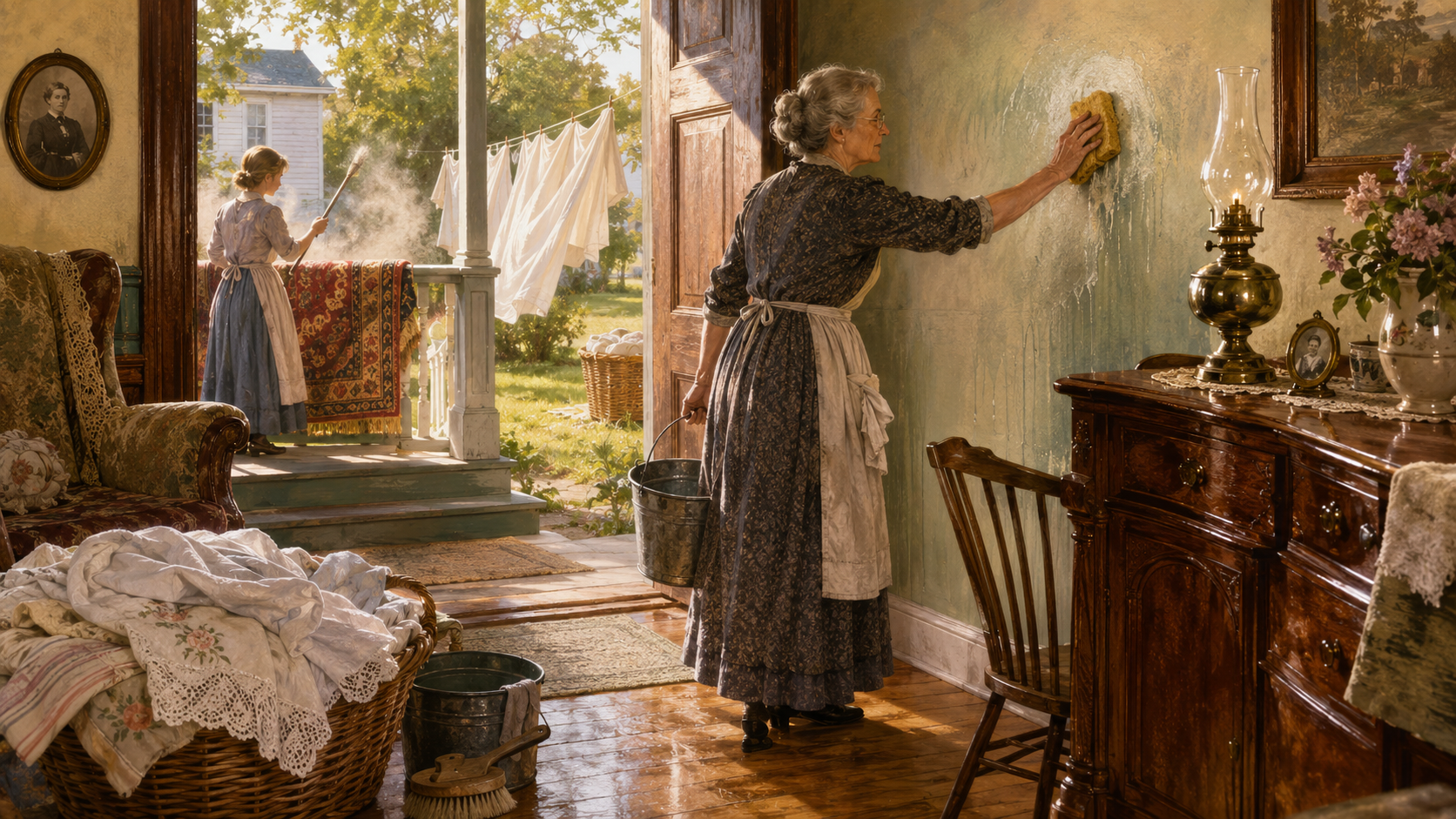
To modern eyes, some old household routines seem almost astonishing. Grandmothers washed walls, beat rugs, aired bedding, scrubbed front steps and polished furniture on schedules that could rival a military operation.
These chores were not necessarily signs that earlier generations enjoyed cleaning more. They reflected the homes, fuels, fabrics and social expectations of the time. Coal smoke settled on walls. Wood stoves produced soot. Open windows admitted dust. Rugs trapped dirt before powerful vacuum cleaners became common. Many households also placed a high value on visible order, especially in rooms where guests were received.
Some of these practices still make sense in certain homes. Others have faded because materials, appliances and lifestyles changed. Here are seven once-routine cleaning jobs that are far less common today.
1. Washing the walls
Yes, Grandma really did wash the walls.
In homes heated by coal, wood or fuel oil, soot and smoke could leave a gray or yellow film on plaster, wallpaper and painted surfaces. Cigarette smoke also contributed heavily to discoloration in many 20th-century homes. Kitchens added grease, steam and residue from frequent cooking.
Wall washing was often part of spring cleaning or preparation for holidays and visitors. Homemakers used sponges, cloths, buckets and mild soap, working carefully from one section to the next.
Modern central heating burns more cleanly, smoking indoors is less common and washable paints are widely available. As a result, many people now wipe only obvious marks near light switches, doors and cooking areas.
Still, walls collect more dirt than many homeowners realize. Dust, pet oils, fingerprints and cooking residue can dull a room gradually. An occasional gentle cleaning can brighten painted walls without recreating Grandma’s full-day ordeal.
2. Beating rugs outdoors
Before efficient household vacuums became widespread, rugs were carried outdoors, hung over a line or railing and struck with a carpet beater.
The process released clouds of dust, hair, crumbs and grit. It was noisy, physical work, but it removed debris that brooms could not reach.
Large rugs might be cleaned only seasonally because moving them required considerable effort. Smaller mats were taken outside much more often. In some neighborhoods, rug beating was a familiar sound on good-weather cleaning days.
Vacuum cleaners made the practice largely unnecessary. Modern machines can remove surface dirt quickly, and professional cleaners handle deep cleaning.
Even so, shaking small rugs outdoors remains useful. Entry mats, washable runners and pet bedding often release surprising amounts of debris before they ever reach a washing machine.
3. Airing beds and bedding
Many grandmothers did not make the bed immediately after waking. They pulled back the covers, opened a window and allowed the mattress and linens to air.
Blankets, quilts and pillows were sometimes hung outdoors in sunlight. The goal was to release moisture, freshen fabrics and reduce stale odors.
This routine made sense in homes without air conditioning, dehumidifiers or frequent machine washing. Bedding absorbed nighttime perspiration, while damp weather and limited ventilation could leave rooms feeling musty.
Modern people often rush to smooth the sheets and arrange pillows before leaving for work. Yet allowing a bed to air briefly remains a sensible habit. Pulling back the covers for part of the morning can help moisture evaporate before the bed is made.
Outdoor airing is less common because of apartment living, allergies, neighborhood restrictions and busy schedules. It has also become less necessary as blankets and sheets are easier to launder.
4. Scrubbing the front steps
The front entrance once served as a public statement about the household. Steps, porches and sidewalks were swept, scrubbed and sometimes whitened or polished.
In tightly packed towns and city neighborhoods, residents might clean the pavement directly in front of their homes. Mud, horse traffic, coal deliveries and foot traffic made exterior cleaning a frequent necessity.
A tidy step suggested discipline and respectability. Visitors saw it before anything else.
Today, concrete walkways are more likely to be rinsed with a hose or pressure washer. Apartment residents may not be responsible for exterior spaces at all. Cars also reduced the amount of direct foot traffic at many front entrances.
Still, the old instinct survives. A swept porch, clean welcome mat and uncluttered doorway can make a home feel cared for before anyone steps inside.
5. Polishing furniture every week
Wood furniture was once polished far more often than it is today.
Dining tables, sideboards, piano tops and cabinets received regular applications of wax or oil. The work removed dust, deepened the shine and reinforced the appearance of a well-kept room.
Some finishes genuinely benefited from periodic waxing. In other cases, frequent polishing was more about presentation than preservation. A glowing dining room table reflected pride in the home.
Modern furniture often has factory-applied finishes that require little more than dusting with a soft cloth. Too much polish can create buildup, attract dust or leave surfaces streaky.
The weekly ritual has therefore faded. Occasional cleaning with a product suited to the specific finish is usually enough.
Grandma may have overdone the polish, but she understood one useful principle: household materials last longer when people learn how to care for them properly.
6. Boiling and starching laundry
Laundry once involved much more than loading a machine and pressing a button.
White linens, dish towels and clothing might be boiled to remove stains and improve sanitation. Shirts, collars, aprons and table linens were treated with starch to create a crisp finish.
The process required tubs, kettles, washboards, wringers and considerable strength. Laundry day could consume most of a day and continue into ironing day.
Automatic washers, improved detergents and wrinkle-resistant fabrics transformed the routine. Most households no longer boil laundry, and heavily starched clothing is unusual outside military, ceremonial or professional settings.
A trace of the tradition remains in spray starch, pressed dress shirts and neatly ironed tablecloths. But few people miss wrestling wet sheets through a hand wringer.
7. Turning mattresses and cleaning underneath everything
Seasonal cleaning often meant dismantling a room.
Beds were moved. Mattresses were flipped and turned. Furniture was pulled away from walls. Drawers were emptied. Baseboards, bed frames and hidden corners were scrubbed.
This was partly necessary because older mattresses compressed unevenly and needed regular rotation. Furniture was also less likely to be moved during ordinary cleaning, allowing dust to accumulate in large quantities.
Many modern mattresses are one-sided and should be rotated rather than flipped. Lightweight vacuums and long attachments make it easier to clean hidden areas without taking a room apart.
Yet the old deep-cleaning approach still has value. Dust, pet hair and forgotten objects collect under beds and behind furniture even in the cleanest homes. A periodic room reset can reveal problems before they become permanent.
Grandma’s cleaning routine belonged to a different world, but it was not irrational. Her home produced more soot, trapped more dust and demanded more manual labor.
Modern households are easier to maintain, though not necessarily cleaner by default. The old practices remind us that homes slowly collect evidence of daily life, even when dirt is not immediately visible.
Few people need to wash every wall each spring. But wiping the baseboards, airing the bedding and moving the sofa once in a while might make Grandma proud.
========
Clara Whitcombe writes about domestic history, everyday traditions and the changing rhythms of home life.
Her work explores how older household customs continue to shape modern routines.
This article was written, in part, utilizing AI tools.






Comments