On Nutrition: White food isn't all bad
Published in Nutrition
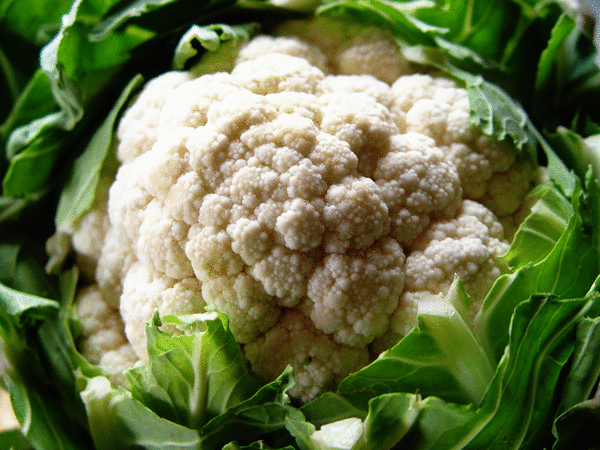
Ever hear the advice, “Don’t eat anything white”? Don’t believe it.
These are the kind of thoughts that pop into my head when I’m in the kitchen cooking a head of cauliflower.
To be fair, some of the advice against white foods has merit. A good example is white bread, typically overly refined and stripped of many of its healthful qualities.
But not always. In addition to the traditional “red” wheat that gives gives whole wheat bread its characteristic brownish color, farmers can now grow a lighter strain of wheat that is often used to make whole grain products.
Think of it as albino wheat, says the Oldways Whole Grains Council ( wholegrainscouncil.org ). Like other types of whole grain, whole wheat white flour contains the entire grain—bran, germ and endosperm. So it offers the same fiber, vitamins and minerals as traditional whole wheat. It is also milder in flavor, so I can pass it off to my grandkids as regular white bread.
And remember the sage advice to “eat a rainbow” of fruits and vegetables? It’s still true. But remember that a rainbow happens when white sunlight separates into its individual colors.
Cauliflower, kohlrabi and turnips are white members of a plant family known as cruciferous vegetables. Along with the likes of broccoli, Brussels sprouts, cabbage and kale, these veggies are well-known for their role in cancer prevention. And like other vegetables, they are rich in dietary fiber (food for the good bugs in our guts) and potassium, which helps keep blood pressure under control. All this, yet very low in calories.
And where would we be without garlic and onions? Garlic contains a compound called allicin, known for its power to fight colds and infections. Raw garlic, especially, has proved itself as a disease fighter due to its high levels of bioactive compounds called phytochemicals. Some experts name garlic a “functional spice” because it contains an array of nutrients and other compounds that promote health beyond just tasting good with spaghetti.
White beans like cannellini (white kidney beans), navy and butter beans are just as rich in protein, dietary fiber and other nutrients as other beans. According the the USDA Food Central Data ( fdc.nal.usda.gov ), a cup of cooked white beans is loaded with almost 17 grams of protein and a whopping 11 grams of dietary fiber. Much of this fiber is the soluble type, which helps lower blood sugars and blood cholesterol levels.
White beans are also a powerhouse of essential nutrients including calcium, iron, magnesium, potassium and zinc. Whatever the color, the nutritional richness of beans qualify them as a protein source as well as a vegetable.
White potatoes are perhaps the most maligned of white foods. Surprise! This starchy vegetable (think baked, not fried) has an extremely favorable nutrient profile. And, according the Alliance for Potato Research and Education ( apre.org ), potatoes are easy on the pocketbook.
©2026 MediaNews Group, Inc. Distributed by Tribune Content Agency, LLC.









Comments