Bay Area's first human West Nile virus cases of 2026 confirmed in Santa Clara County
Published in Health & Fitness
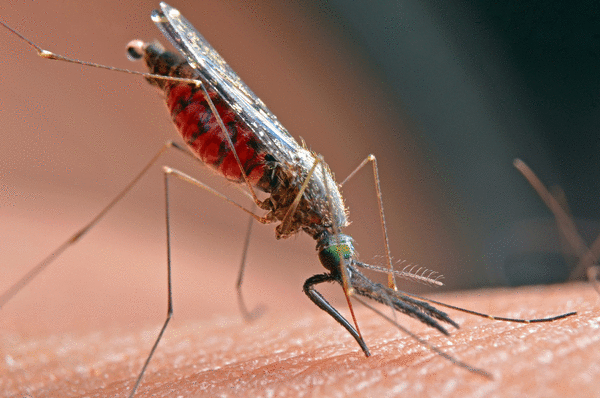
Two residents of Santa Clara County were infected by West Nile virus and are recovering at home after medical care, public health officials said Wednesday, the first confirmed human cases of the mosquito-borne virus this year in the Bay Area.
The two new cases in Santa Clara County were unrelated, and officials have not determined if either resident was infected locally because both traveled during the incubation period, which can last between two days and two weeks, said Dr. Krishna Surasi, communicable disease controller for the Santa Clara Public Health Department. Officials declined to release more details about the two cases to protect the privacy of the patients.
Public health officials in Santa Clara County and in the East Bay urged residents to take the virus seriously. Transmitted by a mosquito bite, the virus typically causes mild symptoms or none at all, but in rare circumstances it can be fatal.
Two people in Santa Clara County have died due to the virus in the last two years, state data shows, along with one person in Contra Costa County.
“It’s really important for people to recognize that this is a threat in the region, and to take whatever measures they can to protect themselves,” Surasi said.
West Nile virus is California’s most common and most serious mosquito-borne disease, according to the California Department of Public Health. Mosquitoes that spread West Nile virus are found throughout California. Since 2003, there have been more than 8,000 cases and 400 deaths reported from the virus in the state.
Symptoms include headaches, fever and body aches, Surasi said, but can progress to vomiting and neurological issues in serious cases. Statewide, five other cases of West Nile virus have been confirmed in humans this year, including one in Sacramento. The other cases were located in Southern California and the Central Valley. None of the cases this year were fatal.
Surasi urged residents to be vigilant this year.
“These two cases are a reminder that West Nile virus can cause very serious illness,” he said.
Jeremy Shannon, assistant manager of the Santa Clara County Mosquito and Vector Control District, said testing of mosquitoes for presence of the virus has revealed West Nile virus within the county this year. Residents should dump and drain any water, report other water sources to the district’s staff, and wear mosquito repellent like DEET or oil of lemon eucalyptus to reduce the risk of a bite. Mosquitoes are most active around dusk and dawn.
Mosquitoes breed in standing water, and they don’t need much room to lay their eggs.
“Even a water-bottle cap can be a source of mosquitoes,” said Nola Woods, spokesperson for the Contra Costa Mosquito & Vector Control District.
Shannon said mosquito activity is heightened this summer throughout California. More mosquitoes were able to survive the mild winter, and a wet spring replenished water sources, he said. Then came summertime heat.
Last month, Alameda County stepped up mosquito abatement by spraying insecticide in Newark after five birds tested positive for West Nile virus there. So far in 2026, a total of 32 birds in Newark, Fremont, Livermore and Castro Valley have tested positive for West Nile virus in Alameda County. That’s up from only six infected birds and zero positive mosquito samples in all of 2025 in Alameda County.
No vaccines or medicines are available to treat West Nile virus cases in humans, according to the Centers for Disease Control and Prevention. People older than 60 are most at risk, or those with weakened immune systems and chronic conditions like cancer, lupus and multiple sclerosis. However, serious cases are rare. Less than 1% of people infected with West Nile virus develop severe illness affecting the central nervous system, which can require hospitalization or result in death, according to the CDC.
West Nile virus spreads between birds and mosquitoes, and mosquitoes transmit the virus to humans and other animals. Local public health officials also urged residents to report dead birds, which may be tested for the virus. To report a dead bird in California, call the state hotline at 1-877-968-2473 or report online at westnile.ca.gov.
_____
©2026 MediaNews Group, Inc. Visit at mercurynews.com. Distributed by Tribune Content Agency, LLC.









Comments