How does Chicago feel about Kanye West now?
Published in Entertainment News
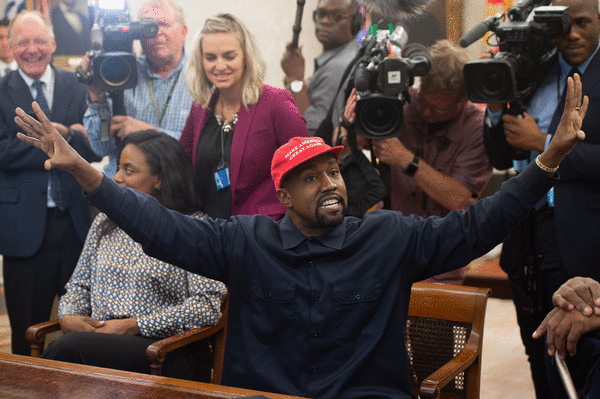
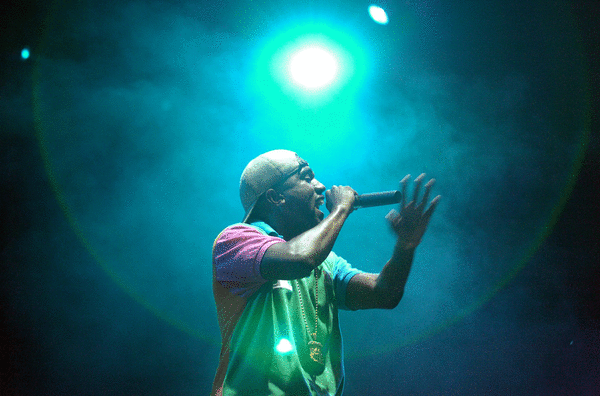
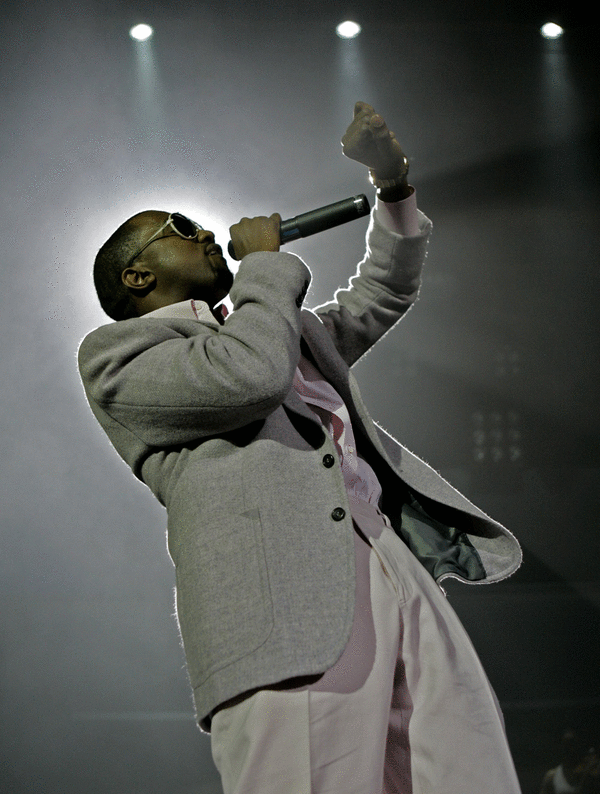

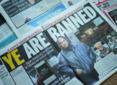
CHICAGO — There’s someone Chicago doesn’t talk about anymore, doesn’t mention much these days, rarely brings up in polite company and almost never acknowledges when it’s celebrating its beauty or cheerleading its own greatness, as Chicago is prone to do. And that person is Kanye West. Or rather Ye, as he prefers to be called today.
See, Chicago is in love with Chicago, just as Kanye West is in love with Kanye West.
So for years they were — plenty of eye rolls aside, particularly on the North Side — joined at a simpatico hip, an ideal if complicated bombastic match, just another example of Chicago being the greatest incubator of the greatest talents on Earth. Or something. Between the release of “The College Dropout” in 2004, his first masterpiece, and late 2022, when years of hateful, egomaniacal, self-destructive rants culminated in saying things you can’t unsay — slavery was a choice, Hitler had his qualities, Jews were out to get him — Kanye was probably Chicago’s most influential and innovative cultural export.
And now?
That relationship seems so severed, it might sound nuts to bring up the point again. Chicago moved on. Planet Earth moved on. Yet someone is buying all of those tickets for Ye’s two decently selling concerts Sept. 3-4 at Soldier Field.
Makes you wonder: How does Kanye West’s hometown feel about him now?
On a weekday morning earlier this month, I happened to run into Rhymefest outside of Ye’s childhood home on South Shore Drive. I went on a whim, wondering if a fan or two might be outside, staring up at that pleasant, sky-blue, 1,600-square-foot residence, and serendipitously, Rhymefest was there, about to lead a group of educators from Detroit on a tour. The Chicago rapper’s collaborations with Ye go back decades; he’s credited (and uncredited) with co-writing some of Ye’s best songs, including “Jesus Walks,” and now he’s an elected member of the Chicago School Board and a much-loved local activist. He also co-founded the nonprofit here (named for West’s late mother) as a center for young artists, but then in 2018, he tweeted West had “abandoned” the organization. Donda’s House was soon distancing itself and rebranding as Art of Culture, Inc.
What do you think is Chicago’s relationship with Kanye today? I asked.
“There is no relationship,” he said.
That’s what I figured, I said, until West started selling a lot of tickets here. Assuming both concerts are mostly sold out by showtime, that’s in the ballpark of 120,000 seats.
Well, he said, the popularity of these shows is also an answer. “I think you have an audience out there who see a man dealing with mental health issues, obviously …”
Obviously, I said.
Obviously, he repeated. “Eventually there needs to be grace.”
Except, in the complicated world of Kanye West, grace could never arrive as simply as a photo op or cut-and-paste mea culpa — although West is seemingly attempting this route. In January, he bought a full-page ad in the Wall Street Journal, explaining “one of the difficult aspects of having bipolar type-1 are the disconnected moments — many of which I still cannot recall — that led to poor judgment and reckless behavior.” He said he was mortified at how bad things were, but: “It does not excuse what I did though.”
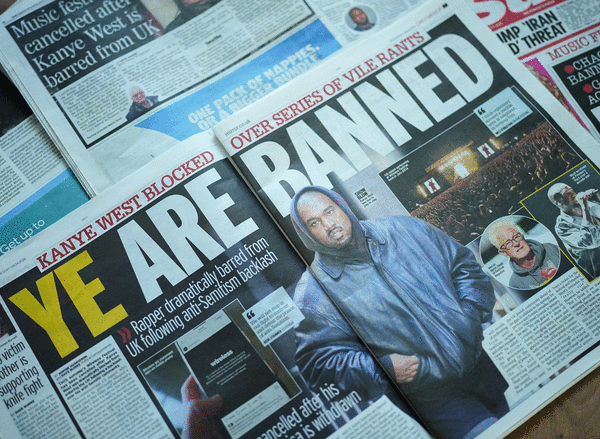
Last month, the government of Albania defended hosting a Ye concert, saying it was a boon for its local tourism and economy. But there were protests there anyway. Same for shows in the Netherlands and Slovakia. In San Antonio and Tampa, Florida, politicians and Jewish leaders (including Holocaust survivors) complained. In April, London’s Wireless Festival was canceled after West, the headliner, was denied a visa to enter the country.
Indeed, in recent years, so many organizations have said they didn’t want anything to do with Kanye West — Peloton, Pepsi, TJ Maxx, Def Jam, Creative Artists Agency (which had represented him), The Gap, Vogue, Adidas, JP Morgan Chase — there’s only room for a partial list. Madame Tussauds London yanked his wax figure. Goodwill of Southern California instructed its employees to no longer accept Yeezy brand clothing.
But in Chicago, as of this writing, crickets.
Not a single civic leader in Illinois, political or otherwise, has released a public word about the Soldier Field shows, in support or against, and when asked if they had had any qualms about the concerts, a spokesperson for Soldier Field (which is owned by the Chicago Park District) said they have heard only “minimal concern” — a handful of angry emails and one complaint from Creative Community for Peace, a Los Angeles-based nonprofit composed of entertainment industry professionals that works to counter antisemitism. He said they were conversations about the shows with the Park District and Soldier Field’s corporate office, and everyone decided to move forward.
The music vs. the man
Mohammad Masoud looked out across his store and repeated the question to himself: What is Chicago’s relationship with Kanye now? He owns La Estrella Minimart on the Northwest Side, a kind of combination bodega and tabletop-gaming hub in the Montclare neighborhood. It’s also well-connected in the local hip hop community, serving as a location for several music videos. He stopped listening to Kanye years ago, when Kanye became Ye. He hasn’t heard a new Ye album since — he couldn’t recall the title — “Kids See Ghosts,” in 2018.
He shrugged, once a fan, now sort of indifferent.
“But that’s just me,” he said. “My regulars here, whenever Kanye comes up, you hear the same things: The music is ‘goated,’ the greatness is secure, and the man is crazy. They have completely separated the music from the person who recorded the music.”
It’s a recurring theme when you talk with fans, some of whom point out that when Ye played Los Angeles in April, those shows were not light on celebrities eager to grant grace, collaborators like Travis Scott and Lauryn Hill, but also singer Aubrey O’Day, who had denounced Sean Combs only to post on social media that she attended both Ye shows.
“He will always be a Chicago legend, and he will always divide opinion, and I think people have come to accept that by now,” said Frono Harris, manager of Succezz, a streetwear boutique in the South Loop. They still sell Yeezy brand sneakers. “I mean, even after Adidas dropped Kanye, we have people who come in here to get the shoes.”
Behind him, standing at a register, Legend Hubbard spoke up.
“He is a hometown hero, so a degree of Chicagoans are forever going to find a way to distinguish between the new Ye and the old Kanye we all knew. But ‘Slavery was a choice’? Some people will never forgive. The people I know say they separate the work from the words. I also don’t know if you can cancel importance of this caliber, not really.”
Choosing a side
Feeling a certain cognitive dissonance became a part of the fandom. There’s the Kanye who called out George W. Bush for the way Black New Orleans was treated after Hurricane Katrina, who rapped about working in a suburban mall and became an avatar for a fresh, self-conscious hip-hop, calling out the music’s materialism and his own hypocrisy. And there’s the Kanye who embraced Donald Trump, told Alex Jones about admiring Hitler, defended Bill Cosby and wore a black KKK robe during an interview.
Interrupting a speech by Taylor Swift starts to look merely precocious.
“You know, whenever I was at the gym, they used to play a lot of Kanye, and now I can see people becoming visibly awkward whenever he comes on today,” said Alex Fruchter, a DJ, writer and founder of Chicago-based indie music label Closed Sessions.
He said his favorite acts of all time are the Beastie Boys, Mos Def (now Yasiin Bey) and Ye. “He was a perpetual underdog, he represented the South Side, he carried a chip on his shoulder. He was all about if he could do it, anyone in Chicago could be this kind of success, then at some point, that flipped to, ‘You can never do it the way that I did it.’ It could be age and time — I’m older myself now and not paying attention in the same way — but I doubt he has the grip on Chicago that he once did. You don’t hear people talking about new Kanye music now, at least certainly not with the kind of joy that was there.”
That said, Fruchter said he could come back to the music someday, maybe.
“I don’t hate on anyone who can’t put (West’s) comments aside, but I can’t at this time.”
Ye’s story, to some extent, is a reminder of what being canceled actually looks like in 2026. Chris Brown — who pleaded guilty in 2009 to felony assault against then-girlfriend, Rihanna, and now faces sentencing in London this fall after pleading guilty to fighting in a British nightclub in 2023 — sold out Wrigley Field last summer, and returned to Wrigley again this month (with Usher). Bill Murray, who faced misconduct allegations in 2022 (later settled), has never stopped being Chicago royalty. Sam Thousand, the Chicago musician and co-founder of the online artist platform ChiBrations, said: “Kanye’s relationship with this city may look nonexistent when you compare it with someone like Common, who finds so many ways to give back here. And yet, Kanye is an all-around genius, an amazing curator of moments, an epic performer, so the fact he can still put up those numbers (in terms of tickets sold) is not surprising.”
He said that Ye “just wants to be heard, and he wants to be able to say what he wants to say, and I want to protect the urge — I think it’s what makes me relate to him even when I can’t get with the things he does and says. He understands that ultimately he is here to be provocative, and that without him life would be a little less interesting.”
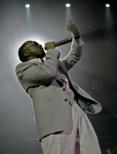
Ye has long framed himself as the boldest of bold voices, the innovator willing to break things. If you have seen clips of his current tour, the stage itself — a giant rotating globe at the center of stadiums, on top of which Ye performs the entire concert — is so visually arresting, it’s like a bittersweet reminder of a time when Kanye West shows were avant-garde spectacles. A time before West himself became the spectacle. Back in 2022, as the spectacle got blinding, Chris Devins, a Chicago artist known for his murals of Chicago history, painted a Kanye in Fulton Market, then kept repainting the parts that were vandalized in protest. He said, “I found I had a natural resistance to towing the party line (on Kanye), and a couple of relationships might have cracked over that.
“And these days, how do I personally feel? ‘Fatigued’ is the word. The guy gets all kinds of passes in Chicago — people say he went nuts to get out of a contract, he’s having an extended manic episode, he was never the same after his mother died (in 2007, during cosmetic surgery). I still like the music and his effect on art, on fashion, on the culture, is undeniable, and at the same time — fatigue. I think the people who buy his tickets can be as nuanced as anyone and they know there is always duality there. But also some people just want what they want, and it overrides past behavior. My feeling, I wish we could go back to the days of not knowing so much about the artists who matter.”
Sara Dulkin is less conflicted.
Last spring after Soldier Field announced the shows on Instagram, she posted a comment: “Can’t believe, in today’s world, everyone is just accepting this,” she wrote. Out of more than 250 comments, hers was one of the few dissenting voices. Dulkin is owner of Chicago Truborn, a West Town street-art gallery. Asked about it now, she replied: “I was a huge Kanye fan, but I will never forget the comments about the Black experience and slavery and Jews, even as he was literally selling Nazi propaganda. People seemed to have moved on, but I haven’t.” Last year, he briefly sold a $20 T-shirt featuring swastikas. That came two years after he apologized to the Jewish community about previous antisemitic comments. The Wall Street Journal apology earlier this year, that came two months before announcing his current stadium tour, which features, among the merchandise, a $58 “(Expletive) Bipolar Disorder” shirt. A generous reading might say all of this is in line with Ye’s history of challenging audiences to weigh the genius of the work against the man making it — an orchestrated performance art of sorts — but for a decade, as the work became forgettable, those defenses sounded hollower.
“It doesn’t feel like mental illness to me,” Dulkin said. “It feels opportunistic, and frankly, if you grew up with him, and my Chicago friends feel the same, it’s just painful and sad.”
'Chicago loves Ye'
Tearched Scott, the owner of House of Music on 87th Street, a big guy wearing a purple T-shirt from an old class reunion (Bowen High School, Class of ’74), seemed almost as if he had been waiting for someone to ask him about Kanye West. “OK, I know the key to understanding why Kanye remains popular, and it is generational,” he said. “I see it in here all the time, I sell his records now to younger people, who come in wanting something different, what their friends don’t have. I can’t keep his early stuff in stock.”
Nostalgia, I’ve heard often, is why Kanye persists.
The artist is 49 now, and like the Rolling Stones or Metallica, nobody’s mourning a lack of great new music when there are already years of classics. Andrew Barber, who created the long-running Chicago-based hip-hop blog Fake Shore Drive, sees a younger generation eager to catch the spectacle, “and so right now Kanye is letting (concerts) do the talking. I think a lot of people are feeling cautiously optimistic. I don’t agree with what he’s said, but what is the path forward?” DJ Nehpets, of Power 92.3-FM, never stopped playing Ye. When we spoke, it was Ye Week at the station. “Chicago loves Ye and it shows in their commitment to spend a dollar on anything he puts out. Forgiveness is there, redemption’s real. You can be upset all day long, but feelings do change.”
America, Scott told me in his store, “is too sensitive now.”
I asked if he had heard Ye’s “Heil Hitler” song yet, released last year? The one that repeats “Heil Hitler” about 20 times and includes a sample of the real Hitler speaking, the one where Ye says his custody battle with Kim Kardashian drove him to Nazism?
He hadn’t.
But he thinks of Ye as somewhat akin to R. Kelly. “If you’re into the music, and not the personality, it’s not an issue.” He still wears a Sean Combs T-shirt sometimes, he added.
“It’s clean and it fits.”
Talent’s not enough
Kanye West left Chicago for the West Coast about 23 years ago, and periodically returns to pledge allegiance to his hometown. In 2018, he told students at Harold Washington Library that he was moving back. (He didn’t.) In 2019, he pledged $1 million (giving $600,000) to help restore the Avalon Regal Theater on 79th Street. (It’s still closed.) He donated $200,000 to the campaign of progressive mayoral candidate Amara Enyia. (She lost.) When the Obama Presidential Center recently opened, it was no surprise he was nowhere to be found in its museum — as president, Barack Obama once called him a “jackass” — still, there’s some alternative reality where Kanye West is proudly present.
But with each passing year, he figures less and less in the mind of Caleb Dunson.
A few years ago, as a junior at Yale, Dunson wrote a scorching, lengthy piece for a campus journal about growing up on the West Side and the legacy of Kanye West and how Dunson had once felt pride that they were from the same city. Except now he could no longer listen to him, he wrote. “He used (Black Chicago’s) stories for gold, and used that gold to finance a sickening brand of hatred which seeks the end of Black people.”
He still can’t listen, he told me recently, just before he left for law school.
“I think I’ve reconciled,” he said. “There are so many more interesting acts coming out of the city — Noname, Saba — he continues to fade into the background for me. I have friends, who I think are indicative of Chicago in general, who say it is what it is, they don’t think too much about what happened. But then I feel like I’ve had at least since 2016 to make peace with this. When we talk about Kanye, it’s like we’re eulogizing him.
“There is a lot going on in the world and it’s hard to spend mental real estate on things like this, but talent doesn’t make up for claiming you’re a Nazi. I hope people consider what they’re endorsing with their money. My idea of grace doesn’t cost $300 a ticket.”
©2026 Chicago Tribune. Visit at chicagotribune.com. Distributed by Tribune Content Agency, LLC.







Comments