Netanyahu opponents in parliament move to undo his key policies
Published in News & Features
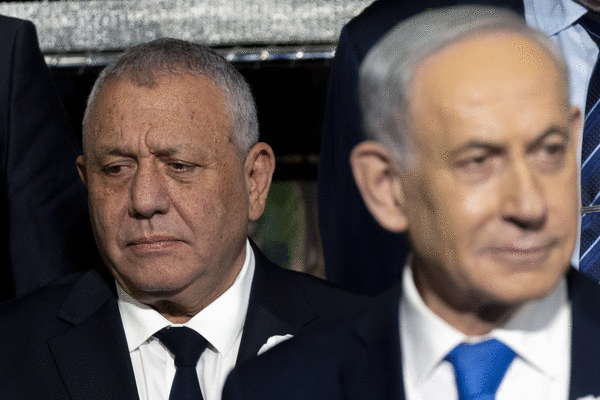
Israel’s newly-elected lawmakers unveiled a series of bills targeting Prime Minister Benjamin Netanyahu on the day the new Knesset was sworn in, a sign his rivals are eager to undo his political legacy after their recent election victory.
The bloc led by Gadi Eisenkot, who has been tasked with forming a new government, proposed legislation Tuesday to establish a state commission of inquiry into political and security failures preceding the Oct. 7 Hamas attacks, a key campaign issue for the opposition.
Eisenkot’s Yashar party and other opposition factions also introduced bills that would impose term limits for prime ministers and reverse the government’s recent overhaul of judiciary. The opposition is seeking to repeal laws that would curb the attorney general’s powers and politicize the police watchdog before they go into effect next year.
It is unclear whether Eisenkot can forge a coalition during the six weeks allotted for negotiations, or whether he can push the bills targeting Netanyahu’s policies through the Knesset in the meantime. But the speed with which he unveiled his legislative agenda shows that the opposition bloc he leads is eager to roll back a series of laws Netanyahu engineered in the weeks leading up to the Oct. 27 election.
The opposition is planning to change the speaker of the parliament, currently a member of Netanyahu’s party, next week. The speaker wields significant influence over the scheduling of parliamentary votes, a key power for the opposition bloc as it prepares to establish temporary committees to debate the proposed bills and start readings at the general assembly. The bills must pass four readings to become law.
“We aim to set up the temporary committees in the coming days and they can handle this regardless of us replacing the government. They must be annulled imminently,” Yair Golan, the leader of the liberal left-wing Democrats backing Eisenkot, said in a radio interview on Wednesday.
Moody’s Ratings warned in July that Israel’s credit rating could come under further downgrade pressure as a result of the weakening of the country’s institutions, “in particular if the judiciary proved to be weaker than assessed.”
President Isaac Herzog on Sunday gave Eisenkot the task of forming Israel’s next government after the opposition leader secured the endorsement of 67 members of the 120-seat Knesset. But some of that support came from the Israeli Arab parties shunned by other members of the opposition, posing a challenge to Eisenkot’s efforts to forge a governing coalition.
On Tuesday, Netanyahu lashed out at the Israeli Arab parties, who make up around a third of the opposition in the parliament.
“Here in the Knesset, there is active chatter regarding the formation of a narrow government that will incorporate or lean on terror-supporting Israel-haters,” Netanyahu said. “On one point they stand united: that Israel, as a Jewish state, possesses no right to exist.”
©2026 Bloomberg L.P. Visit bloomberg.com. Distributed by Tribune Content Agency, LLC.




Comments