Jeff Van Drew, House GOP leaders subpoena Mikie Sherrill's administration over NJ noncitizen voter records
Published in News & Features
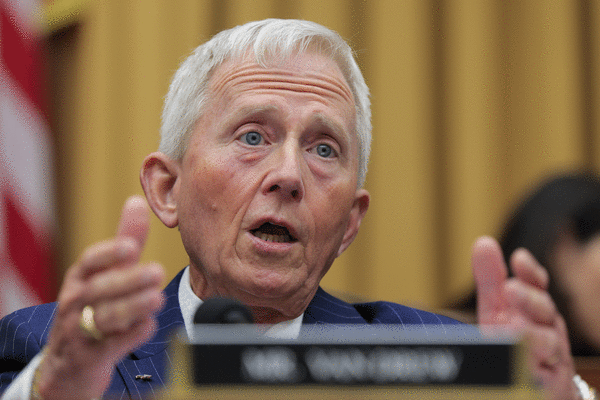
South Jersey Republican Rep. Jeff Van Drew on Wednesday announced a congressional subpoena of New Jersey Gov. Mikie Sherrill’s administration, demanding it produce records he requested three months ago that may explain how 6,600 noncitizens were added to the voter rolls in violation of federal law.
Sherrill, a first-term Democrat, revealed in July that approximately 6,600 people who identified themselves as noncitizens were registered to vote in New Jersey between June 2023 and June 2024 through the Motor Vehicle Commission, though fewer than 400 actually cast ballots.
Van Drew, the Cape May Republican who chairs House Judiciary Committee’s subcommittee on Oversight, first requested the documents Aug. 7 as part of the subcommittee’s investigation. To date, the state has produced just 12 documents that shed no light on how this happened, Van Drew and other Republican congressional leaders wrote in a letter accompanying the subpoena from the Judiciary Committee and the House Administration Committee.
Her administration’s response has been “inadequate,” and “an impediment” to their investigation, the letter said.
“None of the documents offered any substantive insight into how the noncitizen voter registration issue was discovered or why New Jersey did not conduct any remediation efforts until 2026,” said the letter Van Drew co-authored.
“These ineligible voter registrations raise concerns about the application of federal law in New Jersey as it pertains to accurate voter registration, as well as the effect that New Jersey’s failure to identify and remove noncitizens from its voter rolls has on the civil liberties of American voters and their ability to elect representatives,” according to the letter.
Sherrill has blamed former Gov. Phil Murphy’s team, as well as software vendor IDEMIA, for the registration of people who had answered they weren’t citizens and therefore ineligible to vote. Both have denied responsibility.
Murphy spokesperson Mahen Gunaratna on Wednesday pointed to his one statement on the matter from July in which he said Murphy “had no knowledge” of the issue and “applauds” Sherrill for looking into it.
In addition to removing thousands of people from the rolls, Sherrill sent about 2,000 registrants to county election officials for verification to make sure they didn’t accidentally disenfranchise citizens.
Sherrill also referred the matter the law firm of former Republican Attorney General Jeffrey S. Chiesa for an independent investigation, which is ongoing, Sherrill noted Wednesday.
“I promised that when we discover a problem, we communicate the facts and fix it — and I meant it,” Sherrill’s statement said. “From the moment we discovered the Motor Vehicle Commission registration issue from 2023, we took action immediately, went above and beyond in making agencywide reforms, and have been transparent every step of the way. We did this so that New Jerseyans can feel confident that we are running the strongest and fairest election in our country.”
Sherrill dismissed the subpoena as “political theater,” and derided Van Drew and House Judiciary Chair Jim Jordan, R-Ohio, as “enablers” of President Donald Trump, whose administration has pushed for more power over state-run elections.
Van Drew defended IDEMIA, the vendor Sherrill has blamed, at the hearing on the matter last month but no one from New Jersey’s government or the voter registration system participated. Van Drew repeatedly accused the state of knowing about the noncitizen registration issue since 2024 and called it a “cover-up.”
Van Drew spokesperson Paxton Antonucci told The Inquirer after the hearing that documents showed the state contacted IDEMIA in June 2024 after noticing registered voters whose files were missing their age and party affiliation. Those questions were only asked of people who identified themselves as citizens wanting to vote, but the system still allowed people who said they aren’t citizens to register.
“This information was missing due to the fact that the software, for some reason, was failing to flag that this group of individuals had selected the ‘No’ option when asked if they were a U.S. citizen but were still allowed to be registered to vote,” Antonucci said last month.
_____
©2026 The Philadelphia Inquirer. Visit inquirer.com. Distributed by Tribune Content Agency, LLC.




Comments