California Gov. Gavin Newsom signs first-in-nation standards for homes damaged by wildfire smoke
Published in News & Features
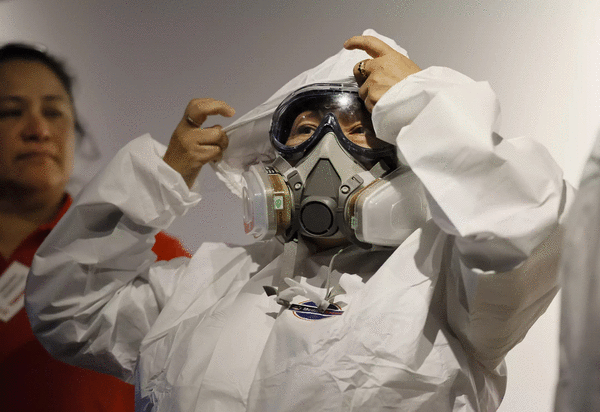
LOS ANGELES — Thousands of Los Angeles homeowners faced a persistent problem long after the devastating wildfires in January 2025: While their homes were left standing, they had been infiltrated by heavy, toxic smoke and ash, and remained unsafe.
Residents were forced into lengthy battles with their insurance companies to prove contamination and get help paying for the cleanup and additional living expenses.
Backed by wildfire survivors and advocates in Altadena, California Gov. Gavin Newsom on Tuesday announced he had signed legislation to create new, first-in-the-nation standards to test and remediate homes damaged by wildfire smoke, and to require insurance companies to pay for the associated costs.
“California will not leave survivors to navigate recovery alone,” Newsom said. “These new protections will make insurer obligations clearer and give homeowners more financial flexibility when they need it most. As fire seasons across the West become a year-round reality, California’s commitment to recovery must be just as enduring.”
The January 2025 Eaton and Palisades fires were two of the deadliest and most destructive in state history. Together, they burned more than 16,000 structures and killed 31 people.
Assembly member John Harabedian, D-Pasadena, authored Assembly Bill 1642 after hearing repeatedly from constituents concerned that the fires had left layers of ash contaminated with asbestos, lead and toxic materials in and around their homes.
The now-signed bill directs the state to create scientific standards for what constitutes a safe home and provide guidance on how to properly remediate residences.
Twenty months after Jane Lawton Potelle sat in a friend’s garage— already suffering from a cough and chest pain as her Altadena home stood contaminated with toxic smoke — she stood alongside Newsom as he signed the bill, which was championed by her advocacy group, Eaton Fire Residents United.
“Early days, we were told we were the lucky ones,” said Potelle, who founded EFRU as her neighbors shared concerning test results on Facebook — all while government agencies and insurers offered conflicting guidance and little support.
“To have this bill signed is acknowledgment that just because your home is left standing and looks fine, doesn’t mean that it’s actually safe to return,” she said.
The data EFRU collected in the months after the fire showed the vast majority of homes tested had lead levels beyond what the U.S. Environmental Protection Agency considers acceptable. With no clear guidance, haphazard and improvised efforts by companies to clean these homes left 6 in 10 residences still unsafe.
A companion bill signed by the governor, AB 1795, was born out of a Department of Insurance task force and requires insurers to abide by the AB 1642 standards in the insurance claims process and to do so in a timely manner.
If these laws had been in place when the Eaton fire broke out, “we’d all be home by now,” Potelle said.
Potelle’s home — like many others’ — remains contaminated as disputes with her insurance company drag on. Her Christmas tree, from 2024, is still up.
“Going forward, the question of whether a family can safely return home should be answered by science, not by an insurance company’s guesswork,” Harabedian said in a statement. “Families should not have to fight for the testing they need or be left trying to figure out on their own whether their homes are safe.”
More than 13,000 insurance claims filed after the fires involved homes that were damaged by smoke, not flames, according to an estimate from the Department of Insurance.
Newsom also signed legislation from Harabedian that will allow homeowners in the future to seek up to one year of mortgage forbearance if their home becomes uninhabitable due to the effects of a wildfire or other disaster. Another bill signed into law extends existing mortgage relief for those affected by the Palisades and Eaton fires for another year.
©2026 Los Angeles Times. Visit at latimes.com. Distributed by Tribune Content Agency, LLC.





Comments