Trump says Iran-backed Houthis asked US not to target them
Published in News & Features
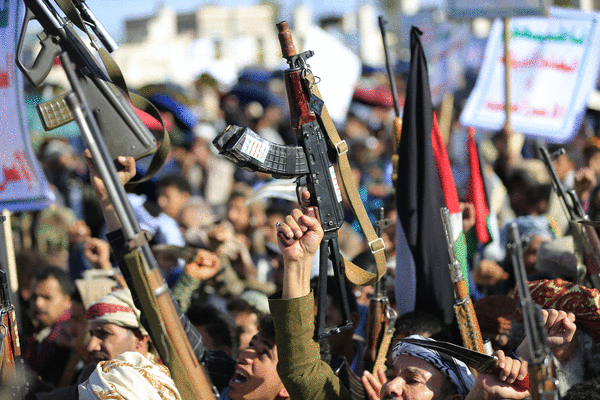
President Donald Trump said Iran-backed Houthis have asked the U.S. to abstain from targeting the militant group, as a worsening clash with Saudi Arabia inflames tensions in the Middle East.
“The Houthis called us, and they don’t want to fight with us,” Trump told reporters during a Saturday meeting in Dublin with Irish Prime Minister Micheal Martin. “They don’t want us to go after them,” and “they would much prefer not having us involved,” he added.
Trump’s comments come amid intensifying fighting between the Houthis and Saudi-backed Yemeni forces, including attacks on energy facilities in the region and missile launches on southwestern Saudi Arabia.
As hostilities escalated, Saudi Arabia’s Crown Prince Mohammed Bin Salman called Trump twice on Thursday and asked him to strike the Houthis, according to an Axios report citing two unnamed U.S. officials.
Trump confirmed the conversation without elaborating. “I have had a call with MBS. He’s a good friend of mine,” Trump said Saturday. “I can just say everything’s going to work out fine and dandy. It’s going to be very good.”
The Houthis have already disrupted shipping and oil markets in recent years, but now have gained ground in a bid to seize Mokha, a Yemeni port city of strategic importance for the energy trade.
The conflict is heightening anxiety over expanding tensions in the Middle East — as well as the consequences for the global economy — roughly seven months into the U.S. war on Iran that’s already disrupted flows of oil and gas through the region. Both Tehran and Washington now are bracing for an even more protracted conflict, with Trump on Saturday reiterating his recent view that a resolution could follow November’s midterm elections.
The war already has stoked higher prices for energy worldwide, spurred by damage to production facilities and limited tanker flows through the Strait of Hormuz, which typically carried about a fifth of the world’s oil and gas supplies before the conflict’s late February start.
Now, however, fighting between the Houthis and Yemenis around the Bab al-Mandeb Strait, along with damaged refineries in Russia, are driving fresh anxiety, feeding a record surge in U.S. diesel prices that have risen above $6 per gallon for the first time ever. Because the workhorse fuel is used globally to power farm machines, the movement of freight and the construction of buildings, diesel price spikes can quickly ripple through the economy.
Asked whether Iran was responsible for a Thursday attack that forced the closure of Saudi Arabia’s East-West pipeline, Trump said bluntly: “I think they are.”
The Saudi Ministry of Foreign Affairs has blamed drones launched from Iraq for the pipeline attack, which the Ministry of Energy said caused several injuries and prompted the conduit’s closure as a precautionary measure.
Still, Trump appeared to shrug off attacks by Houthis in the area, highlighting the militant group’s appeal for a reprieve from Washington.
“They’re letting most ships go through,” Trump said. “It’s just one country that they’re not too happy with, and we’ll get that straightened out.”
©2026 Bloomberg L.P. Visit bloomberg.com. Distributed by Tribune Content Agency, LLC.





Comments