US Army Secretary Driscoll resigns after clash with Hegseth
Published in News & Features
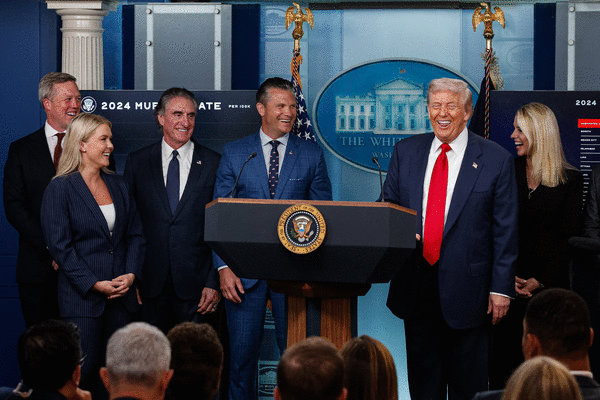
U.S. Army Secretary Dan Driscoll is stepping down after repeated clashes with his boss, Pete Hegseth, leaving the service without several top leaders even as the conflict with Iran continues.
Driscoll submitted his resignation to President Donald Trump, according to a person familiar with the matter who asked not to be identified. His decision was first reported by the Wall Street Journal.
White House spokeswoman Anna Kelly said Driscoll provided “outstanding leadership during historic military operations, restoring an emphasis on readiness and lethality, assisting with negotiations between Russia and Ukraine, and more.”
Driscoll gave Trump his opinion of the state of the Army when he submitted his resignation, according to a U.S. official, who also asked not to be identified in discussing a private conversation.
His departure is only the latest in a series of resignations and firings within the service and the military. Months earlier, Hegseth fired the Army’s chief of staff, General Randy George, who was close to Driscoll.
With Driscoll gone, the Army will be left with no Senate-confirmed leadership.
Driscoll, the 26th Army secretary, was nominated by Trump and confirmed in 2025 at the age of 38, making him the youngest person to serve in the role. He is a close friend of Vice President JD Vance from their days at Yale Law School.
Driscoll had a strained relationship with Hegseth, marked by disagreements over personnel and leadership decisions, people familiar with the matter earlier said. Hegseth has directly intervened in Army matters, at times ordering Driscoll to remove senior advisers, highlighting tensions over control of the service. Driscoll reportedly resisted efforts to remove certain officers from promotion lists, including women and black officers.
Most recently, Hegseth removed George almost a year earlier than the usual term for an Army chief of staff. George and Driscoll worked well together, often tag-teaming in speaking engagements and events where they touted the Army’s ambitious transformation efforts.
Driscoll and George pushed for changes to modernize the Army and prepare it for a new generation of warfare, even as the wars in Ukraine and Iran underscored shortcomings. Earlier this year, Driscoll assembled top defense contractors and tech firms in an initiative to allow weapons to communicate better with each other and more closely integrate artificial intelligence.
Driscoll drew attention when he was picked to help broker a peace deal between Ukraine and Russia, raising questions as to why the defense secretary was not the one chosen as negotiator.
He also took on an unusual dual role as acting head of the Bureau of Alcohol, Tobacco, Firearms and Explosives, an unprecedented overlap between defense and a domestic law enforcement agency.
As a venture capitalist, Driscoll reframed his role in the Army and tried to run it more like a business. He oversaw the service during a period of major restructuring and budget pressure, including directives tied to Pentagon-wide reforms.
Driscoll also led a Trump administration initiative to upend the Pentagon’s traditional emphasis on building more — and more sophisticated — weapons over systems that can be manufactured more cheaply and in larger quantities.
In June, he urged defense companies to develop cheaper air-defense interceptors more quickly, with the Army seeking demonstrations within six months and procurement to start within one year.
____
(With assistance from Roxana Tiron and Ryan Chua.)
©2026 Bloomberg L.P. Visit bloomberg.com. Distributed by Tribune Content Agency, LLC.



Comments