Sea turtles are hatching in near-record numbers in NC this year. Here's why
Published in News & Features
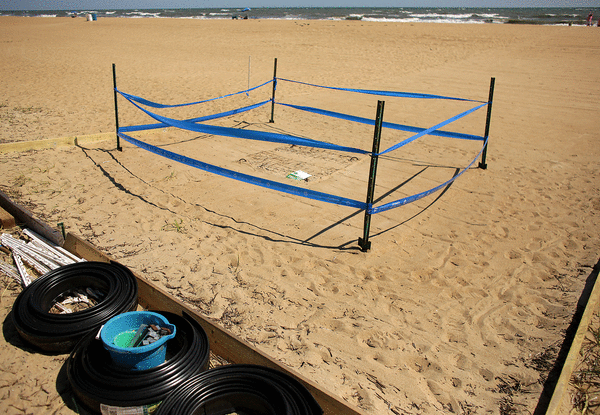
Almost 2,000 sea turtle nests have been spotted along North Carolina’s coast this year — the second-most since the state started tracking nests in 2009.
North Carolina’s 300-plus miles of coastline are a crucial habitat for endangered turtles, especially loggerhead turtles, the most common species on the state’s beaches.
As female turtles have lumbered ashore to lay their eggs, volunteer groups have fanned out along the coastline, helping to spot turtle tracks, count eggs and get hatchlings safely from the dunes to the ocean.
“We’re out there every single night, because we have nests hatching every night, and we will into October,” said Terry Meyer, conservation director for the Topsail Turtle Project on Topsail Island.
Right now, nesting season is winding down; adult turtles typically lay their eggs from May to August. However, since turtle eggs usually incubate for around 60 days, eggs will likely continue to hatch well into the fall.
This year’s surge isn’t completely unexpected, Meyer said. Loggerhead turtles typically lay eggs every two to three years. The state last saw a major uptick in turtle nesting three summers ago, meaning this summer was expected to be a big year for nesting.
Still, 2019 holds the record for the most turtle nests in North Carolina. Volunteers counted over 2,300 nests across the state that season, according to data compiled by the Wildlife Resource Commission.
This summer’s hot weather has brought one unusual trend to turtle nesting patterns in parts of the state, said Suzan Bell, the volunteer coordinator for the Oak Island Sea Turtle Protection Program.
Usually, sea turtle eggs incubate for about 60 days before they hatch and make their way back to the ocean — that’s called an emergence. But research suggests that hot weather can cause the turtles to hatch earlier than expected.
Bell said that in Oak Island and surrounding areas, hatchlings have started emerging after 50 days or less.
“When there’s excessive heat, it seems that they are starting to emerge much quicker,” Bell said. “Heat just incubates them faster.”
This year, Cape Hatteras National Seashore has led the state, with over 400 turtle nests along the shore’s 70 miles of coastline. Cape Lookout National Seashore is close behind, with 320 nests spotted this year.
Yet there have also been high numbers counted along smaller stretches of coastline, especially toward the southern end of the state. Oak Island has reported the third-highest number of nests in North Carolina, though Bell’s volunteer group covers just 10 miles of beach.
And near the Virginia coastline, turtle nesting in the Outer Banks has surpassed the area’s 2019 record, WHRO Radio in Norfolk reported earlier this week.
“Through the efforts of thousands of volunteers, sea turtles are making a comeback. Our nest numbers are getting higher, and I do attribute all that to beach programs,” Bell said. “We’re just trying to educate everyone on the fact of, you know, we need to protect and care for this species. We don’t want to lose it.”
Human disruptions, like loud noises or artificial lighting, can keep turtles from nesting. Volunteers advise beachgoers to clean up litter before leaving the beach, avoid using flashlights at night, turn off any outdoor lighting near beachfront homes, and give turtles, nests and hatchlings plenty of space.
If you spot a turtle or a nest, you can call local authorities or your area’s sea turtle monitoring group to report the sighting, but leave it alone.
_____
©2026 Raleigh News & Observer. Visit newsobserver.com. Distributed by Tribune Content Agency, LLC.





Comments