The Catholic principle guiding popes through tech upheavals, from the Industrial Revolution to AI
Published in News & Features
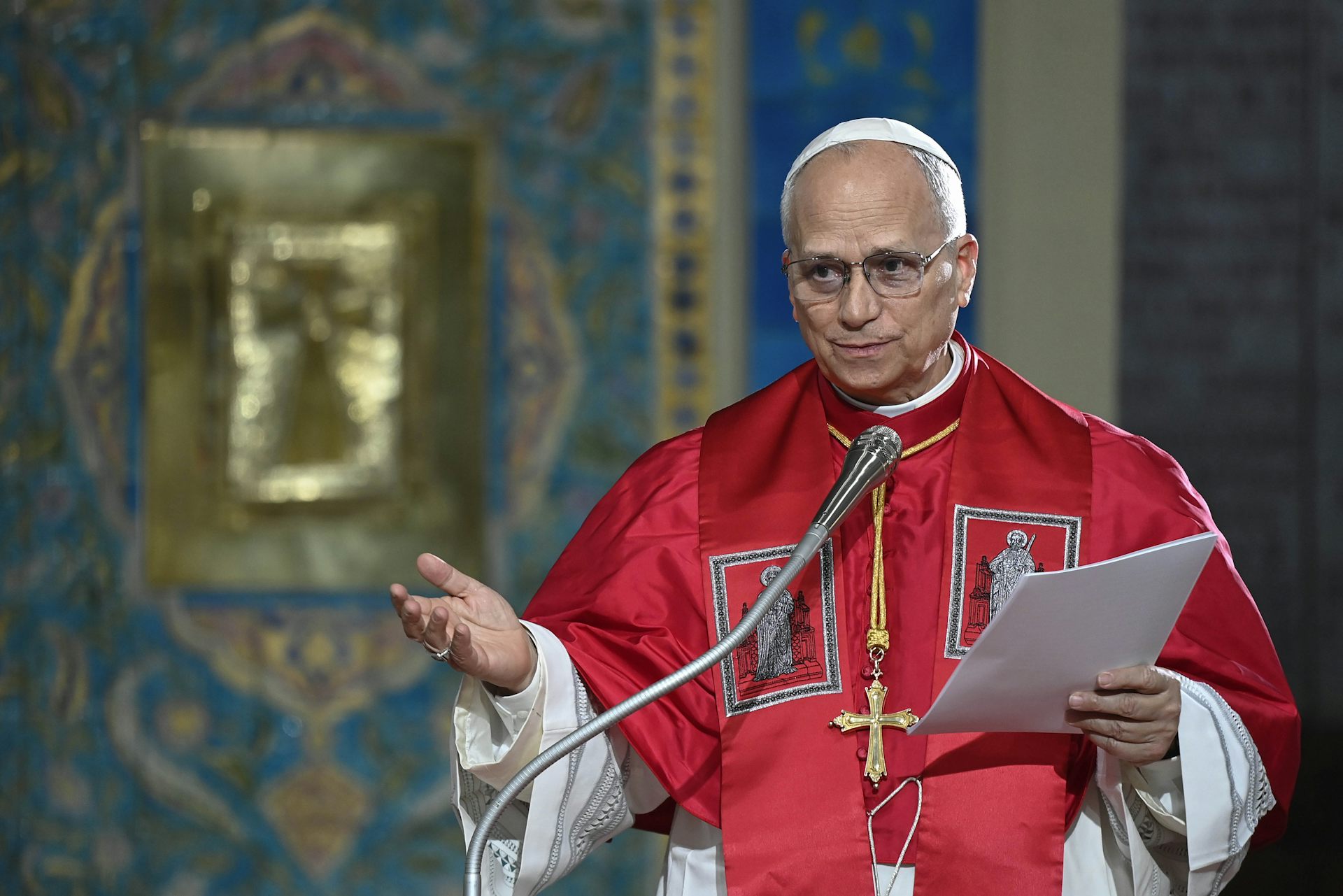
Pope Leo XIV recently found himself in a position many of today’s students can relate to: having his writing tested for signs of artificial intelligence use.
Proudly Human, a tech company that analyzes creative work, announced July 21, 2026, that it had reviewed a collection of Leo’s speeches. In general, algorithms to sniff out AI aren’t always accurate. Fortunately for the pope, though, the company declared his writing to be “human-authored.”
In a way, it was fitting. Since the start of his papacy, Leo has spoken about the risks AI presents for broad swaths of society. As a computer scientist interested in how Catholic teachings can shape digital technology, I’ve followed his statements closely. In May 2026, he released his first encyclical,“Magnifica humanitas” – “Magnificent humanity” – which describes how the Catholic Church should respond to the AI era.
While the technology might be new, the principles guiding the pope’s perspectives have deep roots. In particular, the encyclical invokes the concept of “subsidiarity,” a core tenet of Catholic social teaching that has guided the church’s response to technological upheavals for almost a century.
Simply defined, subsidiarity means that, whenever possible, decisions should be made by the people most affected by them. In the United States, for instance, the Department of Education may set federal assessment guidelines, but cities and states are in charge of many aspects of public education.
AI increasingly shapes the lives of Americans, whether we want it or not. Yet platforms such as Gemini, Claude and ChatGPT are proprietary black boxes, under full control of the corporations behind them. What “Magnifica humanitas” suggests is putting control of AI at the “closest level possible to the persons involved” in its use.
Subsidiarity has a long history in Catholicism, extending back to Pope Pius XI. In 1931, he released an encyclical called “Quadragesimo anno,” or “In the 40th year.”
The title was a reference to the first encyclical on Catholic social teaching, written by Pope Leo XIII in 1891. Although the earlier encyclical did not mention subsidiarity by name, it advocated for harmony between different levels of society – an idea that Pius would further develop into the full-fledged concept.
Both texts were responding to their era’s own technological inflection point: the Industrial Revolution. Church leaders were deeply troubled by a new, unrestrained form of capitalism that left laborers with few options other than working on mechanized assembly lines, under harsh terms set by corporate managers. In Pius’ words, “Free competition has destroyed itself; economic dictatorship has supplanted the free market; unbridled ambition for power has likewise succeeded greed for gain; all economic life has become tragically hard, inexorable, and cruel.”
Pius feared that this new economic system undermined human flourishing and the common good, and drew on the Catholic Church’s intellectual tradition for solutions. Writings by St. Thomas Aquinas laid the groundwork for subsidiarity back in the 13th century, but the Industrial Revolution prompted theologians to refine the idea and develop Catholic social teaching.
“Quadragesimo anno” recommended that societies be restructured to prevent entire economies from falling into the hands of just a few very powerful corporations. This involved fair wages, workers’ participation in decision-making, and eliminating unfair competition that squeezed small- and medium-sized businesses out of the market.
In 1932, when Franklin D. Roosevelt was running for president, he embraced the encyclical’s call for subsidiarity. During a speech in Detroit, he declared the pope’s encyclical “as radical as I am.” Quoting Pius’ words, he rejected a world where “immense power and despotic economic domination are concentrated in the hands of a few” – views that trickled into his New Deal policies, although Roosevelt himself belonged to the Episcopal Church.
Other politicians looking to give more voters a voice in technology and the economy embraced subsidiarity as well. In Europe, political parties affiliated with the Christian democracy movement incorporated it as a major plank of their platforms.
In recent years, the Vatican has continued developing the idea of subsidiarity to respond to AI and the concentration of Silicon Valley power behind it.
Toward the end of his papacy, Pope Francis became concerned about AI, which he believed would “increasingly influence the way we live, our social relationships and even the way we conceive of our identity as human beings.” The Vatican’s department of culture and education convened a group of scholars at the beginning of the AI boom to discuss its impact.
The book they published in 2023 sees subsidiarity as a way for people on the margins of society to help shape AI instead of being harmed by it. AI labs frequently fail to account for the needs of customers with disabilities and train their systems with massive datasets organized and annotated by low-paid workers in the developing world.
The book also argues that subsidiarity can decrease the threat of moral deskilling: degrading our own decision-making by relying on chatbots. For example, a chatbot could be configured to not provide guidance if users ask it to make decisions about their personal relationships.
Similar ideas worked their way into “Antiqua et nova,” – meaning “Ancient and new” – a Vatican document issued in 2025. Harkening back to Pope Pius’ encyclical, published almost 100 years before, “Antiqua et nova” condemns the monopolization of AI by powerful corporations. It recommends that everyday users, nonprofits, governments and international organizations also have a voice in creating technology that “promotes human dignity” and “the common good.”
“Magnifica humanitas” is the most recent attempt to reconcile AI systems with Catholic social teaching. AI should “not be imposed from above in an opaque and unilateral manner,” Leo writes, “but instead be directed toward the common good with transparency, accountability and meaningful forms of participation.”
In a practical sense, what does this look like?
On the business side, I believe subsidiarity would require alternatives to Silicon Valley’s offerings. Some AI startups, such as the Catholic company Longbeard, align their values with particular faith communities. Truly open-source AI projects could give users transparent and reconfigurable access to the technology. For example, a parent could turn off the platform’s ability to do a child’s homework or to generate sexually suggestive imagery.
Some faith leaders and computer scientists, including my own team, are developing frameworks for how software engineering and product design could be guided by subsidiarity. Developing AI products typically involves harvesting training data by pervasively monitoring users, which many people are unaware is occurring. But it’s possible to train platforms in less invasive ways that give users more control, such as by using only information in the public domain or Creative Commons data.
These efforts highlight how subsidiarity could give more people a voice in a world that AI is rapidly changing.
This article is republished from The Conversation, a nonprofit, independent news organization bringing you facts and trustworthy analysis to help you make sense of our complex world. It was written by: Walter Scheirer, University of Notre Dame
Read more:
Even with Pope Leo XIV in place, US Catholics stand ‘at a crossroads’
Trump’s exchange with Pope Leo reflects deep‑rooted tensions between the Vatican and the United States: 4 essential reads
AI‑induced cultural stagnation is no longer speculation − it’s already happening
Walter Scheirer does not work for, consult, own shares in or receive funding from any company or organization that would benefit from this article, and has disclosed no relevant affiliations beyond their academic appointment.






Comments