A flesh-eating bacterium is on the rise as Chesapeake Bay warms
Published in News & Features
BALTIMORE — A warming Chesapeake Bay may mean more days of swimming, but it brings a greater threat from a flesh-eating bacterium that thrives as the mercury rises.
Last year, the health department reported 11 deaths from Vibrio fulnificus — the so-called flesh-eating strain — including an outbreak tied to a Wicomico County crab feast. This year, 72 cases from five strains had been reported by late June, according to MDH data, with no deaths so far.
Vibriosis more than doubled from 100 cases in 2018 to 260 in 2025, according to the Maryland Department of Health, as reported in the Bay Journal. Additionally, a 2024 NIH study found a 39% average increase in cases from 2006 to 2019, with wound infections increasing 85% and hospitalizations increasing 58%.
“Environmental conditions have changed,” Dr. Clifford Mitchell, MDH environmental health bureau director, told Bay Journal.
The state reports that at least 80 different species and many different strains of Vibrio bacteria live in the warm brackish waters of the bay. Not all of them make people sick. They serve an ecological function by recycling carbon and nitrogen as they break down blue crab shells, dead insects and zooplankton, and they thrive in waters warmer than 60 degrees.
And waters are warming, the National Oceanic and Atmospheric Administration confirms. Over the past 30 years, the average water temperature in the Chesapeake Bay increased by 1.8 degrees.
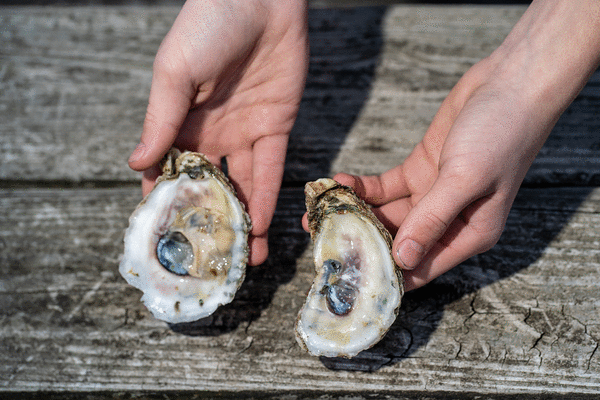
Nationwide, the U.S. Centers for Disease Control and Prevention estimates Vibrio infects about 80,000 each year, including 52,000 cases from contaminated food: most commonly improperly cooked shellfish or raw oysters. Vibriosis from food causes diarrhea, stomach cramps, nausea, vomiting, fever and chills for several days in otherwise healthy individuals. About 100 people die of vibriosis each year.
The bacteria, closely related to cholera, can also enter the body through open wounds exposed to infested waters. In those cases, the infection can escalate within hours to sepsis — a life-threatening medical emergency caused by the immune system’s overwhelming response to an invader. Sepsis triggers severe inflammation that can cause tissue damage, organ failure and death if not treated quickly. Sepsis symptoms include a high heart rate, clammy or sweaty skin, confusion, disorientation, extreme pain, fever, shivering and shortness of breath, the CDC reports.
Vibrio can also lead to necrotizing fasciitis, a severe infection where the flesh around an open wound dies, requiring skin grafts in some cases.
Liver disease, cancer, diabetes, HIV and thalassemia increase the risk of Vibrio infection, the CDC reports. Other risk factors include immune suppression therapy, taking medicine to reduce stomach acid and recent stomach surgery. Individual risk increases with existing health conditions that can increase vulnerability, complicating efforts to gauge the threat to the general population.
“The incidence of infection from swimming and other recreational activities in Maryland waters is relatively rare,” the MDH website states.
Protect yourself
— Avoid water contact if you have any skin wounds.
— If contact cannot be avoided, cover wounds with waterproof bandages.
— Wear water shoes to avoid cuts and scrapes.
— Wear gloves or use extra care when handling crab pots or other equipment.
— If you get a cut or a scrape, clean it immediately with soap and clean water after contact.
— If soap and clean water are not available, clean the wound with hand sanitizer, then wash as soon as possible.
— Always shower after swimming in natural waters and wash hands before handling food or eating.
Pollution also increases exposure risk by providing ample nutrients for bacteria, University of Maryland scientist and Vibrio expert Rita Colwell told The Bay Journal.
“Vibrios are present in very, very low numbers in traditionally unpolluted waters. They’re part of the natural flora,” Colwell said.
“But as soon as we create eutrophic (low oxygen) conditions and with increased temperature of the water,” she said, “that’s sufficient to change the composition of the microbial population.”
_____
©2026 Baltimore Sun. Visit baltimoresun.com. Distributed by Tribune Content Agency, LLC.






Comments