Wave goodbye Massachusetts to any tax rebates
Published in News & Features
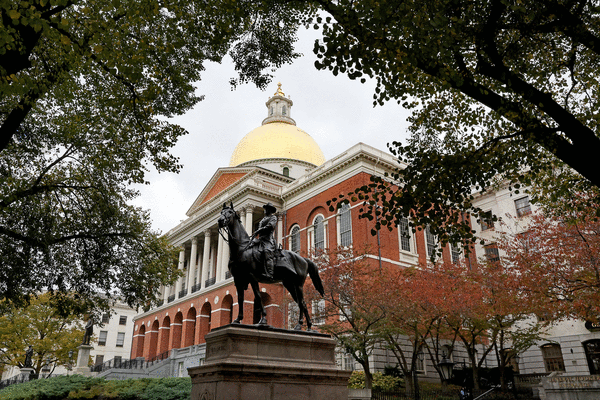
BOSTON — Hold on tight to your wallets as state lawmakers look to claw back even more of your money.
Fiscal watchdogs and politicians are reacting to an amendment passed by the Massachusetts Senate that would put an end to a longstanding law requiring any tax surplus to be returned to taxpayers as a rebate.
Amendment 14 to a joint economic development bill (S. 3178), filed by state Sen. Jason Lewis (D-Winchester) and entitled Countering Fiscal Uncertainty, would repeal Chapter 62F — voted into law in 1986 and facilitates the tax rebate for Massachusetts residents from state law.
“Delay. Dilute. Deny,” said the Pioneer Institute for Public Policy Research in a post to X slamming the amendment. “Massachusetts voters approved an independent audit of the Legislature in 2024. Beacon Hill has refused to implement it. Now the Senate wants to repeal Chapter 62F, the voter-approved law that requires the state to return money to taxpayers when state tax collections grow much faster than taxpayers’ incomes. As Jim Stergios noted, that’s contempt for the voters.”
The amendment was co-sponsored by several Democratic senators, including Sens. Rebecca Rausch, Jamie Collins, Liz Miranda, Patricia Jehlen, Jamie Eldridge, Sal DiDomenico and more.
The Massachusetts Fiscal Alliance is also slamming the lawmakers for considering a repeal of the voter-approved law, saying that one of the few safeguards in place for Massachusetts taxpayers is being stripped away by the same lawmakers who have approved record-breaking spending in the recently passed budget.
“When the state collects too much taxpayer money, taxpayers should decide how to spend their own money, not State House politicians. Every year, these same lawmakers pass a record-breaking spending plan in the state budget and the taxpayer rebate law is designed to allow for taxpayers to get some relief even after these politicians spend more money than they have ever spent before,” said MassFiscal Executive Director Paul Craney.
“Massachusetts lawmakers have been busy tucking climate mandates into utility bills, adding mandates to municipalities while keeping local aid below the national average and now we see they are actually considering removing a tax rebate law despite passing a record state spending budget,” Craney continued. “This is the definition of fiscal irresponsibility. This is a recipe for keeping Massachusetts unaffordable. Keeping the flow of taxpayers migrating to states like NH, FL, TX, and NC which respect taxpayers and keeps more money in their paychecks.”
In 2022, for example, Chapter 62F returned nearly $3 billion to Massachusetts taxpayers after state revenues exceeded the legal cap, a provision honored by then-Governor Charlie Baker. It was just the second time since the law was enacted that Chapter 62F had been put into action.
MassFiscal says the 2022 rebate resulted in returns equating to approximately 14% of each taxpayer’s personal tax liability in 2021.
“Once again, Beacon Hill politicians are trying to take more money out of our pockets,” Republican gubernatorial candidate Brian Shortsleeve said. “Chapter 62F exists for one simple reason: when the state collects more money than it needs, that money belongs to the taxpayers who earned it— not to politicians looking for new ways to spend it.”
“In plain English: when the state over-taxes you, Democrats would rather keep the money for more spending instead of sending it home,” added state Rep. candidate Chester Tam. “This is classic one-party Beacon Hill behavior dilute the will of the voters, delay accountability, and deny fiscal discipline. It’s a big reason Massachusetts has become one of the most expensive states in America.”
The Senate could vote as early as this week on the amendment. It is not clear if the House will sign off on it or if it has support from Gov. Maura Healey.
---------
©2026 MediaNews Group, Inc. Visit at bostonherald.com. Distributed by Tribune Content Agency, LLC.





Comments