Miami-Dade leaders say state's anti-DEI law is so confusing they may have to sue
Published in News & Features
MIAMI — Miami-Dade County may go to court over Florida’s new anti-DEI law, which bars local funding of groups or services tied to gender, race or sexual orientation.
County leaders say the legislation is sweeping enough to make Miami-Dade rethink countless spending decisions, from staffing the current Hispanic Affairs Advisory Board to awarding a tourism grant to a gay pride parade to sponsoring a festival celebrating Haitian Americans.
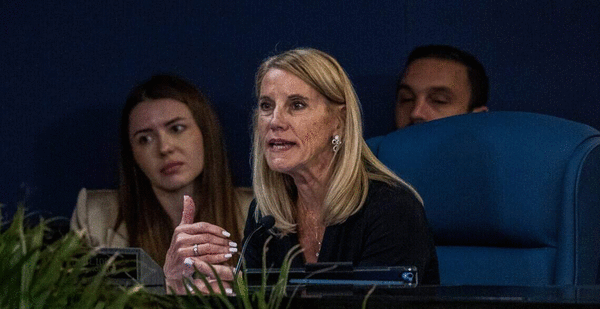
“I think it’s important to get some clarification,” County Commissioner Vicki Lopez, a former Republican member of the Florida House, said Tuesday before the board authorized Miami-Dade lawyers to explore legal action against the state law. “Oftentimes, the only way to do that is to go to the courts.”
Lopez’s resolution falls far short of any kind of court action against Senate Bill 1134, which doesn’t take effect until Jan. 1. Formally titled Official Actions of Local Governments, the law targets practices known as DEI — which stands for Diversity, Equity and Inclusion and generally refers to a focus on helping minority groups.
The Lopez item simply instructs county lawyers to research a potential lawsuit challenging the bill, or the possibility of asking a judge to offer an interpretation of what’s allowed under the law and what isn’t — a process that would have Miami-Dade seek a court ruling to guide county decisions on the new rules.
But in winning unanimous support for potential court action, Lopez has moved Miami-Dade a bit closer to a fight over the controversial legislation. And her item also highlighted the concern about the law’s sweep and penalties, which includes removal from office for any local official found to have violated its anti-DEI rules.
During the discussion, Commissioner Oliver Gilbert said he was so committed to a legal challenge of the law that he invited community groups to sue the county. His idea was that Miami-Dade would cite the state law in canceling funding for some outside groups based on their activities related to race, gender or sexual orientation.
“The groups should sue us. The state would then have to intervene to defend their statute,” said Gilbert, a lawyer. “If they didn’t intervene, we’d just settle.”
That plan didn’t go over well with Commission Chair Anthony Rodriguez. “I think it is entirely negligent for any of us up here to encourage a lawsuit against — myself. I’m a taxpayer of this county,” he said. “We’re not encouraging that at all.”
Commissioner Kionne McGhee said he wasn’t willing to defund charities and community groups based on them helping minority groups, even after the law takes effect at the start of 2027.
“If removal is the option,” he said, “then removal it’s going to have to be. ... I am not going back to my district, to face the people who put me in office to represent their voices and their positions, and tell them that their representative chose to hold onto a seat as opposed to fighting for their position. So I’m just putting everyone on notice.”
_____
©2026 Miami Herald. Visit miamiherald.com. Distributed by Tribune Content Agency, LLC.






Comments