Tupac murder suspect's book admissible in trial, judge rules
Published in News & Features
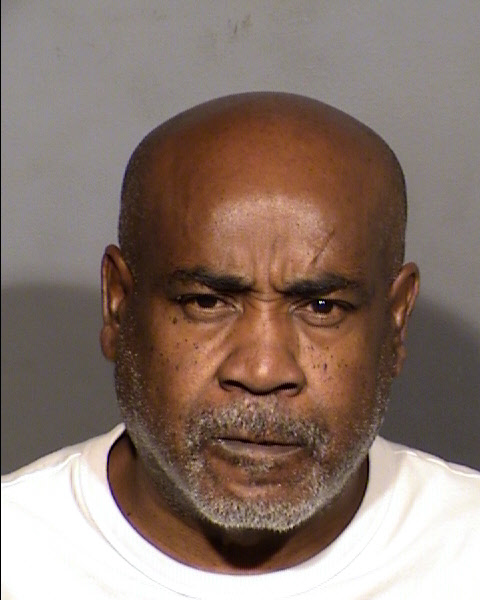
LAS VEGAS — A judge ruled Tuesday that a memoir by the man accused of organizing the killing of iconic rapper Tupac Shakur is admissible evidence.
Authorities have accused Duane “Keffe D” Davis, 63, in connection with the fatal shooting of Shakur near the Strip in 1996. His trial is scheduled to begin Aug. 10.
The memoir called "Compton Street Legend," which purports to be written by Davis and a co-author, is crucial to prosecutors’ case. The book says Davis “tossed” a gun into the backseat of the Cadillac in which he was riding at the time. That weapon was used by a man in the back seat for the shooting, according to the memoir.
Defense attorney Michael Sanft sought to suppress the book and statements Davis made to police. Prosecutors asked District Judge Carli Kierny to reject that request.
“A defendant cannot market his confession and then demand that the courthouse treat it as confidential,” prosecutors wrote in a filing.
Sanft argued that statements in the book could not be directly attributed to Davis because of the involvement of a ghostwriter, who “sort of made it up.” He suggested that statements Davis made promoting the book were only made “for entertainment purposes.”
Kierny said Davis had adopted the book as his own and encouraged people “to buy it to get the real truth.”
She also ruled that Davis was free to leave during disputed interviews with law enforcement and had not spoken involuntarily.
But she said she had “problems” with a 2008 interview and was “not necessarily saying it’s admissible.”
“Had Mr. Davis never opened his mouth, had he never decided to take money and go on BET and talk about this situation, had he decided to never write the book, he would not, probably, have ever been prosecuted for the crime,” said Chief Deputy District Attorney Marc DiGiacomo. “But once he decides to write that book in 2019 and describe this situation, we are entitled to prove up what he’s saying is true.”
Davis is accused of organizing the fatal shooting as part of a feud between the South Side Crips and the Mob Piru gang, which was tied to the Bloods, and as retaliation for a fight involving Davis’ nephew Orlando Anderson, Shakur and Death Row Records CEO Marion “Suge” Knight, who was injured in the shooting.
Prosecutors have said Davis was a shot caller in the Crips and that the Mob Piru gang was associated with Death Row Records.
Kierny ruled prosecutors could use gang evidence to establish a motive.
Sanft argued that when Davis previously spoke to law enforcement in 2008 and 2009, his statements were involuntary.
Davis was facing drug charges, said Sanft, who argued that his client was not free to walk out of an interview because of the threat that he and his family could be charged.
During a 2008 interview, Sanft said law enforcement promised Davis he would not face consequences for speaking with authorities.
One Los Angeles police detective went so far as to tell Davis: “What is said right here cannot be used against you, Keefe. Nothing you say today can be used against you so don’t even worry about it,” according to court filings.
Prosecutors said in court papers that Davis — whose prior attorney described him as a liar whose account could not be trusted — was also expected to give an accurate account of what happened.
DiGiacomo told the judge that Davis was facing the possibility of a federal life sentence, and records indicate that he was tied to the sale of PCP and a kilo of cocaine.
Davis explained in his book that he had to decide whether to talk to authorities or fight the charges, when he knew they had sufficient evidence against him, according to DiGiacomo.
“He explains in his book the voluntariness of his decision to have this conversation,” the prosecutor added.
He said prosecutors should be able to show that what Davis wrote in the book was true.
Prosecutors argued in a filing that Sanft’s arguments were also undermined by the fact that Davis was represented by a lawyer during his interviews with law enforcement.
The 2008 interview did not involve Nevada authorities, who made no promise to Davis and he appeared voluntarily at the 2009 interview with the Metropolitan Police Department in Las Vegas, according to prosecutors.
“We have a situation here where it’s a 30-year-old case, it’s a multi-jurisdictional case, there’s a lot of things that were done in secret and it’s messy,” said Sanft.
Sanft also requested that the judge sequester jurors during the trial, saying he was concerned about the influence of media coverage.
Kierny said jurors’ access to cell phones and television would defeat the purpose of isolating them. She ruled that jurors would instead be partially sequestered.
She indicated that could entail them eating lunch in private and being questioned about their knowledge of the case individually during jury selection.
“Everyone at some point will raise their hand, because they’re going to be familiar with something to do with this particular trial, whether it’s his music, whether it’s some of the individuals that will be named by the state as potential witnesses,” Sanft said of potential jurors.
_____
©2026 Las Vegas Review-Journal. Visit reviewjournal.com.. Distributed by Tribune Content Agency, LLC.




Comments