Chicago health officials warn of potential measles exposure at O'Hare airport
Published in News & Features
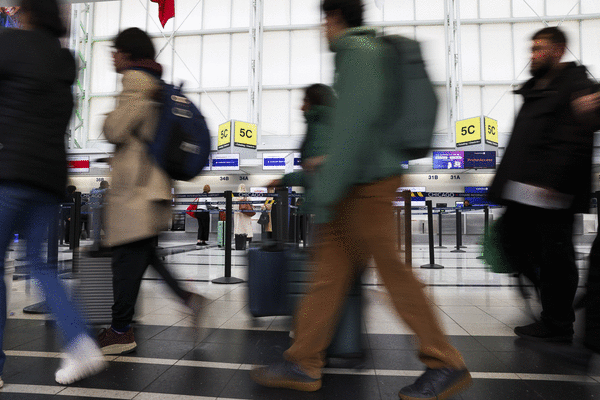
Chicago health officials are investigating a case of measles in a traveler who arrived at O’Hare International Airport on June 17.
The person likely caught the measles outside of the U.S., according to the Chicago Department of Public Health. It’s possible members of the public may have been exposed to the illness at O’Hare in terminal 5 on June 17 between 5:50 a.m. and 9:30 a.m., according to the city health department.
The Chicago Department of Public Health, Illinois Department of Public Health and the U.S. Centers for Disease Control and Prevention are working together to identify and notify individuals who may have been exposed.
People who think they may have been exposed should check their vaccination status, according to the city health department. If they’re not sure of their status, they should talk to a healthcare provider to determine if they need to be vaccinated or have their immunity checked. Two doses of the measles, mumps and rubella vaccine are considered 97% protective against the measles, and one dose is considered 93% protective.
The city health department is encouraging anyone who develops measles symptoms to call their healthcare providers before going to their offices so providers can take steps to prevent others from being exposed.
Measles is highly contagious and can spread through the air when an infected person breathes, coughs or sneezes. Symptoms can include high fever, cough, runny nose, red or watery eyes, and a rash that often begins on the face and then spreads. Symptoms usually begin seven to 21 days after exposure, according to the city health department.
There had been four cases of measles in Illinois between the start of the year and April 1, according to the state health department. As of June 18, there had been 2,104 confirmed cases of measles in the U.S. this year, with the largest outbreaks in Utah and South Carolina.
Last year, the U.S. had 2,288 cases of measles, which was the highest number of cases in decades, according to a U.S. Measles Tracker hosted by the International Vaccine Access Center at the Johns Hopkins Bloomberg School of Public Health.
Chicagoans can get the measles, mumps and rubella vaccine at no cost at the city health department’s immunization clinics.
_____
©2026 Chicago Tribune. Visit chicagotribune.com. Distributed by Tribune Content Agency, LLC.






Comments