Pennsylvania parents will soon have easy access to school-level vaccination data to see measles risk
Published in News & Features
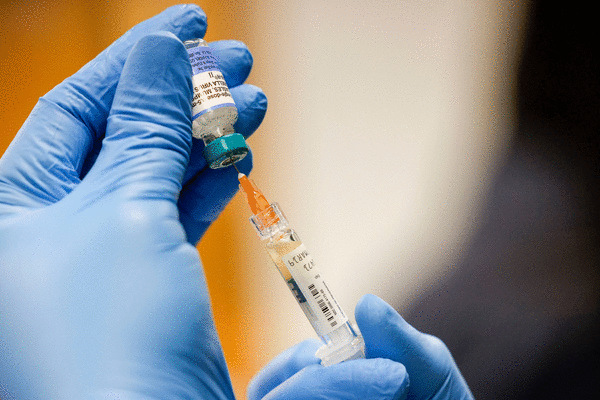
PHILADELPHIA — Pennsylvania families will gain access to detailed information about vaccination rates in their schools before the new academic year, when the state health department launches a new online database to better inform the public.
More than 200 Philadelphia-area schools with kindergarten classrooms — roughly one in three — have measles vaccination rates insufficient to protect against an outbreak, The Inquirer found earlier this year in an analysis that identified pockets of vulnerability hiding in plain sight at schools across the Philadelphia region.
The Pennsylvania Department of Health routinely releases county-level data about childhood immunizations, which for the Philadelphia region shows only overall higher rates of measles protection.
The highly contagious disease, which can linger in the air for two hours and infect nine in 10 unvaccinated people exposed to it, was once considered nearly eradicated after years of vaccination.
But as more families opt out of vaccines required for school attendance through religious and philosophical exemptions, cases are on the rise. Pennsylvania has reported a total of 66 measles cases so far this year — the highest number in three decades and more than four times the total cases in 2025.
The new data initiative follows a drumbeat of reporting by The Inquirer and the Pittsburgh Post-Gazette revealing the declining vaccination rates within communities across the state. Families are often in the dark about the risk because local data are not readily available.
The joint effort between the state’s health and education departments stems from Gov. Josh Shapiro’s executive order last fall to improve access to vaccines, and from intense media scrutiny of vaccination efforts locally and nationally, said Debra Bogen, Pennsylvania’s health secretary.
“We’re following the same instincts that you all were following,” Bogen said. “There is a huge interest among the public in this information.”
The new initiative will offer a closer look at childhood vaccination rates, similar to an interactive school lookup tool published by The Inquirer with the latest available data from last school year.
With the new online tool, the state wants to make people more aware of risks within their community and encourage schools to do more to improve access to vaccines.
Better access to local vaccine data
Pennsylvania law requires schools to report vaccination data for students in kindergarten, seventh grade and 12th grade. Kindergarten rates, in particular, are seen as a bellwether for a community’s attitudes toward vaccination, as parents are deciding whether to get the shots required to attend school.
Families will be able to use the database to find vaccine information by school, county, and grade. It will allow people to search by vaccine and exemption type, and determine what portion of students in a school are attending unvaccinated without an approved exemption.
The database will not include schools with fewer than 20 students in kindergarten, a privacy protection.
In a joint letter to school administrators and nurses last week, state officials said the move was aimed at increasing transparency around vaccination rates. “We want to help ensure that parents, guardians, students and community members have accurate, science-backed information to make immunization decisions for their family,” the letter read.
As of Tuesday, the department had not received feedback from schools. Bogen hopes that schools will become more aware of potential vaccination challenges and work closely with local health providers to coordinate clinics.
“We don’t want lack of access to be the barrier,” Bogen said. “That’s what public health does best — bring access to the resources.”
Joshua Good, the head of a Lancaster County school where two students developed measles earlier this year, said he has no issues with the state’s new initiative, but does not expect it will negatively affect enrollment at schools like his.
Fewer than half of the 27 students in the kindergarten class at Good’s Ephrata Mennonite School are vaccinated against the measles, and many people in his community have opted against vaccination in the last decade.
He thinks parents at Ephrata Mennonite and other private Anabaptist (part of a Christian denomination that includes Amish and Mennonite churches) schools are already aware of vaccination rates there.
“Information is always good, so that folks can make their best decisions,” he wrote in an email.
More informed vaccine decisions
In Delaware County, which has some of the Philadelphia region’s lowest kindergarten measles vaccination rates, public health leaders see an opportunity to help families make decisions about vaccinating their children.
“Making this transparent at the school level helps parents, helps schools, helps all of us,” said Lora Siegmann Werner, director of Delaware County’s health department.
At Chester Community Charter School, for instance, 66% of kindergartners were vaccinated against measles in 2024 — well below the 95% vaccination rate scientists say is necessary to prevent the disease from spreading.
A majority of those students did not have a signed exemption form or a plan for getting vaccinated, according to The Inquirer’s analysis.
Public health experts say that high rates of so-called noncompliant but attending students can indicate that the community struggles with access to healthcare.
The county health department launched a mobile health clinic earlier this month to improve healthcare access and provide vaccine education in a region where the leading hospital, Crozer-Chester Medical Center, closed last year.
Werner said she hopes the new state database will help her staff show families why it is important to get vaccinated, and encourage more schools to host vaccine clinics.
Pennsylvania’s lax rules
Pennsylvania’s vaccine exemption rules are among the loosest in the country, with the state among 15 that allow families to opt out for medical, religious or philosophical reasons.
With the resurgence of measles, some states, including New York and California, have updated their rules to allow only medical exemptions. Many more states allow medical or religious exemptions.
Any future legislation proposing to tighten Pennsylvania’s rules would likely meet resistance in its split Legislature, where Democrats narrowly control the House and Republicans control the Senate.
Many GOP members broadly believe that parents should be free to decide whether their children are vaccinated.
“Parents know what’s best for their kids,” state Rep. Robert Leadbeter, a Columbia Republican and chair of the House Freedom Caucus, told The Inquirer earlier this month. He did not respond to a request for comment for this story.
Nearly a decade ago, state Rep. Michael Schlossberg, a Lehigh Democrat and the majority whip, introduced unsuccessful legislation to tighten Pennsylvania’s rules.
Now the state’s greater data transparency will “allow the public to hold school leaders accountable for enforcing Pennsylvania’s important vaccination requirements,” Schlossberg said in a statement.
Improving access to information could help families make more informed decisions, he said.
“Parents, students, and teachers deserve to know whether public health is at risk in our classrooms,” Schlossberg said.
_____
©2026 The Philadelphia Inquirer. Visit inquirer.com. Distributed by Tribune Content Agency, LLC.



Comments