US-Iran stalemate drags on as conflict approaches 100-day mark
Published in News & Features
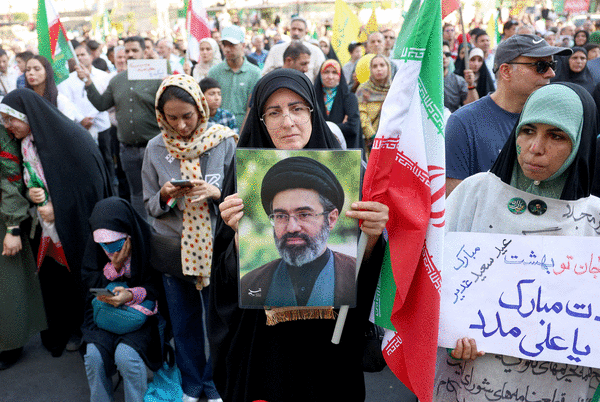
The United States and Iran remained at loggerheads over any potential truce heading into the weekend, with the conflict nearing the 100-day mark and Tehran saying that it and Oman have sovereignty over the Strait of Hormuz.
Following skirmishes overnight between Hezbollah and Israel in southern Lebanon, Iran continued to insist on a ceasefire there before reaching a deal with the U.S. Meanwhile, a military adviser to Iran Supreme Leader Ayatollah Mojtaba Khamenei told CNN that “the ball is in Trump’s court” when it comes to a deal, insisting on the unfreezing of $24 billion in assets.
U.S. President Donald Trump has insisted for months that Iran is near its breaking point and ready for a deal, but the standoff suggests that Tehran believes it can bear the current level of pressure longer while betting that the political pain in the U.S. may get the American leader to concede on some of his objectives.
Iran’s Foreign Minister Abbas Araghchi earlier said there had been “no tangible progress” in talks even though the two sides continued to exchange messages via mediators. No commercial transits through the Strait of Hormuz were observed on Friday morning, with three passages in each direction seen Thursday, according to ship-tracking data compiled by Bloomberg.
As the conflict that began Feb. 28 nears the 100-day mark, Trump was traveling to Wisconsin for a domestic political event Friday after a pair of rebukes by the Republican-led Congress over his foreign policy. The first was when the House voted to halt the war with Iran, a largely symbolic move that underscores the president’s loosening grip on Capitol Hill. Four GOP members joined Democrats in passing the measure.
Congress then passed legislation to provide additional aid to Ukraine and impose more sanctions on Russia. The moves come after a surge in inflation since the war started has eaten away at Americans’ paychecks, straining consumers who were already frustrated by the high cost of living. Sixty-four percent of Americans say going to war with Iran was the wrong decision, according to a New York Times/Siena poll taken in May.
Nevertheless, Trump on Thursday said negotiations are in the “final” stages, without elaborating. Earlier this week, Iran fired missiles and drones at Kuwait and Bahrain, killing one person and injuring dozens at Kuwait’s main airport. That was the worst of several flareups since a fragile ceasefire between the U.S. and Iran took hold on April 8.
Here’s more on the war:
—Iran allowed the United Nations atomic watchdog this week to visit its Bushehr nuclear power plants, while stonewalling inspectors’ demands to verify the condition and location of its enriched uranium stockpile.
—The United Kingdom and France have finalized plans to lead a multinational mine-clearing mission in the Strait of Hormuz within days of an agreement between the U.S. and Iran to reopen the waterway, according to people familiar with the matter.
—Operations at Oman’s main crude oil export terminal at Mina Al Fahal have resumed after an explosion Friday halted some loadings, according to traders familiar with the matter.
_____
(With assistance from Jennifer A. Dlouhy.)
©2026 Bloomberg L.P. Visit bloomberg.com. Distributed by Tribune Content Agency, LLC.






Comments