US proposes broad tariffs of at least 10%, citing forced labor
Published in News & Features
WASHINGTON — The United States is proposing tariffs of at least 10% on imports from most major trading partners following an investigation into forced-labor practices, as President Donald Trump seeks to rebuild the sweeping tariff wall struck down by the U.S. Supreme Court.
The 10% rate would apply to imports from Canada, Mexico, the European Union, Taiwan and the U.K., among other places, according to a statement from the Office of the U.S. Trade Representative. Products from other major economies, including China, India, Japan, South Korea, Brazil and Switzerland, would be subject to a higher 12.5% levy.
Trump has moved to reconstruct his tariff agenda by launching probes under Section 301 of the Trade Act of 1974. The recommended duties are a result of that investigation process. The levies won’t go into effect immediately and are subject to a public comment and review period before implementation.
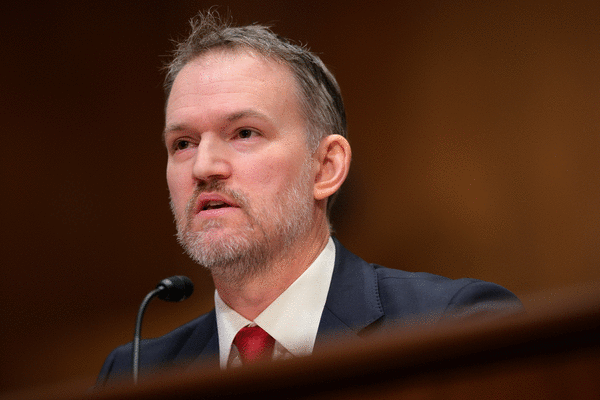
“The failure of our most important trading partners to address the importation of goods made with forced labor is unacceptable. This creates a dynamic where American workers are forced to compete globally on an unlevel playing field,” U.S. Trade Representative Jamieson Greer said in a statement. “We will no longer tolerate this disparity.”
The move is a major step in Trump’s push to reinstate the country-by-country tariffs he imposed during his first year in office before they were deemed unconstitutional. The move will test the tolerance of economic partners, who have largely restrained from retaliating, opting instead to negotiate deals with the U.S. to lower import taxes and ensure market access.
Written comments are due to be submitted by July 6, and a Section 301 panel is expected to convene public hearings beginning on July 7, according to the notice.
Trump’s broad trade agenda suffered a sharp blow in February when the Supreme Court struck down levies he imposed using emergency powers. The 301 probe into forced-labor practices initially targeted around 60 economies.
Section 301 tariffs are seen as more legally sound and flexible than other powers Trump has eyed, but also more time-consuming. As a stopgap measure, the president also implemented a 10% global levy under Section 122 of the trade law, though those import taxes expire in July. U.S. Trade Representative Jamieson Greer has said the goal was to complete a series of trade investigations to allow Trump to quickly enact new tariffs after the outgoing measures expire.
____
(With assistance from Catherine Lucey.)
©2026 Bloomberg L.P. Visit bloomberg.com. Distributed by Tribune Content Agency, LLC.




Comments