Hungary set for power clash as president rejects demand to quit
Published in News & Features

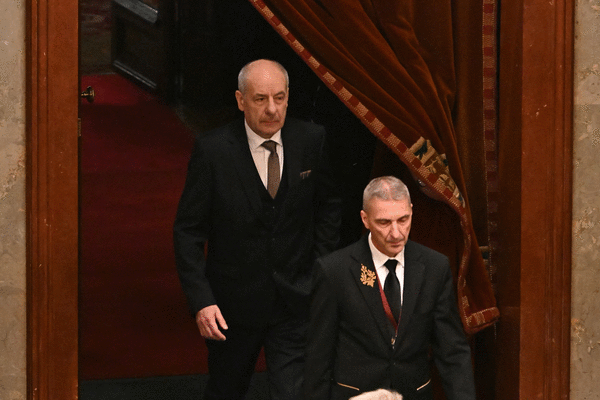


Hungarian President Tamas Sulyok rejected Prime Minister Peter Magyar’s demand that he resign, setting up a political showdown between the country’s old and new leadership figures.
Magyar, whose crushing election victory ousted former premier Viktor Orban, had set a midnight Sunday deadline for Sulyok to leave. In a five-minute video message on Facebook, Sulyok cited what he described as his allegiance to local and European constitutional norms that required him to stay on.
Removing the head of state would make way for a complete dismantlement of the self-styled illiberal state Orban built up during 16 years in office.
“The office of the head of state requires me to stay on,” Sulyok said, pointing to the president’s constitutional role to serve as a check on executive power. He said he’s ready to work with the Magyar administration to advance Hungary’s interests.
Magyar won a landslide election on April 12 on a vow to dismantle Orban’s increasingly authoritarian and corrupt system. During the campaign, he pledged to oust Orban loyalists, including Sulyok, top justices and prosecutors. His Tisza party won a two-thirds parliamentary majority in the ballot, allowing it to change the constitution at will.
Magyar was quick to spot irony in the message from Sulyok, who remained silent as Orban further consolidated power over the past two years — threatening to jail judges, civil society workers and journalists as part of a Russia-inspired crackdown.
Not even one of the biggest scandals in Hungary’s post-communist history — the systemic abuse of children in state care, which forced the resignation of Sulyok’s predecessor in early 2024 — led the former constitutional court justice to speak up.
“Tamas Sulyok has never stood up for those in need, nor for those who were attacked, nor for the rule of law,” Magyar said in a Facebook post after Sulyok’s message.
In Hungary, executive power lies with the prime minister. The president, elected by parliament for a five-year term, has a largely ceremonial role, though the head of state can send back laws to parliament for reconsideration or direct them to the constitutional court for review.
Orban had sought to insulate Sulyok months before the elections by transferring his trusted former chief prosecutor to the presidency of the constitutional court and giving his bench the power to reject the removal of the head of state by parliament. Sulyok’s term runs until 2029.
The changes are unlikely to amount to much legal protection in the face of the Magyar’s parliamentary supermajority, which allows his party to change the constitution — something Magyar said would be done swiftly if Sulyok didn’t quit.
_____
©2026 Bloomberg L.P. Visit bloomberg.com. Distributed by Tribune Content Agency, LLC.





Comments