Economic model and US relations at stake in Colombian election
Published in News & Features
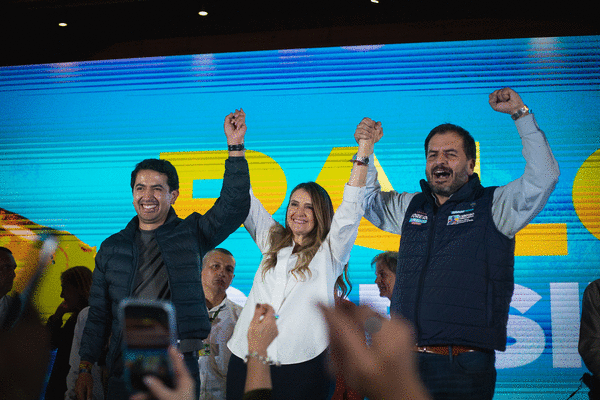
Colombians are voting in presidential elections in which the economic model, counter-narcotics policies and relations with Washington are all at stake.
Senator Iván Cepeda, an ally of leftist President Gustavo Petro, has pledged to tax the rich, boost social spending, seek peace deals with cocaine-trafficking militias.
His main opponents, Abelardo de la Espriella and Paloma Valencia, in contrast, both say they’ll curb spending, cut taxes and fight rather than negotiate with criminal groups.
And while Cepeda has been critical of U.S. interventions in Latin America, and opposes fracking, his rivals want to seek more US military aid to fight cocaine-trafficking groups, and legalize unconventional oil and gas extraction.
But whereas Valencia is a senator from the conservative establishment, De la Espriella is a celebrity defense attorney with a gift for social media, who created his own political group. One of the two is likely to face Cepeda in a June 21 runoff. Petro is barred by the constitution from seeking a second term.
Colombia’s stocks, bonds and currency are likely to rally on a strong performance by De la Espriella or Valencia, or sell off if Cepeda beats expectations. That’s because investors fear that a Cepeda administration would undermine central bank independence and run up debt.
“Markets will be scrutinizing the margin by which Iván Cepeda, the probable first-round winner, outpaces his nearest rivals,” said Mario Carvajal, a consultant at Colombia Risk Analysis.
The next president, who’ll take office Aug. 7, will inherit a fiscal deficit that widened to nearly 7% of gross domestic product last year, as well as a security crisis fueled by record cocaine production.
S&P Global Ratings downgraded Colombia’s sovereign credit rating to BB-, its lowest-ever level, after Petro’s government last year suspended the fiscal rule, which limited the government’s ability to run up debt.
Extortion, kidnappings and terrorist attacks surging over the past four years, as illegal armed groups took advantage of a relative lack of military pressure to expand.
Despite this Petro and Cepeda retain a strong base of support among low-income Colombians, particularly among Black and Indigenous voters. This was bolstered by a 23% increase in the minimum wage this year, higher welfare payments and a law that boosted workers’ rights.
Polls close at 4 p.m. in Bogota, with results expected later in the evening. If no candidate wins more than 50% of the vote, a runoff will be held three weeks later.
Elsewhere in the region, presidential races are also deeply polarized between candidates with radically different ideologies. Peru’s June 7 runoff vote is between the conservative daughter of former President Alberto Fujimori and Roberto Sánchez, an anti-establishment leftist. In Brazil, President Luiz Inácio Lula da Silva is facing a conservative movement led by the son of former President Jair Bolsonaro.
_____
©2026 Bloomberg L.P. Visit bloomberg.com. Distributed by Tribune Content Agency, LLC.





Comments