Trump says he'll announce negotiated deal with Iran shortly
Published in News & Features
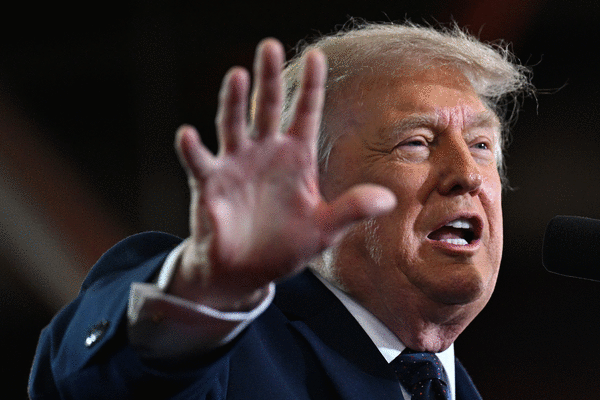
President Donald Trump said that a peace deal with Iran has been “largely negotiated” and he plans to announce an agreement shortly that would reopen the strategic Strait of Hormuz.
“An Agreement has been largely negotiated, subject to finalization between the United States of America, the Islamic Republic of Iran, and the various other Countries,” Trump wrote Saturday in a social media post.
Earlier, Iran said talks on a peace deal with the U.S., focused on ensuring fighting ends on all fronts, were progressing and that other key points of contention would be ironed out at a later stage.
Pakistan and several Arab nations have been pushing negotiations toward a bigger deal that would extend a fragile ceasefire that has largely held for six weeks.
Trump met Saturday with advisers at the White House after speaking with leaders from a number of regional powers, including Saudi Arabia, United Arab Emirates, Qatar, Pakistan and Turkey, as well as Israeli Prime Minister Benjamin Netanyahu, about what he called a “Memorandum of Understanding pertaining to PEACE.”
Iran had indicated that a final draft of an agreement text was under review. Iranian state television cited Foreign Ministry spokesman Esmail Baghaei as saying. “Over the past week, the process has been moving toward a convergence of views.”
It remains unclear how key differences, including the fate of Iran’s nuclear program and Tehran’s calls for sanctions relief, will be addressed, with Baghaei saying those matters aren’t currently on the table. The two sides will also need to agree on how the Strait of Hormuz, a crucial passageway for global energy supplies that has remained largely shuttered since the war began on Feb. 28, should be administered.
“There’s been some progress,” and it’s possible an announcement will be made in coming days, Secretary of State Marco Rubio told reporters in India on Saturday, adding that the U.S. remains adamant that Iran can never have a nuclear weapon, must hand over its highly enriched uranium and ships must be allowed to pass freely through the strait. “The president’s preference is always to solve problems such as these through a negotiated diplomatic solution.”
Iran has rejected demands to give up its uranium and halt enrichment, while insisting that it has no intention of building an atomic bomb, and wants to levy fees on ships passing through Hormuz.
Tehran is also demanding that the U.S. release a “significant portion” of Tehran’s assets that are blocked abroad as a first step, with a “transparent” process for unfreezing the rest, the semi-official Tasnim news agency reported.
The war began when the U.S. and Israel launched air strikes on Iran. Tehran responded with missile and drone attacks on countries in the Persian Gulf and further afield. Thousands of people were killed, the bulk of them in Iran and Lebanon.
A lasting peace deal has remained elusive so far, keeping global energy markets on edge and oil prices elevated above $100 a barrel. The UAE has joined Qatar and Saudi Arabia in appealing to Trump to allow more time for negotiations, according to several people familiar with the matter.
Trump has also been facing growing domestic political pressure to end the conflict, particularly ahead of the November midterm elections that will determine the control of Congress. Opposition to renewed hostilities has heightened among Americans upset about the sharp rise in gasoline prices.
(Arsalan Shahla, Tooba Khan and Eric Martin contributed to this report.)
_____
©2026 Bloomberg L.P. Visit bloomberg.com. Distributed by Tribune Content Agency, LLC.




Comments