Inner Harbor struggling amid mixed Baltimore watershed data
Published in News & Features
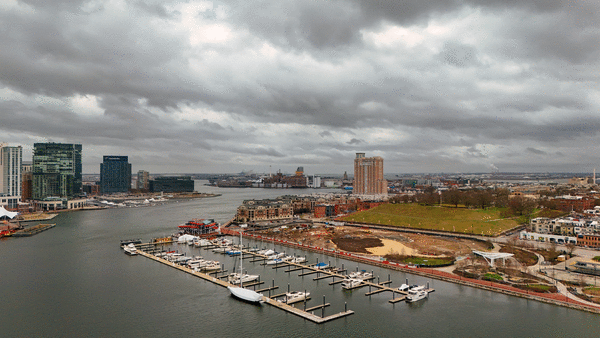
BALTIMORE — Baltimore’s Inner Harbor, long the centerpiece of the city’s waterfront revival strategy, is showing worsening water quality even as some surrounding waterways improve — a split result that is intensifying debate over whether decades of infrastructure promises are finally working or still falling short.
A report released Wednesday by Blue Water Baltimore found water quality in the Inner Harbor has declined over the past 15 years, despite incremental gains in some surrounding waterways. The group calls the trend a “growing crisis” driven largely by stormwater runoff, nutrient pollution, and persistent environmental stressors in an aging urban watershed.
“Clearly, the status quo isn’t working,” said Alice Volpitta, Baltimore Harbor Waterkeeper with Blue Water Baltimore. “The question we have to ask ourselves is: Do we want our children to inherit a Harbor in decline? Or are we ready to really commit to the solutions we know do work so we can all enjoy a healthier future?”
But city and state officials and waterfront advocates say the picture is more nuanced, pointing to long-term infrastructure investments and declining sewage volumes as evidence that the system is improving — just not evenly or quickly enough.
What’s causing the problems?
At issue is what the data reflects — and who is responsible for fixing it.
Environmental advocates say the harbor continues to absorb pollution from aging sewer systems, stormwater runoff and recurring sewage overflows, particularly during heavy rain. They argue that those failures are the result of decades of underinvestment and weak stormwater controls.
State officials counter that conditions are improving, pointing to reductions in sewage discharge and long-term upgrades already underway.
“Like many urban waterways, the Harbor continues to face pressures from stormwater runoff, aging infrastructure, and legacy pollution,” said Maryland Department of the Environment spokesperson Jay Apperson. “MDE remains focused on reducing pollution and improving the long-term health of the Harbor and its tributaries.”
The data shows both realities.
None of the monitored Inner Harbor sites in 2025 fell into the worst “very poor” category. But underlying indicators tell a more complicated story: excess nitrogen and phosphorus continue to fuel algal growth that depletes oxygen in the water, while sediment and runoff reduce clarity and block sunlight needed for underwater grasses to survive.
Monitoring harbor health and investing in improvement projects falls under the Baltimore City Department of Public Works.
Across the wider watershed, progress is uneven. Fecal bacteria levels — a key measure of sewage contamination — have improved in some areas over time. But more than 20 monitoring sites across Baltimore City and Baltimore County still recorded high bacteria levels in 2025, including stretches of Gwynns Falls, Jones Falls, and Back River, all of which drain into the harbor.
Other waterways are performing significantly better. Portions of the Patapsco River system — including Rock Creek, Bear Creek and the Fort McHenry Channel — earned “excellent” ratings for low bacteria levels, according to the report.
Blue Water Baltimore attributes some improvements to years of sewer repairs and expanded wastewater treatment capacity. But it says those gains are repeatedly undermined by overflow events when storms overwhelm aging infrastructure.
That vulnerability has been underscored by recent incidents, including a suspected broken pipe that sent 1.7 million gallons of raw sewage into the Jones Falls last year. City data also show at least six sanitary sewer overflows exceeding 10,000 gallons so far in 2026, according to the Baltimore Department of Public Works.
Environmental groups say those events point to a system still under strain — and argue stormwater runoff remains the single largest source of pollution entering Baltimore’s waterways and ultimately the Chesapeake Bay.
A call for stricter rules
The policy response is now under scrutiny.
Blue Water Baltimore and other advocacy groups are calling for stricter stormwater regulations, faster sewer infrastructure upgrades and stronger enforcement of pollution rules, arguing Maryland’s current standards are not sufficient to protect urban waterways.
The Waterfront Partnership of Baltimore, which promotes harbor programming and restoration projects, says the city has made significant progress and cautions against focusing only on declining indicators.
“We view recreation and restoration as complementary goals,” said Adam Lindquist, vice president of the organization. “The more people connect with the Harbor, the more public support there is for the investments needed to continue improving it.”
Lindquist said bacteria levels have declined over time and that the harbor is far cleaner than in past decades, though nutrient pollution and habitat health remain longer-term challenges tied to stormwater and wastewater systems.
The Baltimore Department of Public Works did not respond to The Sun’s request for comment.
As construction continues and regulations are debated, the Inner Harbor remains at the center of a familiar Baltimore tension: a waterfront that is cleaner than it once was — but still not clean enough for the expectations placed on it, or the promises made about it.
--------------
©2026 The Baltimore Sun. Visit at baltimoresun.com. Distributed by Tribune Content Agency, LLC.






Comments