Juvenile behind active shooter hoax at University of South Carolina is charged, officials say
Published in News & Features
COLUMBIA, S.C. — An arrest has been made months after a swatting incident at the University of South Carolina, where reports of an active shooter on campus turned out to be a hoax.
The U.S. Attorney’s Office in Pennsylvania said a juvenile will face charges because it’s believed to be responsible for a series of swatting hoaxes in 2025, including at USC’s Columbia campus, USC spokesman Jeff Stensland said Tuesday in a news release.
The juvenile, who was not publicly identified because of their age, is a self-identified member of the cybercriminal group “Purgatory,” according to the release. That’s who South Carolina Attorney General Alan Wilson called an “online gore-seeking group,” that picked USC and other institutions at random, the U.S. Attorney’s Office said.
The juvenile has no known connection to USC, according to Stensland.
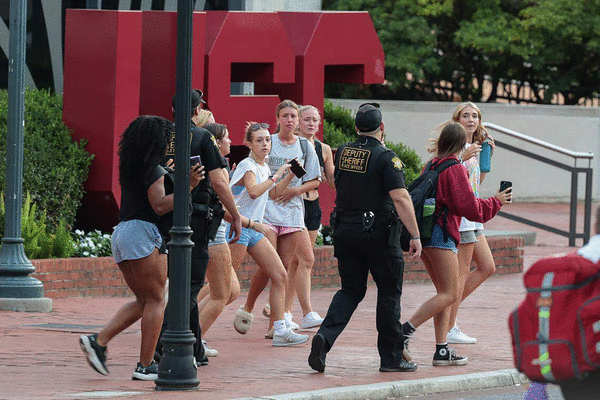
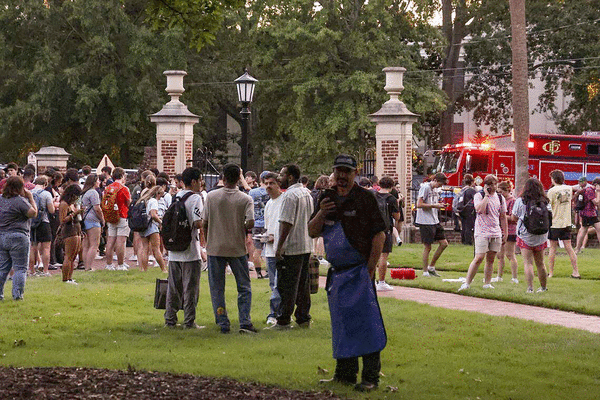
Wilson previously said that Purgatory was behind the Aug. 24 phone calls that reported gunfire at Thomas Cooper Library in the heart of USC’s Columbia campus. Although it turned out that there were no shots fired, fear and chaos temporarily gripped the university as the campus was placed on lockdown and students were told to evacuate the area and find shelter.
On Aug. 24, USC’s dispatch line received two separate calls initiated by an unknown male, with what sounded like gunfire in the background. One around 6:30 p.m., the next around 6:32 p.m. This prompted the safety alert.
Following protocol, buildings in the vicinity were locked and students were escorted to safety once no threat was detected by law enforcement.
“USC is grateful to investigators and prosecutors for their efforts in bringing the individual responsible for the swatting incident to justice,” Stensland said in the release. “The hoax was a callous act intended to create panic and fear within the community.”
USC was one of several universities that received false active shooter reports. Similar swatting incidents involved schools including Villanova University, the University of Tennessee at Chattanooga, the University of Arkansas and Iowa State University.
A “swatting call” is a hoax call made to emergency services typically reporting an immediate threat to human life, the U.S. Attorney’s Office said in a news release. The goal of the caller is to draw a response from law enforcement — and specifically a special weapons and tactics (SWAT) team — to the victim’s location, according to the release. Perpetrators frequently place swatting calls to harass rivals or to raise their profile within their online communities by demonstrating a willingness to cause havoc and terrorize unsuspecting victims, the U.S. Attorney said.
USC thanks “the multiple public safety agencies that assisted in our August response,” Stensland said. “Their coordination and professionalism were critical to ensuring a swift and safe resolution. USC is equally appreciative of the campus community for following instructions from law enforcement and treating one another with care and support.”
©2026 The State. Visit at thestate.com. Distributed by Tribune Content Agency, LLC.






Comments