Trump casts doubts on Iran peace proposal as details emerge
Published in News & Features
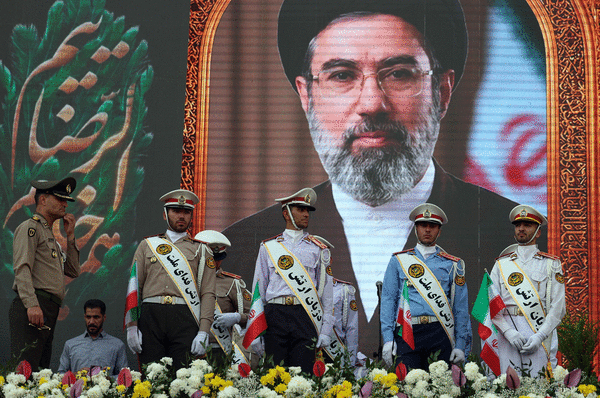
Efforts continued to broker an end to the Iran war, now into its third month, as U.S. President Donald Trump suggested the Islamic Republic’s latest peace proposal might not be enough to satisfy him.
Iran’s suggestions include setting a one-month deadline on talks for a deal to reopen the Strait of Hormuz and end both the U.S. naval blockade and the fighting in Iran and Lebanon, Axios reported, citing two people familiar with the matter.
If such a pact is reached, another month of discussions would then begin in an attempt to reach an agreement on Iran’s nuclear program, according to Axios.
Iran’s semi-official Tasnim News Agency reported the proposal called for a complete end to the conflict within 30 days along with guarantees against renewed strikes. It said the plan reiterates Tehran’s earlier demands, including that U.S. forces withdraw from near Iran, a maritime blockade be lifted, sanctions removed, and reparations paid. The nuclear issue wasn’t mentioned.
Trump, speaking to reporters on Saturday, said he’d been briefed on the “concept of the deal,” but later cast doubts on whether it would be acceptable to him. He said he wouldn’t rule out restarting strikes on Iranian targets if its rulers “misbehave.”
“I will soon be reviewing the plan that Iran has just sent to us, but can’t imagine that it would be acceptable in that they have not yet paid a big enough price for what they have done to Humanity, and the World, over the last 47 years,” Trump said in a post on Truth Social.
The U.S. president has voiced frustration at the lack of progress in talks to end the conflict that began with U.S.-Israeli strikes on the Islamic Republic on Feb. 28. Thousands of people have been killed across the Middle East since then, mainly in Iran and Lebanon.
Iran’s foreign ministry said Sunday that the country’s top envoy, Abbas Araghchi, had briefed his Omani counterpart on the latest efforts to end the war. It gave no further details on their phone call.
Energy prices have soared because of the blockage of the Strait of Hormuz, the waterway south of Iran through which about one-fifth of the world’s oil and liquefied natural gas normally flows. That’s stirred concerns in the White House that the Republicans could suffer a major defeat in November’s Midterm elections as Americans cope with high gasoline prices.
Major OPEC+ nations on Sunday agreed on a modest and symbolic increase in their June production quota levels, delegates said. Seven countries, led by Saudi Arabia and Russia, would — at least on paper — add 188,000 barrels a day next month under the pact.
The expected move, which follows the United Arab Emirates’ surprise exit from the Organization of the Petroleum Exporting Countries, effective May 1, is largely symbolic as the group won’t be able to implement the increase while Hormuz is blocked.
The waterway remains at the heart of the stalemate. After Iran effectively closed the strait, the U.S. imposed a naval blockade on the Islamic Republic’s ports, seeking to squeeze its economy and choke off oil exports.
Foreign Minister Araghchi has indicated Tehran is ready to continue diplomatic efforts if the Americans change their approach and avoid “excessive demands, threatening rhetoric, and provocative actions.” The military remains “fully vigilant,” he said.
Iran, which has long prepared for such scenarios, has begun curbing oil production as its storage tanks fill up, Bloomberg reported on Saturday. The move aims to keep them ahead of capacity limits rather than waiting for tanks to fill completely, according to a senior Iranian official, who asked not to be identified because the information is sensitive.
Oil prices eased Friday after touching wartime highs earlier in the week. Brent crude settled near $108 a barrel, putting its gain for the week at 2.7%. U.S. gasoline pump prices have surged to well above $4 per gallon.
Here’s more on the war:
— The UAE’s flagship oil company Adnoc said it will move forward with 200 billion dirhams ($55 billion) in project awards spanning upstream and downstream operations — part of a previously announced growth plan.
— Israel is to acquire two new fighter squadrons: a fourth F-35 squadron from Lockheed Martin, and a second F-15IA squadron from Boeing. It’s the first step in executing the IDF’s decade-long force buildup plan, under a dedicated 350-billion-shekel ($119 billion) budget.
— Israel’s military issued evacuation orders for more than 10 villages in Lebanon located north of the area its army currently occupies. That’s despite a formal cease-fire in the country, where Israel had been fighting Iran-backed Hezbollah.
_____
With assistance from Sara Gharaibeh.
_____
©2026 Bloomberg News. Visit at bloomberg.com. Distributed by Tribune Content Agency, LLC.






Comments