Trump's messaging blitz divides advisers as Iran talks waver
Published in News & Features
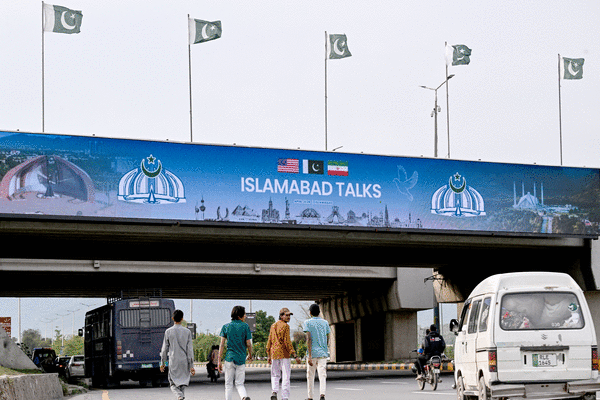
The prospect of Iran agreeing to more in-person peace talks with the U.S. is being hindered by President Donald Trump’s threats and brash social media posts, according to several officials with knowledge of the diplomatic efforts to end their war.
Trump’s Truth Social posts — as well as his decision to continue with a naval blockade of Iranian ports — have been detrimental to ongoing negotiations through mediators such as Pakistan, according to two U.S. officials familiar with the matter.
Iranian negotiators have also said those posts, in which Trump’s said he may “blow up the rest of their country” and send it “back to the Stone Ages,” are aimed at humiliating Tehran’s leaders and making them less inclined to strike a deal, according to an Iranian official and an Arab diplomat. All the people asked not to be named because of the sensitivity of the matter.
The warring sides began a truce just over two weeks ago. They are in a standoff over how to proceed to talks to end the conflict, which has killed thousands of people, wreaked havoc across the Middle East and sent energy prices soaring.
Brent crude climbed to around $105 a barrel on Thursday as tension mounted over the Strait of Hormuz and the blockade. The U.S. said its forces boarded a supertanker in the Indian Ocean that was carrying oil from Iran, while Tehran fired on ships on Wednesday and seized two vessels.
The U.S. president’s public messaging, according to the officials, is key to the impasse. There’s been little progress in the past day, according to a European diplomat in touch with Iranian negotiators.
Trump isn’t trying to protect the feelings of Iranian leaders, said a White House spokesperson, who declined to be named talking about sensitive matters. He is serious about negotiating a deal that will ensure the long-term national security of America, they said.
Trump, on April 7, shortly before the U.S. and Iran started the ceasefire, said “a whole civilization will die tonight, never to be brought back again.” The White House has said tough language helped get Iran to agree to the truce.
He extended the pause in hostilities on Monday, after Iran refused to send delegates to Islamabad for a second round of talks. The first round, also in Pakistan, was in mid-April and ended without a deal.
Vice President JD Vance was again set to lead the U.S. team for this week’s negotiations and was ready to travel to Islamabad, until the cancellation. Jared Kushner, Trump’s son-in-law, and Steve Witkoff, a special envoy, were expected to join Vance.
Some of Trump’s posts have compelled Iranian officials to react, with lead negotiator and Parliament Speaker Mohammad Bagher Ghalibaf slamming them as “media warfare and the engineering of public opinion.”
Iran’s President Masoud Pezeshkian on Wednesday said Iran welcomes talks with the U.S., but that the “blockade and threats are the main obstacles to genuine negotiations.”
Some of Trump’s advisers want to milk the blockade longer, arguing that Iran is just weeks away from shut-ins because of its inability to export oil at normal volumes, said the U.S. officials. That could inflict significant economic damage and lead to bigger concessions. For them, the president’s social media posts are serving the purpose of running out the clock.
Trump suggested Thursday that he agreed with that approach and he’s under no pressure to make a deal.
“You know who’s under time pressure? They are, because if they don’t get their oil moving, their whole oil infrastructure is going to explode,” Trump told reporters in the Oval Office. “You know what that means — because they have no place to store it, and because they have no place to store it, if they have to stop it.”
Another camp of Trump allies has argued that the time to seek the off-ramp is now and that Trump risks deeper financial wounds at home — with repercussions for November’s mid-term elections — if the Hormuz disruption persists much longer, said the same American officials.
For this group, the president’s rhetoric could unravel progress made by U.S. and Iranian negotiators toward an agreement that would limit the Islamic Republic’s nuclear program and reopen the critical shipping route in return for sanctions relief.
The president’s national security team is completely unified behind ensuring that Iran can never possess a nuclear weapon, said the White House spokesperson. He is always the final decision-maker, they said.
While the president has said he’s in no rush and that the blockade is squeezing Iran’s economy by preventing it from exporting oil, he is under mounting pressure to bring down U.S. fuel prices. They’ve surged because of Iran’s effective closure of the Strait of Hormuz, turning Americans against the conflict and leading to concern about a global economic slowdown.
The Iranians, said the Arab official, want an accord that resolves a host of long-standing issues such as the sanctions against the Islamic Republic and its nuclear and missile programs.
Tehran also wants guarantees it won’t be attacked again and some formal control over shipping traffic through Hormuz. The U.S. and Israel have signaled they won’t accept those demands.
Still, it’s possible that Washington and Tehran agree to an interim deal that reopens the strait and ends the U.S. blockade, while leaving most of the other sticking points to future negotiations. Some Gulf Arab and European leaders believe talks on the wider points would take at least six months to be agreed, Bloomberg reported last week.
“Trump’s style of messaging has undermined his own position of wanting diplomacy to work,” said Alex Vatanka, a senior fellow specializing in Iran at the Middle East Institute. “In the case of this Iranian regime, effective means quiet, silent, not loud, not in the media, not attacking Iranian leaders in social media posts.”
_____
©2026 Bloomberg L.P. Visit bloomberg.com. Distributed by Tribune Content Agency, LLC.





Comments