Florida wildfires shattering records amid long drought
Published in News & Features
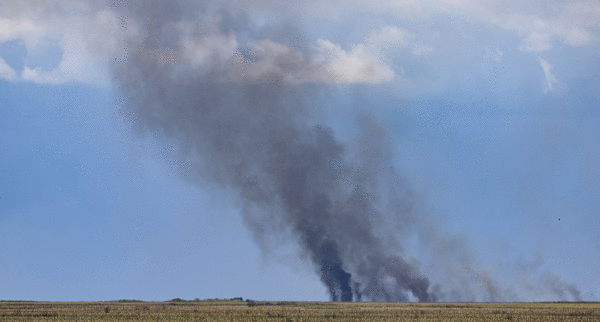
In his 22 years as a Hillsborough County firefighter, Rob Herrin says he’s never been this busy.
One Sunday earlier this year offers a glimpse: Herrin and his team responded to a 300-acre brush fire, then another fire, and another. All told, they extinguished 22 brush fires in 24 hours.
And it was only February, months from peak fire season.
“I’ve never heard of that many fires in one day,” said Herrin, who is also the spokesperson for the county’s fire rescue.
It’s been decades since Florida experienced a fire season as busy as this one, amid severe drought conditions.
Local fire officials and Florida’s Forest Service, which responds to fires statewide, say more than three times the fires have ignited this year versus the same period last year. And the blazes have been more severe and burned longer, a trend that likely won’t slow as the state approaches peak season in June.
The state has been preparing for a surge like this since 2023, investing in equipment and fire staff to help local responders. This year has been testing their readiness.
Florida wildfires have trended upward since 2021, according to state data. This year, the number of fires is on track to set a record. In the first three months of the year, there were more than 1,400 wildfires in Florida.
In all of 2025, there were just over 3,150.
“It’s abnormally busy, and it’s going to be worse before it gets better,” said Rick Dolan, Florida’s Forest Service director, who has been fighting fires in the state for three decades. “It’s the driest year we’ve had in 25 years.”
No hurricanes last year, while a blessing in some ways, have combined with dry La Niña winter weather to drain the state’s aquifers and water tables. Several frosts in January created a lot of dry grass and shrubs, Dolan said.
“This is as bad as I’ve ever seen it,” he said.
Fires are so rampant and drought so severe, covering 95% of Florida, that in February, Gov. Ron DeSantis declared a state of emergency to allow for freer spending and support to local officials.
Many counties along Florida’s Gulf Coast and throughout the Tampa Bay region have enacted burn bans, including Hillsborough, Pinellas and Pasco counties. Polk County has suspended its ban due to heavy rains until April 16. Nearly two dozen counties have announced burn bans this year.
“Most fires in the state of Florida are human-caused one way or another,” Dolan said.
In February, more than 30,000 acres burned in Big Cypress National Preserve in South Florida. Last month, a Hernando County fire torched 120 acres in one weekend, prompting evacuation orders.
That same weekend, a fire in Pasco County destroyed campers and a home after someone started a fire illegally.
“We still have fires people are lighting, and people don’t realize how dry the grass truly is,” Pasco County operations deputy fire chief Shawn Whited said.
Pasco, which has banned outdoor burning of any kind since Jan. 28, has exploded in population but still has large tracts of rural land susceptible to fire, Whited said.
In Polk, which is the size of Rhode Island and is mostly rural and unincorporated, fire officials say 2026 has been its most active year ever.
Kevin Shireman, the county’s fire marshal and assistant fire chief, has seen a “huge jump” in fires. In 2024, there were 162 fires from Jan. 1 through Feb. 26. This year, during that period, county data shows there were 680.
Polk County has about 300 firefighters and is hiring more, Shireman said. The county has asked neighboring counties for help on days when fires have escalated. It relies on the Florida Forest Service for support, too.
Last month, a sheriff’s deputy in Calhoun County died after helping residents evacuate from a fire. Officials said they did not know whether the fire was related to his death.
That fire, in late March, displaced 43 residents and destroyed 15 buildings.
Local firefighters and the Florida Forest Service, which employs 1,200 firefighters, share radio networks and an app to pinpoint how a fire is spreading. The state works with local municipalities and all county fire services.
“Essentially, it becomes one team, one fight,” Dolan said.
The state has been shoring up its response resources, pouring more than $55 million over the last three years into pay raises to retain state firefighters, updating its Vietnam-era helicopters and bulldozers and investing in a drone program.
The Department of Agriculture and Consumer Services, which houses the Florida Forest Service, asked for an additional $64 million in this year’s budget to update equipment used to clear debris and maintain fire breaks, where land is plowed up to stop fires from spreading.
“When you go to a fire, you need equipment that is going to work,” Florida Commissioner of Agriculture Wilton Simpson said in an interview.
While he was in the Legislature, the Fire Service had an 18% vacancy rate, and equipment was increasingly outdated, he said. Simpson was Florida’s Senate president before being elected agriculture commissioner in 2022.
Integrating new technology, like the state’s fleet of 50 drones, into the state’s fire arsenal doesn’t just curb fires, it protects those who fight them, he said.
For example, when firefighters arrive on scene, they can now send up a drone. From above, they can more efficiently pinpoint where to deploy bulldozers to cut off fire lines and where to send firefighters.
Drones also allow the state to do prescribed burns more effectively, Simpson said, by dropping fireballs evenly along the burn perimeter to control the fire.
“A 500-acre block of forest would have taken a crew of eight men,” he said. “With a drone, four firefighters can do it in four hours.”
The machines can drop water to help dissipate flames around firefighters who become surrounded, he said. As Florida leads in its widespread use of drones to prevent and fight wildfires, Simpson said, state firefighters have trained those from several other states.
Because of the hilly geography of western states, like California, fire crews often use hand tools like shovels and axes to cut through brush and create fire lines.
That doesn’t work in Florida because it’s much flatter and often drier, meaning fire can spread too quickly for hand tools.
While wildfires may seem a uniquely rural occurrence, most of the state’s fires approach urban and suburban areas, said Dolan, the state’s fire chief.
Herrin, the Hillsborough firefighter, recently saw a fire spreading through a forest nearly come for a house.
“A couple weeks ago, I ran a fire that, it started in someone’s back patio, and their whole back yard was burned up, and it threatened their neighbor’s house,” he said.
Florida residents must also consider less obvious ways fires can start, especially as summer temperatures rise.
“Something as benign as leaving your car running on dry grass, hands down, could start a fire, Herrin said. “Fire needs a heat source, period. Be aware of heat sources, like your exhaust on your car.”
He noted that fires can affect residents regardless of where they live.
“Just because you live in an area surrounded by houses doesn’t mean you’re immune to any sort of damage.”
_____
©2026 Tampa Bay Times. Visit tampabay.com. Distributed by Tribune Content Agency, LLC.






Comments