FCC bans wireless router imports, citing security concerns
Published in News & Features
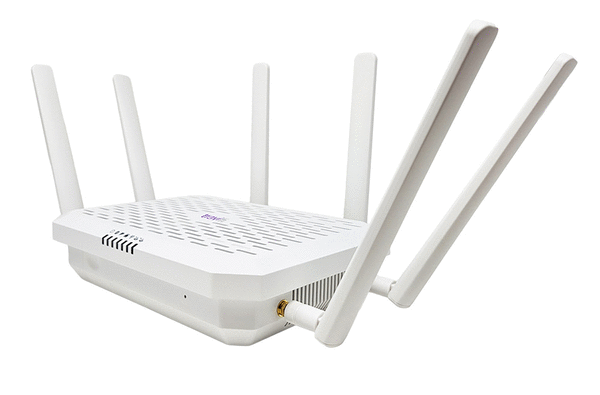
The Federal Communications Commission ordered a ban on the import of new models of foreign-produced consumer wireless routers after an interagency panel determined they threaten national security.
While the FCC said companies could apply for exemptions, the move could dramatically shake up the market for routers, which are primarily made overseas. Consumers and businesses connect wired internet lines to routers to create Wi-Fi networks for computers, phones, TVs, cameras and other internet-enabled products.
The action puts further pressure on TP-Link Systems Inc., one of the world’s largest makers of routers. The company, which was founded in China 30 years ago but which has since set up its headquarters in Irvine, California, is already facing investigations by the Trump administration over concerns that its connections to China could threaten national security.
“While the rule doesn’t name China, the direction of travel is pretty clear, and it raises the stakes for how the U.S. approaches connected devices going forward,” said Craig Singleton, a senior fellow at the Foundation for Defense of Democracies.
Other router makers include Netgear Inc., Alphabet Inc.’s Google Nest, Amazon.com Inc.’s Eero, Cisco Systems Inc., Linksys and Asustek Computer Inc. They all build their products overseas.
The import ban is in place regardless of the nationality of the developer. Many of the router makers are based in the U.S.
Netgear shares rose as much as 16.7% in after-hours trading, suggesting that investors believe the company will get an exemption and that a ban of TP-Link’s products would lessen competition.
“We commend the Administration and the FCC for their action toward a safer digital future for Americans,” a spokesperson for Netgear said in a statement.
None of the other companies immediately responded to requests for comment. TP-Link has said in the past that it welcomes the opportunity to engage with the U.S. government to demonstrate that its security practices are in line with industry standards and said that it’s committed to addressing any national security issues.
In making its decision, the FCC cited a National Security Determination provided on March 20. “Recently, malicious state and non-state sponsored cyber attackers have increasingly leveraged the vulnerabilities in small and home office routers produced abroad to carry out direct attacks against American civilians in their homes,” the notice said.
The FCC added it believes routers could introduce a “supply chain vulnerability that could disrupt the U.S. economy, critical infrastructure, and national defense.” The agency added that foreign-made routers were exploited in the Volt, Flax, and Salt Typhoon cyberattacks targeting U.S. infrastructure.
The move doesn’t impact consumers’ ability to continue using previously purchased routers, and retailers will be allow to keep selling already-imported routers.
The latest development is reminiscent of a ban on smartphones developed by Chinese companies, including Huawei Technologies Co Ltd.
_____
©2026 Bloomberg L.P. Visit bloomberg.com. Distributed by Tribune Content Agency, LLC.






Comments