Will Michigan opt into Trump's school choice program? Whitmer hasn't decided
Published in News & Features

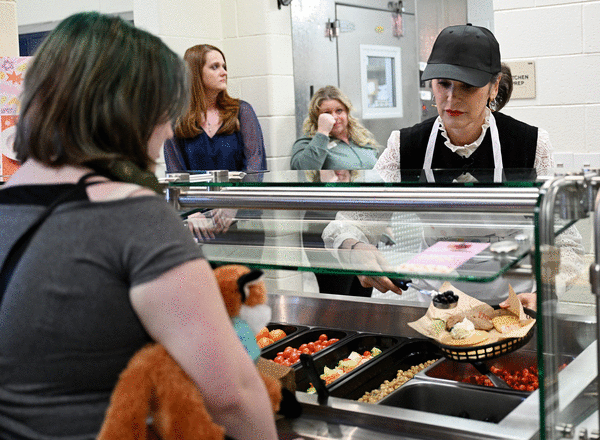
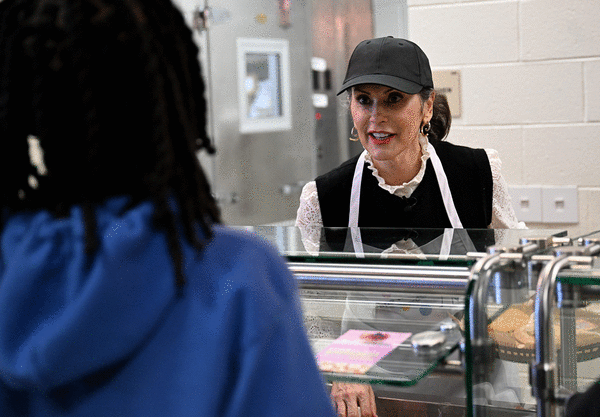
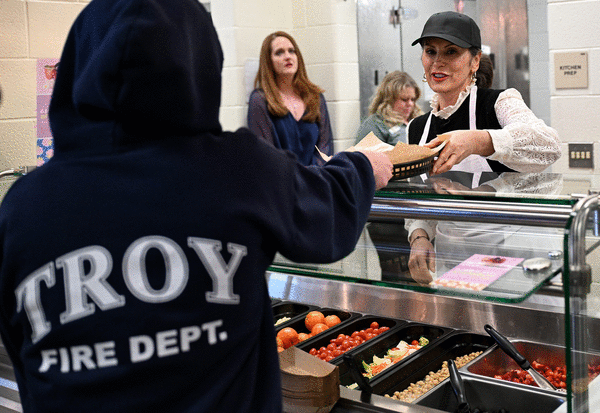
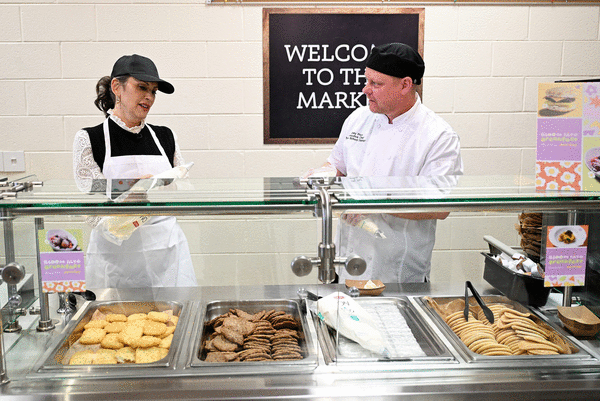
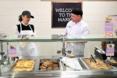
TROY, Mich. — Gov. Gretchen Whitmer said Wednesday she would need more information before deciding whether Michigan would join at least 23 other states in opting in to a federal scholarship program giving taxpayers up to $1,700 for private school tuition or other educational uses.
The Democrat governor said President Donald Trump's Education Freedom Tax Credit, created by his Working Families Tax Cuts Act, was a "high-level talking point" for the Republican administration.
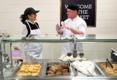
"They've not put out any guidance," Whitmer said at an event at a Troy school promoting free school lunches. "I'm always going to leverage as much in terms of investment as we can for education and help people keep money in their pockets, but there's very little actual detail that's been released on this particular subject."
In June 2025, the U.S. Department of Education issued guidance on the school choice program. The U.S. Department of Education’s Office of Elementary and Secondary Education said it sent a letter to all chief state school officers about how the states could spend their federal formula funds under the Elementary and Secondary Education Act to expand education choice and turn around failing schools.
Whitmer's Director of Communications Bobby Leddy later clarified that Whitmer was awaiting tax guidance from the federal government.
The tax credit would allow individual taxpayers to receive a federal tax credit for donating to nonprofits that grant scholarships to students to pay for education expenses, such as textbooks, tutoring and tuition at private and religious schools, or additional support for students with disabilities. The tax credit is set to begin in 2027.
In 2021, Whitmer vetoed a similar school choice effort at the state level. She struck down two bills approved by the Republican-controlled Legislature and backed by west Michigan's DeVos family that would have created an education scholarship program giving contributors a tax break on donations that could be used for a variety of education services, including private school tuition.
"Simply put, our schools cannot provide the high-quality education our kids deserve if we turn private schools into tax shelters for the wealthy," Whitmer said at the time. "The movement to privatize education in this state has been a catastrophic failure, causing Michigan students to fall behind the rest of the nation."
The Democratic governors of New Mexico, Oregon and Wisconsin have said they plan to opt out of the Trump school choice program, Bloomberg reported in October.
The governor of a state must choose to opt into the program, the U.S. Department of Education said in a fact sheet. When a state is "covered," its officials must identify potential "scholarship-granting organizations." Taxpayers in the covered states would donate to those organizations and would receive a tax credit for up to $1,700 to use for their children to attend schools of their choice, such as private or religious schools, or other educational products and services.
The department defined SGOs as charities that use at least 90% of their income on scholarships for education choice options for eligible K-12 students and are banned from providing scholarships for any other expenses.
In neighboring Ohio and Indiana, both states with Republican governors who have opted into the program, those charities include the Waldorf Method Education Scholarship Association and Professional Athletes of Indiana.
The Michigan Association of Superintendents and Administrators did not immediately respond to a request for comment.
K-12 Alliance of Michigan Executive Director Robert McCann said he hoped Whitmer would not choose to opt into the program.
"Michigan voters have been clear on more than one occasion that they do not support using public tax dollars, directly or indirectly, for private schools," McCann said in an email, referring to a Michigan constitutional ban on school vouchers and unsuccessful efforts to legalize it through ballot initiatives. "This idea would not only violate the Michigan Constitution but would also further divert money from already underfunded public schools to benefit the wealthiest Michiganders. We certainly hope that Governor Whitmer continues to do the right thing in not pursuing this harmful program."
Molly Macek, the director of education policy for the Midland-based Mackinac Center for Public Policy, a longtime school choice champion, said she hoped Whitmer would decide to opt into the program. If not, she worried that Michigan families would miss out on needed scholarship money.
"There’s nothing on this scale available to families looking for scholarships for private schools," Macek said. "This would expand options significantly. ... Most Michigan families would be eligible for the tax credit."
Macek added that families might still get to receive tax credits through donations made to SGOs in other states. But if Michigan didn't opt in, she said, the state's educational charities that could be designated as SGOs would miss out on the donations.
A report cited in the U.S. Department of Education's fact sheet from the Democrats for Education Reform said the tax credit will generate an additional $24 billion in education funding annually, and every $1 billion in scholarships could fund tuition at a school of choice for 77,000 students or cover tutoring for more than 300,000 students.
_____
©2026 The Detroit News. Visit detroitnews.com. Distributed by Tribune Content Agency, LLC.





Comments