H5N1 bird flu found in California elephant seals for the first time
Published in News & Features
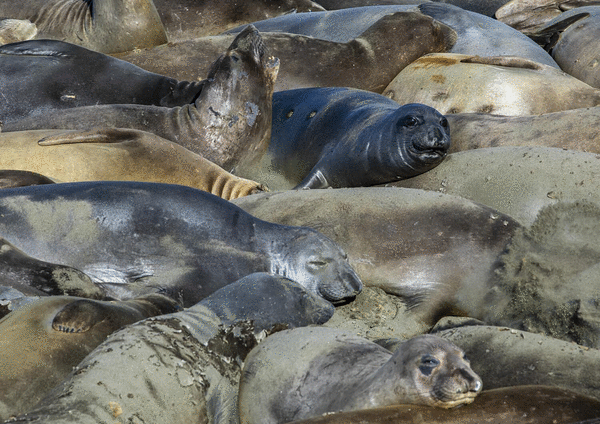
The H5N1 bird flu virus that devastated South America’s elephant seal populations has been confirmed in seals at California’s Año Nuevo State Park, researchers from the University of California, Davis and the University of California, Santa Cruz announced Wednesday.
The virus has ravaged wild, commercial and domestic animals across the globe and was found in seven weaned pups.
The confirmation came from the U.S. Department of Agriculture’s laboratory in Ames, Iowa.
The death toll so far was not provided, although a press release from UC Davis noted at least some animals had succumbed. In most wildlife cases, carcasses and tissue samples are sent to the USDA for confirmatory testing.
“This is exceptionally rapid detection of an outbreak in free-ranging marine mammals,” said professor Christine Johnson, director of the Institute for Pandemic Insights at the University of California, Davis’ Weill School of Veterinary Medicine. “We have most likely identified the very first cases here because of coordinated teams that have been on high alert with active surveillance for this disease for some time.”
In late 2022, the virus decimated southern elephant seal populations in South America and several sub-Antarctic Islands. At some colonies in Argentina, 97% of the pups died, while on South Georgia Island, researchers reported a 47% decline in breeding females between 2022 and 2024. Researchers believe tens of thousands of animals died.
More than 30,000 sea lions in Peru and Chile died between 2022 and 2024. In Argentina, roughly 1,300 sea lions and fur seals perished.
At the time, researchers were not sure why northern Pacific populations were not infected, but hoped previous or milder strains of the virus had conferred some immunity.
The virus is better known in the U.S. for sweeping through the nation’s dairy herds, where it infected millions of cows, dozens of dairy workers and thousands of wild, feral and domestic mammals. It’s also been found in wild birds and killed millions of commercial chickens, geese and ducks.
Two Americans have died from the virus since 2024, and 71 have been infected. The vast majority were dairy or commercial poultry workers. One death was that of Louisiana man who had underlying conditions. It is believed he was exposed via backyard poultry or wild birds.
Scientists at UC Santa Cruz and UC Davis increased their surveillance of the elephant seals in Año Nuevo in recent years.
“Given the catastrophic impacts observed in related species, we were concerned about the possibility of the virus infecting northern elephant seals for the first time,” said Roxanne Beltran, a professor in ecology and evolutionary biology at UC Santa Cruz. With more monitoring, they hoped to detect early signs of abnormalities. Beltran’s lab leads UC Santa Cruz’s northern elephant seal research program at Año Nuevo.
©2026 Los Angeles Times. Visit at latimes.com. Distributed by Tribune Content Agency, LLC.






Comments